THE ADVENTURE COLLECTIVE® · Independent discovery and booking for outdoor travel

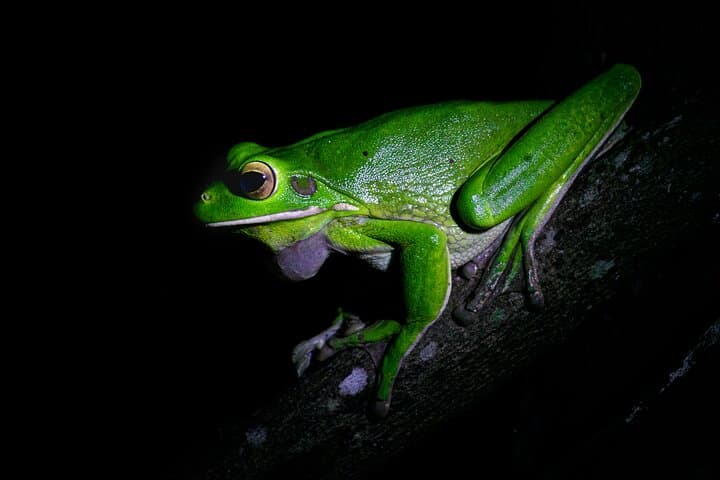
Step into the Daintree after sunset for a guided 90-minute exploration of Cape Tribulation’s nocturnal rainforest life. Learn local ecology and Indigenous connections while spotting frogs, possums, and night insects on easy trails.
Step into the Daintree after sunset for a guided 90-minute exploration of Cape Tribulation’s nocturnal rainforest life. Learn local ecology and Indigenous connections while spotting frogs, possums, and night insects on easy trails.
The path narrows and the rainforest inhales as dusk deepens over Cape Tribulation. You step under a layered canopy where the last light leaks through buttressed trunks and the guide’s torch draws silver lines on lichen and leaf. Night rearranges the forest: frogs begin a chorus, insects claim the understory, and the air tastes of wet earth and green growth.
Verified experiences and guided adventures in the surrounding area.
Operated by Far North Escapes · Cape Tribulation, Queensland
The path narrows and the rainforest inhales as dusk deepens over Cape Tribulation. You step under a layered canopy where the last light leaks through buttressed trunks and the guide’s torch draws silver lines on lichen and leaf. Night rearranges the forest: frogs begin a chorus, insects claim the understory, and the air tastes of wet earth and green growth.
Geologically the Daintree is ancient — one of the oldest continuously surviving rainforests on Earth — and culturally it’s country for the Kuku Yalanji people whose knowledge of plants and rhythms still informs local guiding. The terrain on a night walk is mostly established track and boardwalk with some muddy, uneven sections; the walk here is short but alive, exposing visitors to nocturnal frogs, possums, tree-dwelling skinks, and the rare call of a cassowary in the distance.
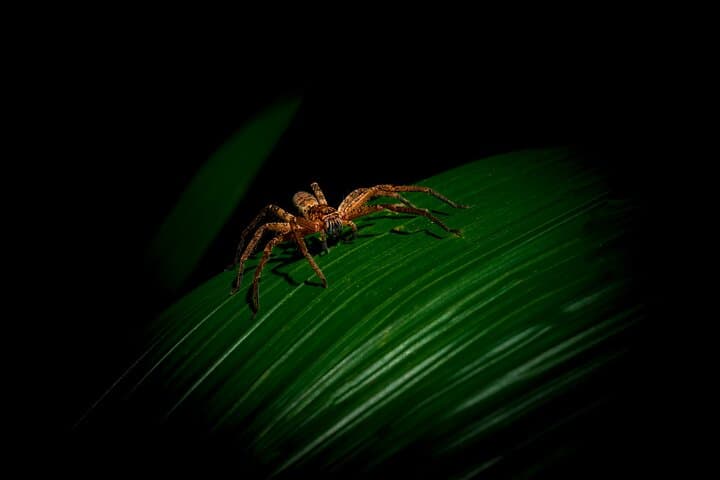
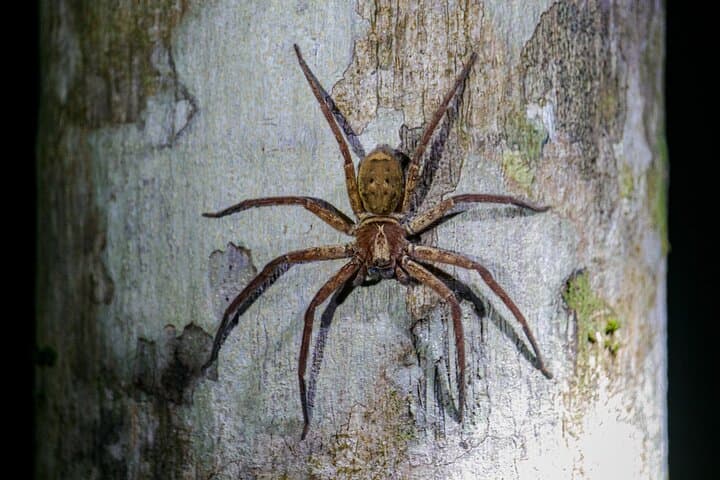
On a guided 90-minute tour you’ll learn how the rainforest evolved, which palms are food for fruit doves, and why certain moths dominate after dark. Practicalities matter: expect low light, humid air, and a steady chorus of insects, so quiet observation and staying on trail are essential. Guides typically supply torches and ponchos; bring waterproof footwear, insect repellent, and a sense of patience — animals move on their schedule.
Best timed for cooler, clearer evenings, the walk suits most fitness levels and makes for a focused wildlife encounter off the beaten daytime routes. It’s an efficient, intimate way to see the Daintree’s after-dark life while supporting local ecotourism and Indigenous knowledge.
easy.
1.5 hours.
Suitable for most people who can walk for 90 minutes over uneven surfaces; no special fitness required.
The tour is approximately 90 minutes on established trails and boardwalks under the rainforest canopy.
Yes—this experience is described as suitable for all fitness levels; however children should be supervised and guests should be able to walk short uneven sections.
No wildlife sightings can be guaranteed; guides increase your chances through local knowledge but nocturnal animals are unpredictable.
Tours may be cancelled for heavy rain or insufficient travelers; operators usually offer refunds or rescheduling per their policy.
The Daintree Rainforest is over 100 million years old and is part of the traditional lands of the Kuku Yalanji people, whose ecological knowledge informs many local guiding practices.
Stay on designated paths and avoid touching plants or wildlife to minimize impact; choose licensed local guides who contribute to community-based conservation.
Far North Escapes operates guided outdoor trips and adventures with an emphasis on safety, stewardship, and memorable experiences.
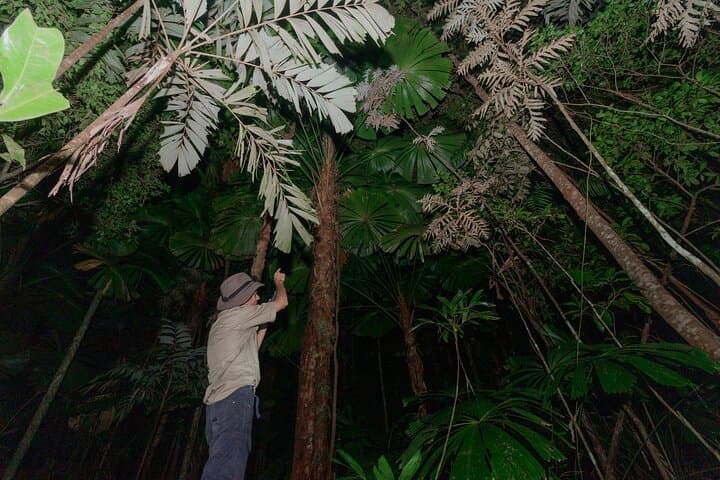
The path narrows and the rainforest inhales as dusk deepens over Cape Tribulation. You step under a layered canopy where the last light leaks through buttressed trunks and the guide’s torch draws silver lines on lichen and leaf. Night rearranges the forest: frogs begin a chorus, insects claim the understory, and the air tastes of wet earth and green growth.
The path narrows and the rainforest inhales as dusk deepens over Cape Tribulation. You step under a layered canopy where the last light leaks through buttressed trunks and the guide’s torch draws silver lines on lichen and leaf. Night rearranges the forest: frogs begin a chorus, insects claim the understory, and the air tastes of wet earth and green growth.
Geologically the Daintree is ancient — one of the oldest continuously surviving rainforests on Earth — and culturally it’s country for the Kuku Yalanji people whose knowledge of plants and rhythms still informs local guiding. The terrain on a night walk is mostly established track and boardwalk with some muddy, uneven sections; the walk here is short but alive, exposing visitors to nocturnal frogs, possums, tree-dwelling skinks, and the rare call of a cassowary in the distance.
On a guided 90-minute tour you’ll learn how the rainforest evolved, which palms are food for fruit doves, and why certain moths dominate after dark. Practicalities matter: expect low light, humid air, and a steady chorus of insects, so quiet observation and staying on trail are essential. Guides typically supply torches and ponchos; bring waterproof footwear, insect repellent, and a sense of patience — animals move on their schedule.
Best timed for cooler, clearer evenings, the walk suits most fitness levels and makes for a focused wildlife encounter off the beaten daytime routes. It’s an efficient, intimate way to see the Daintree’s after-dark life while supporting local ecotourism and Indigenous knowledge.