THE ADVENTURE COLLECTIVE® · Independent discovery and booking for outdoor travel

Spend a morning among the experimental pyramids of Dahshur and an afternoon in a working Egyptian village—donkey rides, organic lunches, and hands-on farming offer a grounded contrast to Giza’s skyline. This 6.5-hour private tour pairs archaeology with rural culture for a practical, immersive day.
Spend a morning among the experimental pyramids of Dahshur and an afternoon in a working Egyptian village—donkey rides, organic lunches, and hands-on farming offer a grounded contrast to Giza’s skyline. This 6.5-hour private tour pairs archaeology with rural culture for a practical, immersive day.
A late-morning sun drapes the Sahara-adjacent plain in warm, dry light as your minivan eases off the paved road and into the flat sweep of Dahshur. The Bent Pyramid tilts its mood with an abrupt change in angle, the stonework telling a story of experimentation; the Red Pyramid sits a short drive away, steady and low, the first successful true smooth-sided pyramid daring the desert breeze to displace its stones.
Verified experiences and guided adventures in the surrounding area.
Operated by True Egypt - Day Tours · Dahshur, Giza Governorate
A late-morning sun drapes the Sahara-adjacent plain in warm, dry light as your minivan eases off the paved road and into the flat sweep of Dahshur. The Bent Pyramid tilts its mood with an abrupt change in angle, the stonework telling a story of experimentation; the Red Pyramid sits a short drive away, steady and low, the first successful true smooth-sided pyramid daring the desert breeze to displace its stones.
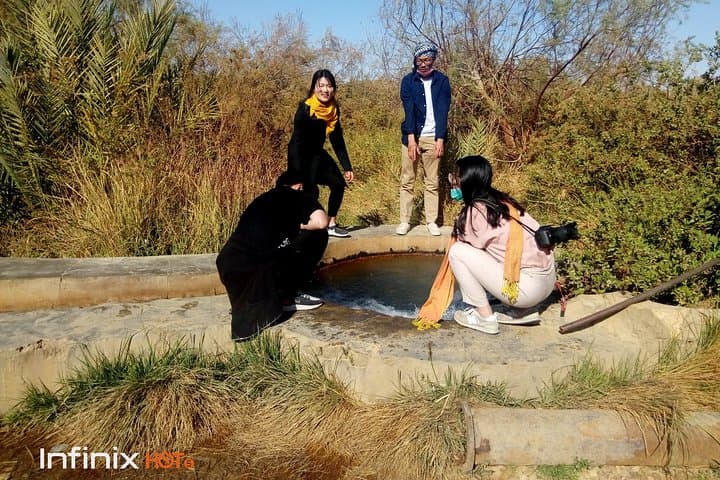
This is a tour that pairs archaeology with everyday country life. Dahshur’s monuments date to the reign of Sneferu (c. 2613–2589 BCE), a period of architectural trial that led directly to the Giza pyramids. Geologically, you move across Pleistocene limestone flats with pockets of windblown sand; the low relief makes for long sightlines to the monuments and the Nile valley to the east. Culturally, the second half of the day shifts to a working village where donkeys amble between mudbrick courtyards, farmers invite you to try olive-pressing or bread-making, and a simple lunch of organic, locally sourced produce is served under a shade canopy.
Practical guidance: plan for roughly 6.5 hours total, with about 2 hours among the pyramids and the balance in the countryside. Morning departures avoid peak heat; bring sturdy closed-toe shoes for uneven stone and village paths, a wide-brim hat, sunscreen, and at least 1.5 liters of water. Respect restricted areas at the archaeological sites, follow your guide’s directions, and carry Egyptian pounds for modest purchases or tips—supporting the village economy is part of the experience. The day balances carved stone and living fields: one moment you’re reading the angles of ancient builders, the next you’re handing grain to a farmer whose rhythms have changed little across centuries.
easy.
6–7 hours.
Suitable for most fitness levels; requires walking on uneven stone and unpaved village paths for short stretches.
The private tour runs about 6.5 hours and includes transport in an air-conditioned vehicle, a guide, lunch, bottled water, and entrance where specified.
The tour is described as suitable for all fitness levels and wheelchair accessible, but some sites and village lanes are uneven—contact the operator to confirm accessibility needs.
This itinerary visits the Bent Pyramid and the Red Pyramid externally; access inside depends on site regulations and is often restricted—follow your guide’s updates on admission.
Bring small change for purchases or tips, a camera, sun protection, comfortable shoes, and a respectful attitude—farm tasks are optional and guided by locals.
Dahshur holds experimental pyramids from Pharaoh Sneferu’s reign; the Bent Pyramid shows a mid-build slope change while the Red Pyramid is the earliest successful smooth-sided pyramid.
The Dahshur zone is archaeologically sensitive—stay on designated paths, avoid climbing on structures, and support local vendors to benefit community conservation efforts.
True Egypt - Day Tours operates guided outdoor trips and adventures with an emphasis on safety, stewardship, and memorable experiences.
A late-morning sun drapes the Sahara-adjacent plain in warm, dry light as your minivan eases off the paved road and into the flat sweep of Dahshur. The Bent Pyramid tilts its mood with an abrupt change in angle, the stonework telling a story of experimentation; the Red Pyramid sits a short drive away, steady and low, the first successful true smooth-sided pyramid daring the desert breeze to displace its stones.
A late-morning sun drapes the Sahara-adjacent plain in warm, dry light as your minivan eases off the paved road and into the flat sweep of Dahshur. The Bent Pyramid tilts its mood with an abrupt change in angle, the stonework telling a story of experimentation; the Red Pyramid sits a short drive away, steady and low, the first successful true smooth-sided pyramid daring the desert breeze to displace its stones.
This is a tour that pairs archaeology with everyday country life. Dahshur’s monuments date to the reign of Sneferu (c. 2613–2589 BCE), a period of architectural trial that led directly to the Giza pyramids. Geologically, you move across Pleistocene limestone flats with pockets of windblown sand; the low relief makes for long sightlines to the monuments and the Nile valley to the east. Culturally, the second half of the day shifts to a working village where donkeys amble between mudbrick courtyards, farmers invite you to try olive-pressing or bread-making, and a simple lunch of organic, locally sourced produce is served under a shade canopy.
Practical guidance: plan for roughly 6.5 hours total, with about 2 hours among the pyramids and the balance in the countryside. Morning departures avoid peak heat; bring sturdy closed-toe shoes for uneven stone and village paths, a wide-brim hat, sunscreen, and at least 1.5 liters of water. Respect restricted areas at the archaeological sites, follow your guide’s directions, and carry Egyptian pounds for modest purchases or tips—supporting the village economy is part of the experience. The day balances carved stone and living fields: one moment you’re reading the angles of ancient builders, the next you’re handing grain to a farmer whose rhythms have changed little across centuries.