THE ADVENTURE COLLECTIVE® · Independent discovery and booking for outdoor travel

Sail the Nile aboard a traditional dahabiya, moving from Luxor’s temples to Aswan’s islands over eight days. This intimate cruise reaches smaller temples and villages larger ships miss, pairing relaxed onboard life with focused archaeological visits.
Sail the Nile aboard a traditional dahabiya, moving from Luxor’s temples to Aswan’s islands over eight days. This intimate cruise reaches smaller temples and villages larger ships miss, pairing relaxed onboard life with focused archaeological visits.
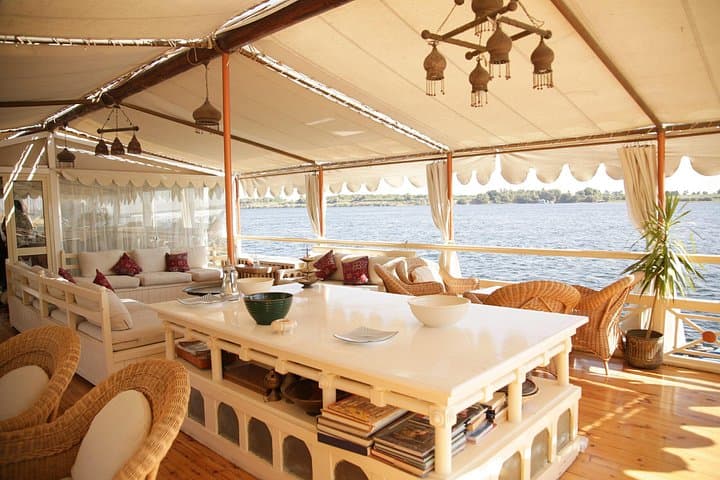
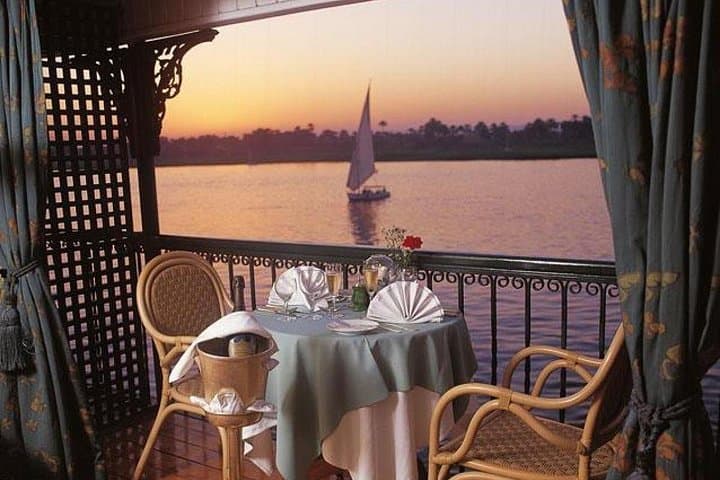
On the sundeck of the Dahabya Saray el Nile the river moves like a slow conversation — reeds brushing past, fishermen gliding in feluccas, desert cliffs sliding into view. Dawn opens on Karnak’s pylons; dusk wraps Philae in amber light. This is a voyage paced by the Nile’s hours, not the clock.
Verified experiences and guided adventures in the surrounding area.
Operated by Saray El-Nile · Luxor, Luxor Governorate
On the sundeck of the Dahabya Saray el Nile the river moves like a slow conversation — reeds brushing past, fishermen gliding in feluccas, desert cliffs sliding into view. Dawn opens on Karnak’s pylons; dusk wraps Philae in amber light. This is a voyage paced by the Nile’s hours, not the clock.
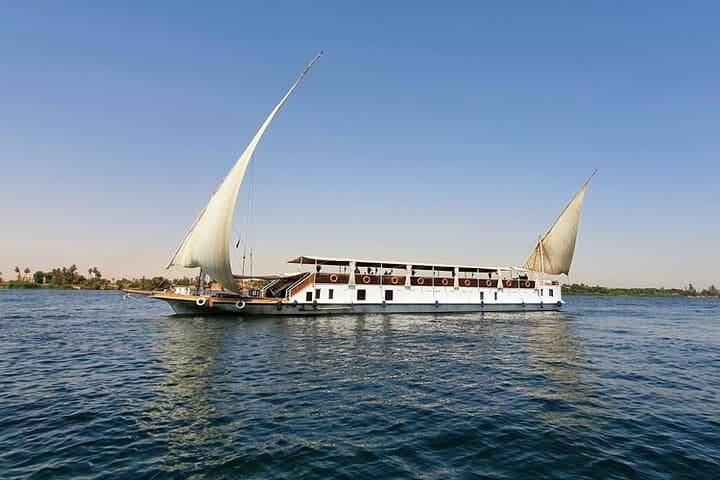
The dahabiya itself is a piece of living history: a traditional two-masted houseboat favored by 19th-century travelers because it could slip into shallow channels and quiet coves. The itinerary threads classical archaeology — Luxor’s Karnak and Valley of the Kings, Edfu’s Temple of Horus, Kom Ombo’s twin sanctuaries, and Aswan’s Philae — with glimpses of modern river life in small villages and the Nubian quarter.
Geology here is straightforward and stark: the river’s fertile floodplain cuts a green ribbon through Paleogene sandstone and Nilotic silt, creating cultivated banks framed by ochre cliffs. Local culture is direct and hospitable; markets and Nubian villages reward slow exploration and respectful curiosity.
Practicalities are simple: expect light motion aboard, short guided walks at sites with uneven stone and steps, and long, sunny afternoons. Carry sun protection, a reusable water bottle, comfortable closed shoes for temple visits, and modest clothing for religious sites. Plan early starts for cooler temperatures and better light at ruins; consider the optional hot-air balloon over Luxor for an aerial view. Bring cash for small purchases and tips; guides and crew make the trip run smoothly. The dahabiya experience is both a relaxed river cruise and a moving archaeological tour — ideal if you want close access to quieter sites and a slower way to read Egypt’s layered landscape.
easy.
8 days.
Suitable for travelers in average fitness — short walks and stair navigation at archaeological sites; minimal sustained exertion required
The itinerary typically embarks in Luxor and disembarks in Aswan, with transfers included by private vehicle as listed.
Yes — all breakfasts, lunches and dinners on board are included, along with an Egyptologist guide for sightseeing.
The cruise is rated easy and suitable for most fitness levels, but temples have uneven ground and steps; assistance for mobility needs should be requested in advance.
Yes — the itinerary offers an optional flight or drive to Abu Simbel from Aswan (additional arrangements may apply).
Dahabiyas were the preferred small craft of 19th-century travelers and archaeologists; this route follows the same river corridor that supported ancient Egyptian civilization.
Many sites restrict touching or climbing on ruins; reduce impact by staying on paths, using local guides, and limiting single-use plastics onboard.
Saray El-Nile operates guided outdoor trips and adventures with an emphasis on safety, stewardship, and memorable experiences.
On the sundeck of the Dahabya Saray el Nile the river moves like a slow conversation — reeds brushing past, fishermen gliding in feluccas, desert cliffs sliding into view. Dawn opens on Karnak’s pylons; dusk wraps Philae in amber light. This is a voyage paced by the Nile’s hours, not the clock.
On the sundeck of the Dahabya Saray el Nile the river moves like a slow conversation — reeds brushing past, fishermen gliding in feluccas, desert cliffs sliding into view. Dawn opens on Karnak’s pylons; dusk wraps Philae in amber light. This is a voyage paced by the Nile’s hours, not the clock.
The dahabiya itself is a piece of living history: a traditional two-masted houseboat favored by 19th-century travelers because it could slip into shallow channels and quiet coves. The itinerary threads classical archaeology — Luxor’s Karnak and Valley of the Kings, Edfu’s Temple of Horus, Kom Ombo’s twin sanctuaries, and Aswan’s Philae — with glimpses of modern river life in small villages and the Nubian quarter.
Geology here is straightforward and stark: the river’s fertile floodplain cuts a green ribbon through Paleogene sandstone and Nilotic silt, creating cultivated banks framed by ochre cliffs. Local culture is direct and hospitable; markets and Nubian villages reward slow exploration and respectful curiosity.
Practicalities are simple: expect light motion aboard, short guided walks at sites with uneven stone and steps, and long, sunny afternoons. Carry sun protection, a reusable water bottle, comfortable closed shoes for temple visits, and modest clothing for religious sites. Plan early starts for cooler temperatures and better light at ruins; consider the optional hot-air balloon over Luxor for an aerial view. Bring cash for small purchases and tips; guides and crew make the trip run smoothly. The dahabiya experience is both a relaxed river cruise and a moving archaeological tour — ideal if you want close access to quieter sites and a slower way to read Egypt’s layered landscape.