THE ADVENTURE COLLECTIVE® · Independent discovery and booking for outdoor travel

Sail the Nile aboard a traditional Dahabiya for two nights between Aswan and Luxor, combining slow river travel with Egyptologist-led tours of Kom Ombo, Edfu and the Valley of the Kings. Expect sun-deck tea, local village visits and shore excursions to iconic temples.
Sail the Nile aboard a traditional Dahabiya for two nights between Aswan and Luxor, combining slow river travel with Egyptologist-led tours of Kom Ombo, Edfu and the Valley of the Kings. Expect sun-deck tea, local village visits and shore excursions to iconic temples.
The sun deck feels like a slow-forward stage: laundry-flapping villages slide past, palm shadows race across the water, and the Dahabiya’s lateen sails kiss the steady current. You wake to river light and the murmur of a captain in his galabeya steering between islands where fishermen and children share the bank.
Verified experiences and guided adventures in the surrounding area.
Operated by Cupid EgypTravel · Aswan, Aswan Governorate
The sun deck feels like a slow-forward stage: laundry-flapping villages slide past, palm shadows race across the water, and the Dahabiya’s lateen sails kiss the steady current. You wake to river light and the murmur of a captain in his galabeya steering between islands where fishermen and children share the bank.
This short Dahabiya passage follows the Nile’s ancient highway. Geologically, the river carves a corridor of sandstone and Nile silts that cradled pharaonic builders; Gebel el-Silsila’s quarry faces and the temple stones at Kom Ombo and Edfu tell that story in layered rock and carved relief. Culturally, Upper Egypt’s Nubian villages still pulse with tea-drinking hospitality and markets where local crafts trade for conversation.
Onboard, an Egyptologist guides temple visits and explains the funerary routes that lead to Luxor’s Valley of the Kings and the mortuary temples of Hatshepsut and Amenhotep. Between guided stops, the Dahabiya’s rhythm is restorative: tea on deck, a sunset barbecue on a sandy spit, and the soft party of local music before sleep.
Practical side: plan for strong sun and sudden wind on deck, bring lightweight but sturdy footwear for uneven temple ramps, and carry small bills for local purchases and tips. Morning walks and temple stairs require basic mobility; transfers are air-conditioned but schedules are set—arrive on time. This short sail is ideal for travelers who want slow travel, big archaeology, and the tactile rhythm of the Nile without a full-week cruise.
easy.
2–3 days.
Suitable for travelers in average physical condition; short walks and stairs at archaeological sites require basic mobility.
Typically cabins, all meals from lunch on day one through breakfast on the final day, an Egyptologist-led program, entry to listed sites, local transfers and onboard activities like a sunset barbecue.
The operator provides door-to-door air‑conditioned transfers from Aswan to the Dahabiya and from Luxor after disembarkation; confirm pickup point and time when booking.
Visits involve uneven surfaces and some stairs; they are manageable for most people but not suitable for travelers who cannot walk short distances or climb steps.
Tipping is customary; carry small local-currency notes for guides, drivers and crew—distribute according to service onshore and onboard.
The Nile corridor between Aswan and Luxor was a pharaonic transport and quarry route; many temples were positioned to control river traffic and access to stone sources like Gebel el-Silsila.
Travelers can reduce impact by avoiding single-use plastics, staying on marked paths at archaeological sites, and supporting local guides and community-run stalls.
Cupid EgypTravel operates guided outdoor trips and adventures with an emphasis on safety, stewardship, and memorable experiences.
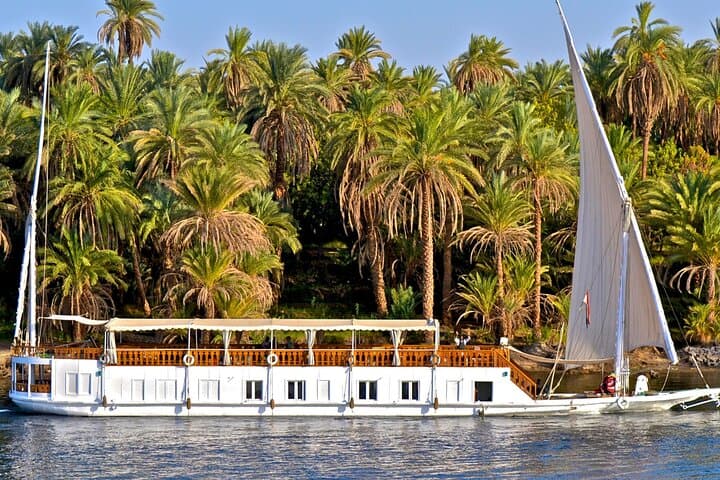
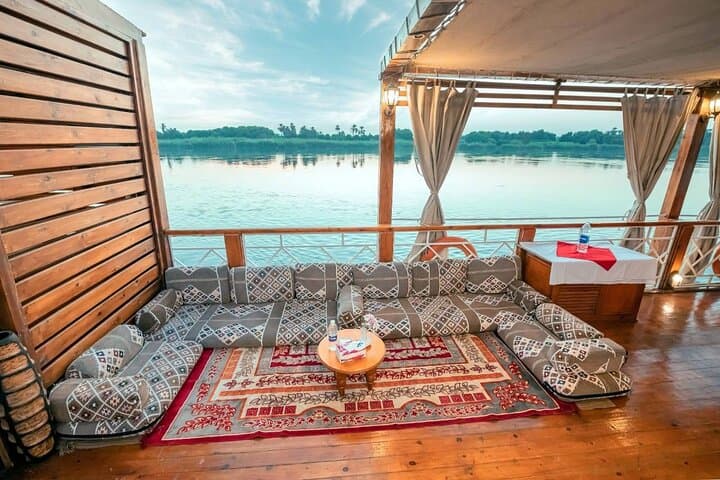
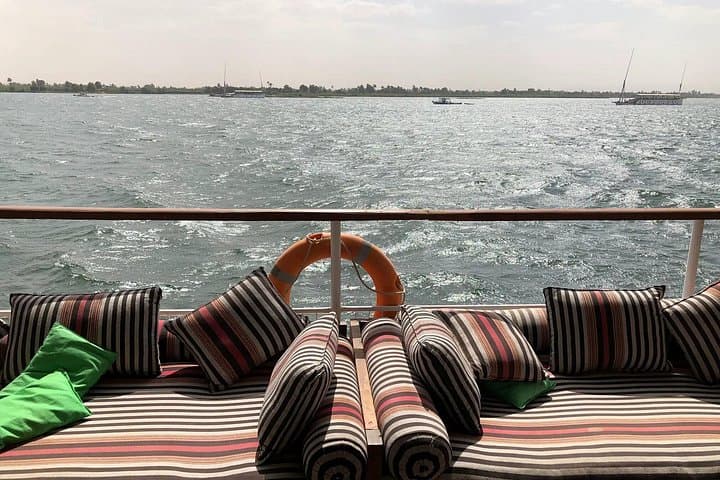
The sun deck feels like a slow-forward stage: laundry-flapping villages slide past, palm shadows race across the water, and the Dahabiya’s lateen sails kiss the steady current. You wake to river light and the murmur of a captain in his galabeya steering between islands where fishermen and children share the bank.
The sun deck feels like a slow-forward stage: laundry-flapping villages slide past, palm shadows race across the water, and the Dahabiya’s lateen sails kiss the steady current. You wake to river light and the murmur of a captain in his galabeya steering between islands where fishermen and children share the bank.
This short Dahabiya passage follows the Nile’s ancient highway. Geologically, the river carves a corridor of sandstone and Nile silts that cradled pharaonic builders; Gebel el-Silsila’s quarry faces and the temple stones at Kom Ombo and Edfu tell that story in layered rock and carved relief. Culturally, Upper Egypt’s Nubian villages still pulse with tea-drinking hospitality and markets where local crafts trade for conversation.
Onboard, an Egyptologist guides temple visits and explains the funerary routes that lead to Luxor’s Valley of the Kings and the mortuary temples of Hatshepsut and Amenhotep. Between guided stops, the Dahabiya’s rhythm is restorative: tea on deck, a sunset barbecue on a sandy spit, and the soft party of local music before sleep.
Practical side: plan for strong sun and sudden wind on deck, bring lightweight but sturdy footwear for uneven temple ramps, and carry small bills for local purchases and tips. Morning walks and temple stairs require basic mobility; transfers are air-conditioned but schedules are set—arrive on time. This short sail is ideal for travelers who want slow travel, big archaeology, and the tactile rhythm of the Nile without a full-week cruise.