THE ADVENTURE COLLECTIVE® · Independent discovery and booking for outdoor travel

A private day trip from Da Nang to the Marble Mountains and Hoi An blends easy hiking among limestone caves and pagodas with guided cultural walks through Hoi An’s preserved merchant quarter. Expect short climbs, artisan workshops, and regional cuisine.
A private day trip from Da Nang to the Marble Mountains and Hoi An blends easy hiking among limestone caves and pagodas with guided cultural walks through Hoi An’s preserved merchant quarter. Expect short climbs, artisan workshops, and regional cuisine.
Step off the hotel shuttle into warm, salt-tinged air and the low hum of Da Nang traffic; within thirty minutes the city gives way to limestone knolls rising like guarded relics above rice paddies. At the Marble Mountains the air cools as stone steps and carved pagodas pull you upward. Caves breathe history and incense; a bell sounds from a 19th-century shrine and the nearby coastline unfurls, a silver band below.
Verified experiences and guided adventures in the surrounding area.
Operated by Authentic HALONG · Da Nang, Da Nang
Step off the hotel shuttle into warm, salt-tinged air and the low hum of Da Nang traffic; within thirty minutes the city gives way to limestone knolls rising like guarded relics above rice paddies. At the Marble Mountains the air cools as stone steps and carved pagodas pull you upward. Caves breathe history and incense; a bell sounds from a 19th-century shrine and the nearby coastline unfurls, a silver band below.
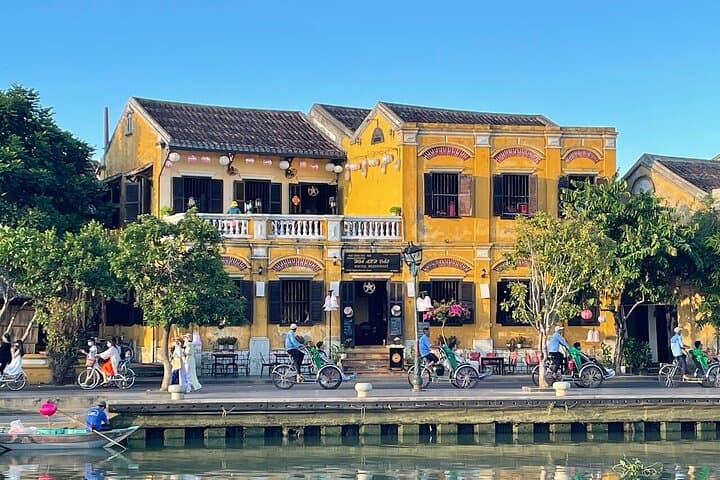
These five limestone peaks are the result of Miocene marine deposits pushed up by tectonic forces and sculpted by monsoon rains. Over centuries the mountains became a place of worship and stonework—local artisans still carve marble here, a craft visible in small workshops at the base. The short transfer to Hoi An moves you from geology to human geography: a port city once central to Indo-Pacific trade, its wooden merchant houses and the 400-year-old Japanese Bridge map a multicultural past.
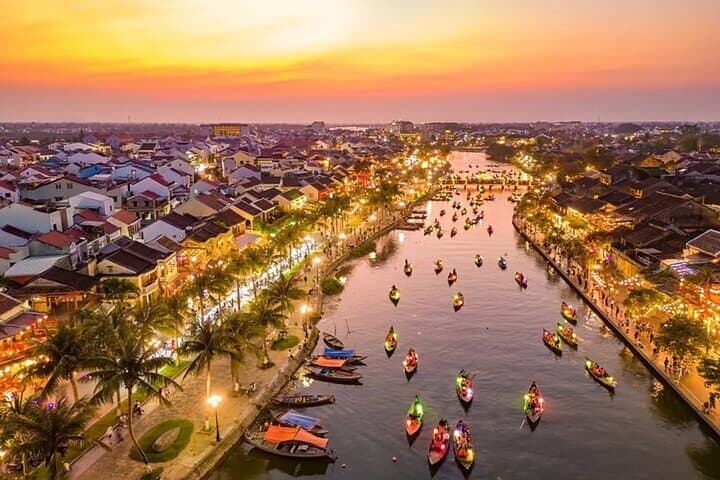
Expect easy walking across mostly flat streets in Hoi An and short climbs and stairways at Marble Mountains; some cave interiors are dim and uneven. Lunch highlights regional specialties—cao lầu or mì quảng—served in compact family eateries. As evening falls, lantern-lit canals draw photographers and those who prefer a quieter pace.
Practical notes: bring sturdy shoes for steps, a refillable water bottle, sun protection, and a small daypack. Aim for early morning to avoid midday heat and peak crowds at the peaks and temple entrances. Guides handle tickets and logistics; you can focus on the views, the stone-smiths, and the slow, local rhythms of central Vietnam.
easy.
6 hours.
Low to moderate fitness; ability to climb short flights of stairs and walk on uneven ground.
Yes—pickup and drop-off in Da Nang hotels are included as part of the private tour.
Yes—there is an elevator at one site, but expect several stairs to reach caves and pagodas where the elevator doesn’t go.
Entrance fees to the Marble Mountains sites are included; some additional small fees in Hoi An (museums) may not be covered—your guide will advise.
Lunch features local dishes; inform the operator of allergies or preferences when booking and your guide can arrange alternatives.
Hoi An was a key trading port from the 15th–19th centuries; Japanese and Chinese communities left distinct architectural marks, including the covered Japanese Bridge.
Local guides encourage staying on marked paths to protect cave formations; support artisan workshops that source local stone responsibly.
Authentic HALONG operates guided outdoor trips and adventures with an emphasis on safety, stewardship, and memorable experiences.
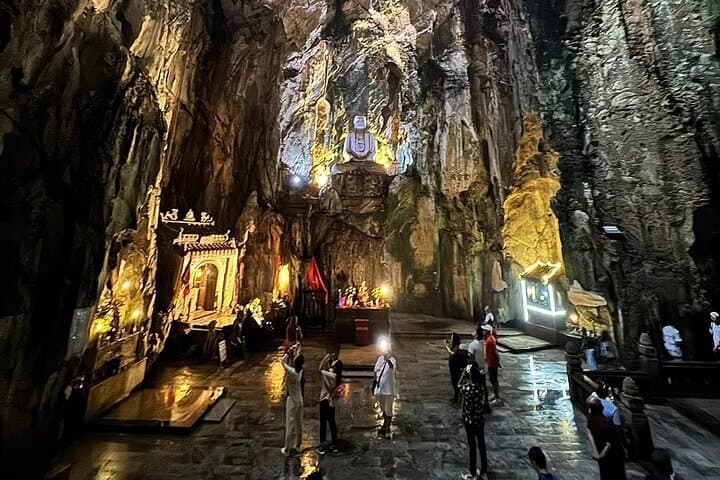

Step off the hotel shuttle into warm, salt-tinged air and the low hum of Da Nang traffic; within thirty minutes the city gives way to limestone knolls rising like guarded relics above rice paddies. At the Marble Mountains the air cools as stone steps and carved pagodas pull you upward. Caves breathe history and incense; a bell sounds from a 19th-century shrine and the nearby coastline unfurls, a silver band below.
Step off the hotel shuttle into warm, salt-tinged air and the low hum of Da Nang traffic; within thirty minutes the city gives way to limestone knolls rising like guarded relics above rice paddies. At the Marble Mountains the air cools as stone steps and carved pagodas pull you upward. Caves breathe history and incense; a bell sounds from a 19th-century shrine and the nearby coastline unfurls, a silver band below.
These five limestone peaks are the result of Miocene marine deposits pushed up by tectonic forces and sculpted by monsoon rains. Over centuries the mountains became a place of worship and stonework—local artisans still carve marble here, a craft visible in small workshops at the base. The short transfer to Hoi An moves you from geology to human geography: a port city once central to Indo-Pacific trade, its wooden merchant houses and the 400-year-old Japanese Bridge map a multicultural past.
Expect easy walking across mostly flat streets in Hoi An and short climbs and stairways at Marble Mountains; some cave interiors are dim and uneven. Lunch highlights regional specialties—cao lầu or mì quảng—served in compact family eateries. As evening falls, lantern-lit canals draw photographers and those who prefer a quieter pace.
Practical notes: bring sturdy shoes for steps, a refillable water bottle, sun protection, and a small daypack. Aim for early morning to avoid midday heat and peak crowds at the peaks and temple entrances. Guides handle tickets and logistics; you can focus on the views, the stone-smiths, and the slow, local rhythms of central Vietnam.