THE ADVENTURE COLLECTIVE® · Independent discovery and booking for outdoor travel

Spend an afternoon moving from Son Trà’s coastal lookout through the Marble Mountains’ caves and end beneath Hội An’s lantern-lit bridges. This full-day tour pairs geology, local food and illuminated riverside streets—perfect for travelers who want nature and history within one easy loop.
Spend an afternoon moving from Son Trà’s coastal lookout through the Marble Mountains’ caves and end beneath Hội An’s lantern-lit bridges. This full-day tour pairs geology, local food and illuminated riverside streets—perfect for travelers who want nature and history within one easy loop.
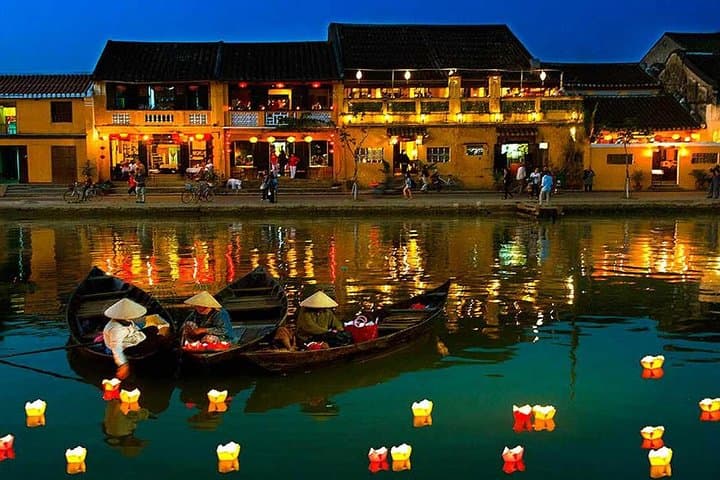
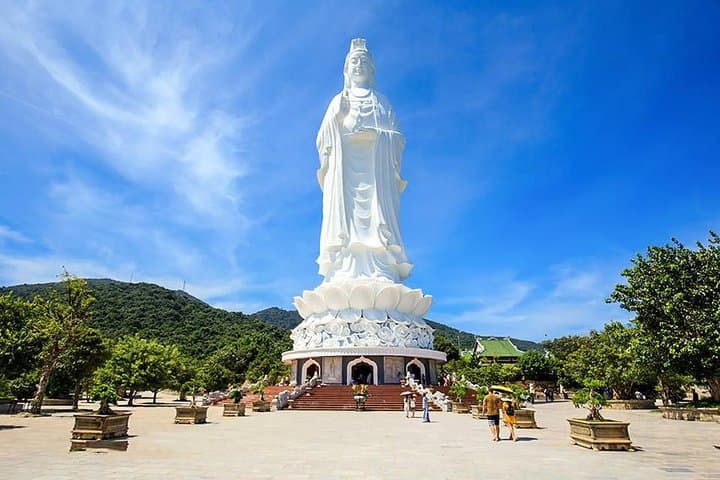
The road climbs Son Trà Peninsula and the air cools; the Lady Buddha statue watches the city and the East Sea like a quiet guardian, while the surf below dares you to look over the cliff. On this afternoon-to-night loop you move from coastal viewpoint to cave passage, then into Hội An’s lantern-lit lanes where the river pushes a ribbon of reflections under the Japanese Covered Bridge.
Verified experiences and guided adventures in the surrounding area.
Operated by longtravel-hoian · Da Nang, Da Nang
The road climbs Son Trà Peninsula and the air cools; the Lady Buddha statue watches the city and the East Sea like a quiet guardian, while the surf below dares you to look over the cliff. On this afternoon-to-night loop you move from coastal viewpoint to cave passage, then into Hội An’s lantern-lit lanes where the river pushes a ribbon of reflections under the Japanese Covered Bridge.
Geology and history thread the route: Son Trà’s volcanic ridges and forested slopes host orchids and red-shanked douc macaques, while Marble Mountains are carved from limestone and marble with caves used as temples and wartime shelters. Hội An’s port history appears in wooden shophouses and Chinese assembly halls—architecture shaped by trade with Japan, China and Europe.
Expect a mix of paved lookout roads, stepped temple approaches and uneven cave paths; the night portion is primarily flat, pedestrian streets. Meals center on central Vietnam flavors—cao lầu noodles and wonton soup—served in compact family-run restaurants beside the water.
Practical edge: wear sturdy walking shoes for stairs and cave footing, carry a light rain layer (afternoon storms in summer are common), and bring cash for small vendors and entrance fees. Time your visit so you arrive at Son Trà before golden hour and save Hoi An for after dark to see the lanterns. Hydrate between stops; some viewpoints have limited shade. The route is accessible for most fitness levels but includes short climbs and stair sections—move at a steady pace and you’ll finish with a mix of coastal panorama, carved stone, and glowing river streets.
easy.
7–9 hours.
Suitable for most travelers who can manage short climbs, stairs, and 2–3 hours of walking with breaks
Yes—this tour includes air-conditioned vehicle transport with pickup and return to central Da Nang hotels; confirm your pickup point when booking.
Entrance fees to the listed attractions and dinner are included as stated in the tour inclusions, but small personal purchases are not.
The tour involves moderate walking with staircases at temples and inside Marble Mountains; comfortable footwear is recommended.
Yes—infants are allowed but must sit on an adult’s lap; child seats may be available on request.
Hội An grew as a trading port from the 15th century onward; its architecture reflects centuries of foreign and local influences. Marble Mountains have long been a pilgrimage and craft center, with stone-cutting traditions in Non Nuoc village.
Son Trà’s forest is part of a protected peninsula; visitors should avoid feeding wildlife and stick to paths to reduce erosion and disturbance.
longtravel-hoian operates guided outdoor trips and adventures with an emphasis on safety, stewardship, and memorable experiences.
The road climbs Son Trà Peninsula and the air cools; the Lady Buddha statue watches the city and the East Sea like a quiet guardian, while the surf below dares you to look over the cliff. On this afternoon-to-night loop you move from coastal viewpoint to cave passage, then into Hội An’s lantern-lit lanes where the river pushes a ribbon of reflections under the Japanese Covered Bridge.
The road climbs Son Trà Peninsula and the air cools; the Lady Buddha statue watches the city and the East Sea like a quiet guardian, while the surf below dares you to look over the cliff. On this afternoon-to-night loop you move from coastal viewpoint to cave passage, then into Hội An’s lantern-lit lanes where the river pushes a ribbon of reflections under the Japanese Covered Bridge.
Geology and history thread the route: Son Trà’s volcanic ridges and forested slopes host orchids and red-shanked douc macaques, while Marble Mountains are carved from limestone and marble with caves used as temples and wartime shelters. Hội An’s port history appears in wooden shophouses and Chinese assembly halls—architecture shaped by trade with Japan, China and Europe.
Expect a mix of paved lookout roads, stepped temple approaches and uneven cave paths; the night portion is primarily flat, pedestrian streets. Meals center on central Vietnam flavors—cao lầu noodles and wonton soup—served in compact family-run restaurants beside the water.
Practical edge: wear sturdy walking shoes for stairs and cave footing, carry a light rain layer (afternoon storms in summer are common), and bring cash for small vendors and entrance fees. Time your visit so you arrive at Son Trà before golden hour and save Hoi An for after dark to see the lanterns. Hydrate between stops; some viewpoints have limited shade. The route is accessible for most fitness levels but includes short climbs and stair sections—move at a steady pace and you’ll finish with a mix of coastal panorama, carved stone, and glowing river streets.