THE ADVENTURE COLLECTIVE® · Independent discovery and booking for outdoor travel

Explore Da Nang’s limestone Marble Mountains, the Cham Museum’s ancient sculptures, and the towering Lady Buddha on a focused half-day tour from Hoi An. Expect caves, coastal views and a compact mix of geology, history and living culture.
Explore Da Nang’s limestone Marble Mountains, the Cham Museum’s ancient sculptures, and the towering Lady Buddha on a focused half-day tour from Hoi An. Expect caves, coastal views and a compact mix of geology, history and living culture.
You step off the van and the air shifts — salty Gulf wind from My Khe, limestone rising ahead like the ribs of an old reef pushed skyward. The Marble Mountains dominate the first hour: five jagged karst outcrops threaded with narrow steps, cave shrines and carved stone stairways that demand a steady pace and an attentive eye. Light slices through the caves; incense smoke drifts from small altars where locals leave offerings.
Verified experiences and guided adventures in the surrounding area.
Operated by TripGuru · Da Nang, Da Nang
You step off the van and the air shifts — salty Gulf wind from My Khe, limestone rising ahead like the ribs of an old reef pushed skyward. The Marble Mountains dominate the first hour: five jagged karst outcrops threaded with narrow steps, cave shrines and carved stone stairways that demand a steady pace and an attentive eye. Light slices through the caves; incense smoke drifts from small altars where locals leave offerings.
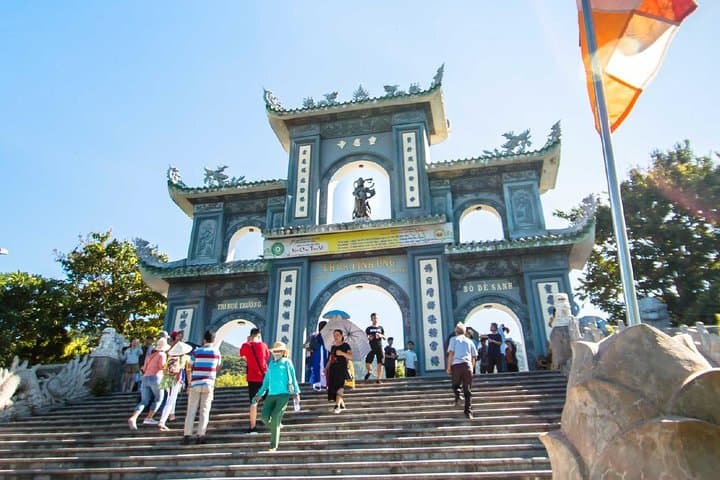
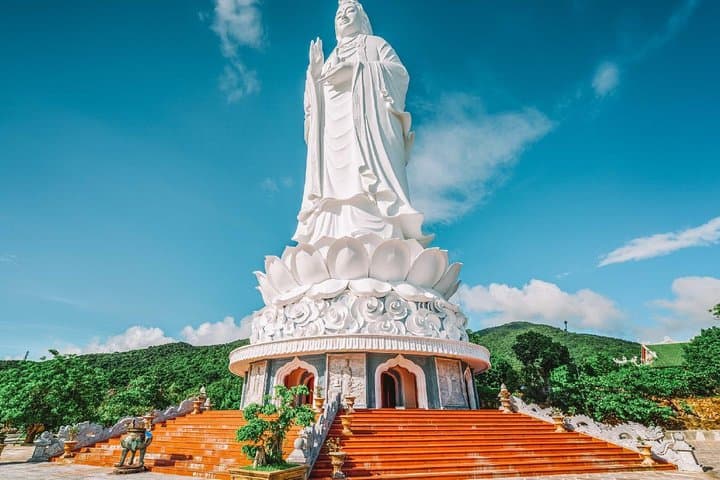
This half-day route moves from natural architecture to crafted history. The Cham Museum in central Da Nang houses sandstone sculptures from a civilisation that flourished between the 3rd and 15th centuries; its pieces explain the Hindu-influenced iconography you’ll see etched into temple niches. On the Son Tra headland, Linh Ung Pagoda and the 67m Lady Buddha watch the sea — a modern landmark built to guard fishing communities and welcome pilgrims.
Geology here is immediate: porous limestone formed from ancient reefs, hollowed by monsoon rains into caverns that now host shrines. Culture and commerce meet at Non Nuoc village, where stone carvers still work the same marble quarried from these hills.
Practicalities: plan 4–5 hours, bring sun protection and comfortable shoes for uneven steps, and allow time for photography and short walks between highlights. Entrance fees are modest; an English-speaking guide and air-conditioned transport are usually included. Go early in the day to avoid heat and crowds, and leave no trace in the caves and temples — these places are active worship sites and delicate geological features.
easy.
4–5 hours.
Suitable for most fitness levels; participants should be comfortable climbing short flights of stairs and walking on uneven ground.
Yes — pick-up and drop-off from Hoi An are commonly included; confirm your pickup point when booking.
Entrance fees for Marble Mountains and the Cham Museum are typically not included but are modest (VND 40,000–60,000); check the tour inclusions to confirm.
The tour is rated easy and suitable for most ages, but Marble Mountains involve stairs and some uneven paths that may be challenging for very young children or those with mobility issues.
Allow extra time at Marble Mountains and Linh Ung Pagoda for photography and short walks — plan 60 minutes per major stop to move at a relaxed pace.
The Cham Museum preserves sculptures from the Champa kingdom, a Hindu-influenced civilization that ruled central Vietnam from the 3rd to the 15th century; Marble Mountains supplied stone and shelter for local communities for centuries.
Visitors should avoid touching carvings and cave formations, carry out litter, and not feed wildlife; coastal development and erosion make responsible tourism important here.
TripGuru operates guided outdoor trips and adventures with an emphasis on safety, stewardship, and memorable experiences.


You step off the van and the air shifts — salty Gulf wind from My Khe, limestone rising ahead like the ribs of an old reef pushed skyward. The Marble Mountains dominate the first hour: five jagged karst outcrops threaded with narrow steps, cave shrines and carved stone stairways that demand a steady pace and an attentive eye. Light slices through the caves; incense smoke drifts from small altars where locals leave offerings.
You step off the van and the air shifts — salty Gulf wind from My Khe, limestone rising ahead like the ribs of an old reef pushed skyward. The Marble Mountains dominate the first hour: five jagged karst outcrops threaded with narrow steps, cave shrines and carved stone stairways that demand a steady pace and an attentive eye. Light slices through the caves; incense smoke drifts from small altars where locals leave offerings.
This half-day route moves from natural architecture to crafted history. The Cham Museum in central Da Nang houses sandstone sculptures from a civilisation that flourished between the 3rd and 15th centuries; its pieces explain the Hindu-influenced iconography you’ll see etched into temple niches. On the Son Tra headland, Linh Ung Pagoda and the 67m Lady Buddha watch the sea — a modern landmark built to guard fishing communities and welcome pilgrims.
Geology here is immediate: porous limestone formed from ancient reefs, hollowed by monsoon rains into caverns that now host shrines. Culture and commerce meet at Non Nuoc village, where stone carvers still work the same marble quarried from these hills.
Practicalities: plan 4–5 hours, bring sun protection and comfortable shoes for uneven steps, and allow time for photography and short walks between highlights. Entrance fees are modest; an English-speaking guide and air-conditioned transport are usually included. Go early in the day to avoid heat and crowds, and leave no trace in the caves and temples — these places are active worship sites and delicate geological features.