THE ADVENTURE COLLECTIVE® · Independent discovery and booking for outdoor travel

A modern museum in Da Nang blends AR and artifact to tell Central Vietnam’s story across three floors. Expect interactive screens, Cham sculpture, wartime relics, and river views—plan for an hour to two and consider the optional AI audio guide.
A modern museum in Da Nang blends AR and artifact to tell Central Vietnam’s story across three floors. Expect interactive screens, Cham sculpture, wartime relics, and river views—plan for an hour to two and consider the optional AI audio guide.
Step through the museum doors and the city softens into a series of focused rooms: light skimmed across glass cases, motion-activated displays that nudge your curiosity, and the Han River outside that seems to hurry past the windows as if telling its own story.
Verified experiences and guided adventures in the surrounding area.
Operated by Vietnam TravelMART · Da Nang, Da Nang
Step through the museum doors and the city softens into a series of focused rooms: light skimmed across glass cases, motion-activated displays that nudge your curiosity, and the Han River outside that seems to hurry past the windows as if telling its own story.
The Da Nang Museum arranges Central Vietnam’s past across three themed floors — ancient Cham sculpture and ritual objects, colonial-era photographs and everyday artifacts, and wartime to modern independence relics. Geology and trade surface in the displays: stone-carved heads and ceramics that point to coastal trade routes and the geological sources of raw materials. The building’s clean lines and multimedia layers make interpretation as much a part of the visit as the objects themselves.
Locals use the museum as both classroom and lookout; photographers favor the river-facing galleries in late afternoon light. The optional AI-powered audio guide clarifies difficult context and gives quieter artifacts a narrative voice.
Practical guidance: allow 60–120 minutes, arrive early to avoid mid-day crowds, and bring a charged phone or the included device for AR zones. Mobility access is excellent; strollers are accepted and most surfaces are wheelchair-friendly. Photography of non-sensitive pieces is generally allowed without flash; ask staff before using tripods. Combine a visit with a riverside walk or the nearby Han Market to round out a half-day of urban exploration.
This visit rewards curiosity: bring time, comfortable shoes, and a readiness to let screens and stones alternate as storytellers.
easy.
1–2 hours.
Suitable for visitors of all fitness levels; mostly indoor walking on level surfaces
Most visitors spend 60–120 minutes exploring the three floors, depending on use of the audio guide and AR zones.
Yes—entrances, galleries, and surfaces are wheelchair and stroller-friendly; elevators serve all exhibition levels.
Non-flash photography is generally permitted for personal use; always check signage or ask staff about specific exhibits.
Yes—mobile or printed tickets accepted; skip-the-line access is typically honored at reception with this ticket type.
The collection spans ancient Cham civilization artifacts through colonial-era records and wartime relics, highlighting Da Nang’s role as a coastal trade and military hub.
The museum uses controlled lighting and climate systems to protect sensitive artifacts; visitors help by avoiding flash photography and following exhibit rules.
Vietnam TravelMART operates guided outdoor trips and adventures with an emphasis on safety, stewardship, and memorable experiences.
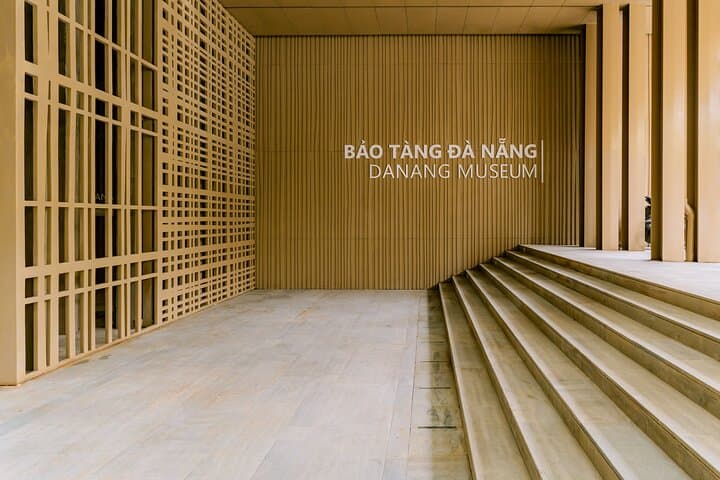
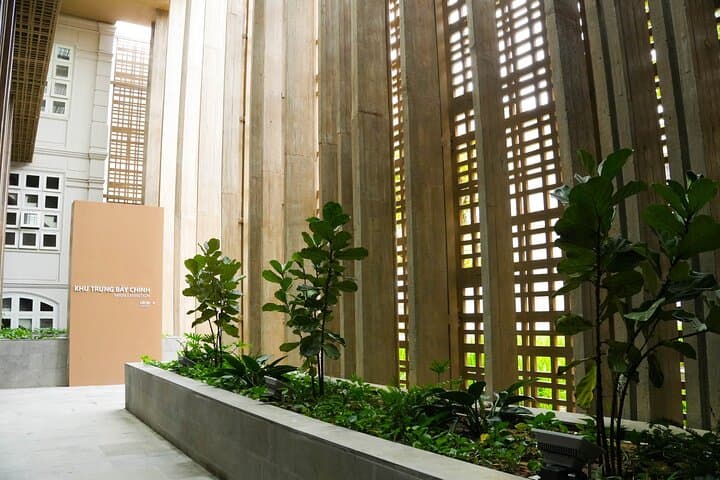

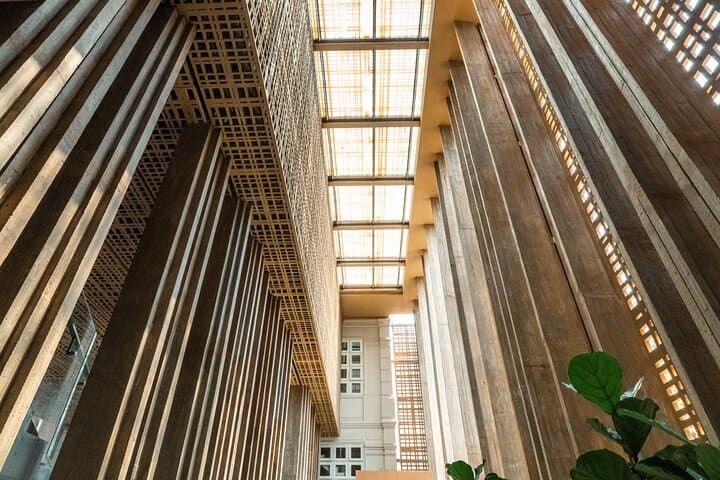
Step through the museum doors and the city softens into a series of focused rooms: light skimmed across glass cases, motion-activated displays that nudge your curiosity, and the Han River outside that seems to hurry past the windows as if telling its own story.
Step through the museum doors and the city softens into a series of focused rooms: light skimmed across glass cases, motion-activated displays that nudge your curiosity, and the Han River outside that seems to hurry past the windows as if telling its own story.
The Da Nang Museum arranges Central Vietnam’s past across three themed floors — ancient Cham sculpture and ritual objects, colonial-era photographs and everyday artifacts, and wartime to modern independence relics. Geology and trade surface in the displays: stone-carved heads and ceramics that point to coastal trade routes and the geological sources of raw materials. The building’s clean lines and multimedia layers make interpretation as much a part of the visit as the objects themselves.
Locals use the museum as both classroom and lookout; photographers favor the river-facing galleries in late afternoon light. The optional AI-powered audio guide clarifies difficult context and gives quieter artifacts a narrative voice.
Practical guidance: allow 60–120 minutes, arrive early to avoid mid-day crowds, and bring a charged phone or the included device for AR zones. Mobility access is excellent; strollers are accepted and most surfaces are wheelchair-friendly. Photography of non-sensitive pieces is generally allowed without flash; ask staff before using tripods. Combine a visit with a riverside walk or the nearby Han Market to round out a half-day of urban exploration.
This visit rewards curiosity: bring time, comfortable shoes, and a readiness to let screens and stones alternate as storytellers.