THE ADVENTURE COLLECTIVE® · Independent discovery and booking for outdoor travel

Spend a day from Da Nang exploring Son Tra’s Lady Buddha, the limestone caves and craft workshops of the Marble Mountains, and the lantern-lit streets of Hoi An. This practical guide covers what to expect, local history, and how to prepare for a long but easy-paced cultural-nature loop.
Spend a day from Da Nang exploring Son Tra’s Lady Buddha, the limestone caves and craft workshops of the Marble Mountains, and the lantern-lit streets of Hoi An. This practical guide covers what to expect, local history, and how to prepare for a long but easy-paced cultural-nature loop.
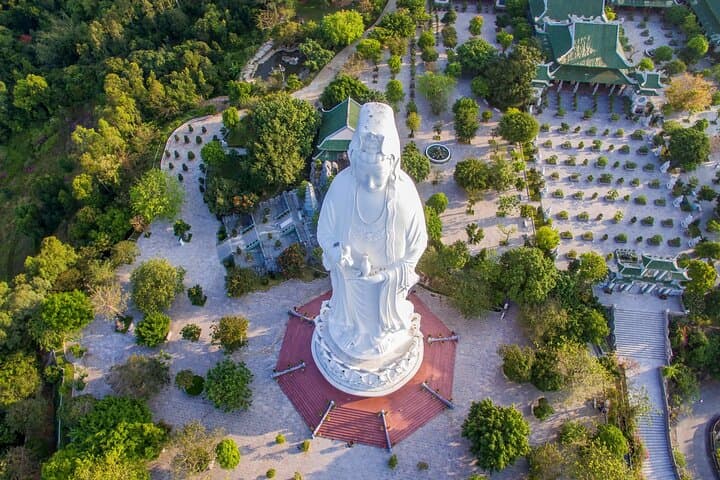
You step out of the van as the sea wind pushes a spray of salt into the air and the Lady Buddha watches over a curved coastline — Son Tra’s slopes feel alive, the trees tugging at your sleeves as if to point the way.
Verified experiences and guided adventures in the surrounding area.
Operated by Authentic Travel HOI AN · Da Nang, Da Nang
You step out of the van as the sea wind pushes a spray of salt into the air and the Lady Buddha watches over a curved coastline — Son Tra’s slopes feel alive, the trees tugging at your sleeves as if to point the way.
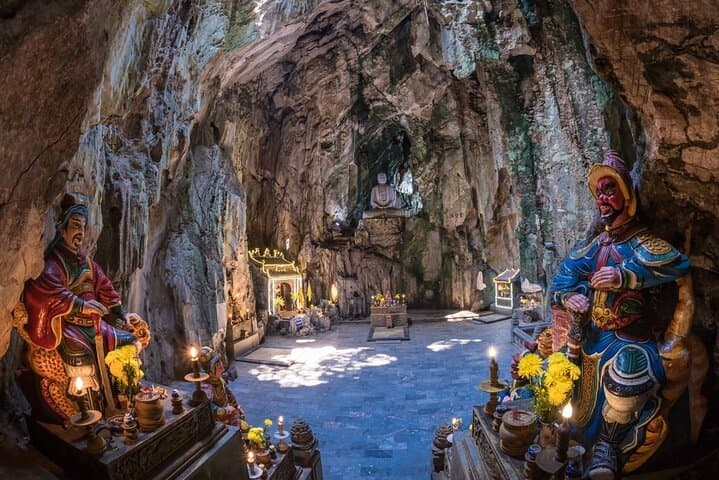
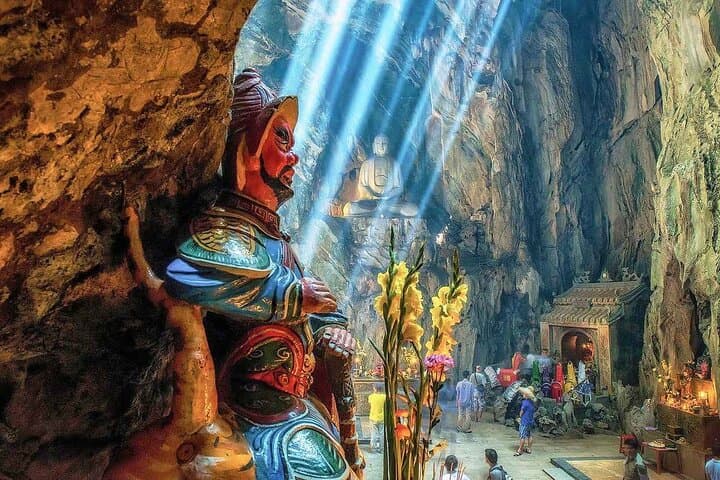
The day moves from high viewpoint to hidden cave: Linh Ứng Pagoda and the 67–70m Lady Buddha command the skyline of Monkey Mountain, then the Marble Mountains’ limestone domes reveal Tàng Chơn cave, stairwells and carved shrines born of Cham-era and later Buddhist practice. Hoi An arrives at dusk — lanterns float on the Hoài River and the Japanese Covered Bridge takes on an amber glow.
Geology here is sharp: rowed karst outcrops worn into caverns and steps, the same stone that fuels Non Nuoc’s artisan workshops. Hoi An's port history (15th–19th centuries) explains its layered architecture and culinary mix — Cao Lầu and thịt heo specialties reflect Chinese, Japanese and Vietnamese influences.
Practical edge: the tour is long but low-impact — expect stairs, short cave climbs, and cobbled streets in Hoi An. Wear grippy shoes for temple steps and bring a small light for dim cave passages. Plan for 7–8 hours including hotel pickup; carry local currency for market stalls and tips. Timing matters: afternoon light on Son Tra and after-dark lanterns in Hoi An offer the best photos. Respect temple etiquette (shoulders and knees covered) and skip souvenirs made from coral or endangered wildlife. The route stitches nature, craft and plate into a single, accessible day — rigorous fitness isn’t required, but a steady pace and a curious appetite will get the most from it.
easy.
7–8 hours.
Suitable for most fitness levels; expect moderate walking, stair climbs and short uphill sections.
Yes — shared tours typically include hotel pickup and drop-off within central Da Nang; confirm your pickup point at booking.
According to the itinerary, entrance fees and a dinner in Hoi An are included, but check the booking page for any changes.
The tour is rated easy but involves stairs and some walking; children and seniors should be able to climb short stair sections and manage longer days.
Yes — the operator notes they can handle vegetarian and other common dietary needs if informed in advance.
Hoi An flourished as an international trading port from the 15th to 19th centuries; the Marble Mountains contain Buddhist shrines and caves used since Cham times.
Visitors should avoid buying coral or wildlife products and stick to marked trails to reduce erosion; support local craftspeople by buying from licensed workshops.
Authentic Travel HOI AN operates guided outdoor trips and adventures with an emphasis on safety, stewardship, and memorable experiences.
You step out of the van as the sea wind pushes a spray of salt into the air and the Lady Buddha watches over a curved coastline — Son Tra’s slopes feel alive, the trees tugging at your sleeves as if to point the way.
You step out of the van as the sea wind pushes a spray of salt into the air and the Lady Buddha watches over a curved coastline — Son Tra’s slopes feel alive, the trees tugging at your sleeves as if to point the way.
The day moves from high viewpoint to hidden cave: Linh Ứng Pagoda and the 67–70m Lady Buddha command the skyline of Monkey Mountain, then the Marble Mountains’ limestone domes reveal Tàng Chơn cave, stairwells and carved shrines born of Cham-era and later Buddhist practice. Hoi An arrives at dusk — lanterns float on the Hoài River and the Japanese Covered Bridge takes on an amber glow.
Geology here is sharp: rowed karst outcrops worn into caverns and steps, the same stone that fuels Non Nuoc’s artisan workshops. Hoi An's port history (15th–19th centuries) explains its layered architecture and culinary mix — Cao Lầu and thịt heo specialties reflect Chinese, Japanese and Vietnamese influences.
Practical edge: the tour is long but low-impact — expect stairs, short cave climbs, and cobbled streets in Hoi An. Wear grippy shoes for temple steps and bring a small light for dim cave passages. Plan for 7–8 hours including hotel pickup; carry local currency for market stalls and tips. Timing matters: afternoon light on Son Tra and after-dark lanterns in Hoi An offer the best photos. Respect temple etiquette (shoulders and knees covered) and skip souvenirs made from coral or endangered wildlife. The route stitches nature, craft and plate into a single, accessible day — rigorous fitness isn’t required, but a steady pace and a curious appetite will get the most from it.