THE ADVENTURE COLLECTIVE® · Independent discovery and booking for outdoor travel

Experience coastal viewpoints, limestone caves, and lantern-lit Hoi An in a single six-hour loop from Da Nang. This guided tour pairs easy walks and short drives with cultural stops—ideal for travelers who want a compact feel for central Vietnam’s landscapes and heritage.
Experience coastal viewpoints, limestone caves, and lantern-lit Hoi An in a single six-hour loop from Da Nang. This guided tour pairs easy walks and short drives with cultural stops—ideal for travelers who want a compact feel for central Vietnam’s landscapes and heritage.
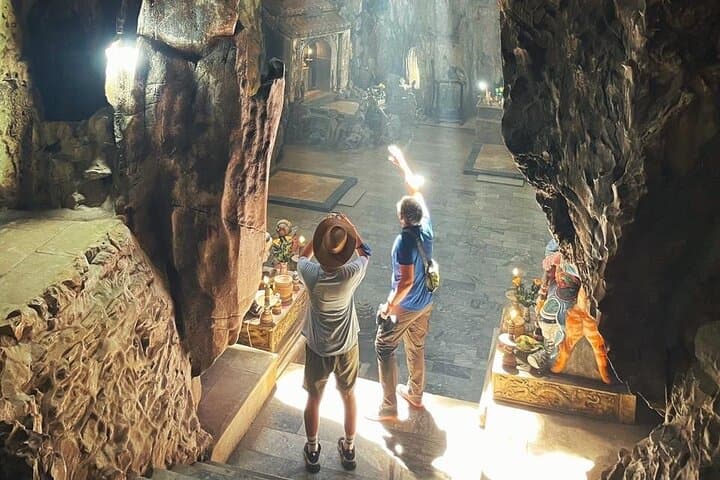
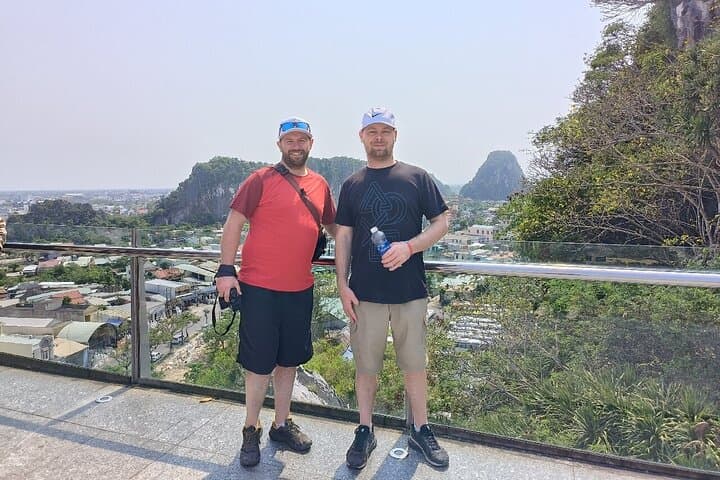
A salt-bright wind meets the steps at Linh Ung Pagoda as the Lady Buddha watches the South China Sea; the figure’s white silhouette frames a coastal panorama that dares you to look farther. From that high ridge the tour drops into the clefted limestone of the Marble Mountains—short flights of stairs, shaded grottos, and carved pagodas tucked into caverns—before the day thins into the lantern-lit lanes of Hoi An.
Verified experiences and guided adventures in the surrounding area.
Operated by Authentuc PU LUONG · Da Nang, Da Nang
A salt-bright wind meets the steps at Linh Ung Pagoda as the Lady Buddha watches the South China Sea; the figure’s white silhouette frames a coastal panorama that dares you to look farther. From that high ridge the tour drops into the clefted limestone of the Marble Mountains—short flights of stairs, shaded grottos, and carved pagodas tucked into caverns—before the day thins into the lantern-lit lanes of Hoi An.
The Marble Mountains (Ngũ Hành Sơn) are a cluster of limestone hills named for the five classical elements; their caves have sheltered Buddhist shrines for centuries and today house skilled stone workshops where artisans carve marble into altars and statues. Hoi An, once a busy trading port between the 15th and 19th centuries, is now a UNESCO-protected urban fabric—narrow wooden houses, the Japanese Covered Bridge, and the Hoài River that runs like a slow conversation through the town.
Expect a largely easy day that mixes short walks and stair climbs with multiple short drives: Son Tra’s Linh Ung sits roughly 10 km from central Da Nang, Marble Mountains about 9 km south, and Hoi An around 30 km down the coast. Practical notes: wear grippy shoes for uneven stone steps, carry sun protection and a refillable bottle, and bring a light layer for seaside breezes. Evening in Hoi An is for slow walking—lanterns, river reflections, and regional dishes like cao lầu. The route is heavily visited but rewards visitors who move deliberately: pause in a cave shrine, watch a craftsman polish marble, then let the river lights slow the pace.
easy.
6 hours.
Light activity—suitable for most fitness levels; expect short stair climbs and walking on uneven surfaces.
The tour lasts about six hours and typically includes hotel pickup, transportation, entrance fees, an English-speaking guide, a set meal, and bottled water as listed in the itinerary.
The tour includes stairs and uneven cave paths, so it is not wheelchair accessible; people with limited mobility may find some sites difficult to navigate.
Photography is generally allowed at outdoor sites and many temple areas—be respectful inside active shrines and follow guidance on restricted areas.
Yes; the itinerary includes Hoi An by night with time in the lantern-lit Old Town and a dinner featuring local specialties before returning to Da Nang.
Hoi An served as a major international trading port from the 15th to 19th centuries; the Marble Mountains have long been a religious and craft center, named for the five elements of Ngũ Hành Sơn.
Son Tra Peninsula is a protected area with sensitive habitats—keep to paths and avoid feeding wildlife; Hoi An manages visitor flow to protect its wooden architecture, so support local conservation-minded businesses.
Authentuc PU LUONG operates guided outdoor trips and adventures with an emphasis on safety, stewardship, and memorable experiences.


A salt-bright wind meets the steps at Linh Ung Pagoda as the Lady Buddha watches the South China Sea; the figure’s white silhouette frames a coastal panorama that dares you to look farther. From that high ridge the tour drops into the clefted limestone of the Marble Mountains—short flights of stairs, shaded grottos, and carved pagodas tucked into caverns—before the day thins into the lantern-lit lanes of Hoi An.
A salt-bright wind meets the steps at Linh Ung Pagoda as the Lady Buddha watches the South China Sea; the figure’s white silhouette frames a coastal panorama that dares you to look farther. From that high ridge the tour drops into the clefted limestone of the Marble Mountains—short flights of stairs, shaded grottos, and carved pagodas tucked into caverns—before the day thins into the lantern-lit lanes of Hoi An.
The Marble Mountains (Ngũ Hành Sơn) are a cluster of limestone hills named for the five classical elements; their caves have sheltered Buddhist shrines for centuries and today house skilled stone workshops where artisans carve marble into altars and statues. Hoi An, once a busy trading port between the 15th and 19th centuries, is now a UNESCO-protected urban fabric—narrow wooden houses, the Japanese Covered Bridge, and the Hoài River that runs like a slow conversation through the town.
Expect a largely easy day that mixes short walks and stair climbs with multiple short drives: Son Tra’s Linh Ung sits roughly 10 km from central Da Nang, Marble Mountains about 9 km south, and Hoi An around 30 km down the coast. Practical notes: wear grippy shoes for uneven stone steps, carry sun protection and a refillable bottle, and bring a light layer for seaside breezes. Evening in Hoi An is for slow walking—lanterns, river reflections, and regional dishes like cao lầu. The route is heavily visited but rewards visitors who move deliberately: pause in a cave shrine, watch a craftsman polish marble, then let the river lights slow the pace.