THE ADVENTURE COLLECTIVE® · Independent discovery and booking for outdoor travel

A compact 5–6 hour shore excursion from Tien Sa Port that pairs Son Tra’s towering Lady Buddha and the cave‑strewn Marble Mountains with a guided stroll through Hoi An’s Ancient Town. Expect coastal vistas, steep steps and a taste of central Vietnam’s layered history.
A compact 5–6 hour shore excursion from Tien Sa Port that pairs Son Tra’s towering Lady Buddha and the cave‑strewn Marble Mountains with a guided stroll through Hoi An’s Ancient Town. Expect coastal vistas, steep steps and a taste of central Vietnam’s layered history.
A ship’s gangway still hums behind you as the coach eases away from Tien Sa Port and the coastline opens like a map of limestone and sea.
Verified experiences and guided adventures in the surrounding area.
Operated by TTP Henry Travel Hoi An · Da Nang, Da Nang
A ship’s gangway still hums behind you as the coach eases away from Tien Sa Port and the coastline opens like a map of limestone and sea.
The first stop is Linh Ung Pagoda on Son Tra Peninsula, where the 67‑meter Lady Buddha presides over the harbor, her gaze sweeping the surf. The statue’s scale and the sea breeze make the place feel deliberate and steady, a spiritual marker for sailors and city dwellers alike.
A short drive brings you to the Marble Mountains — five limestone outcrops rising from coastal sands. These are karst ridges worn into caves, stair cuttings and Cham‑era niches; bullet scars in some vaults recall 20th‑century conflict while worn Buddhist altars link deeper histories. From a summit grotto the city and coast flatten into a patchwork: fishing boats, beaches and the river that fed Hoi An’s old port.
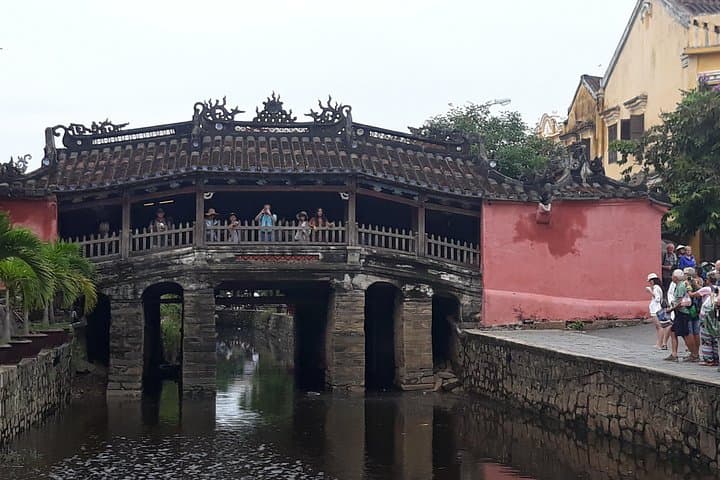
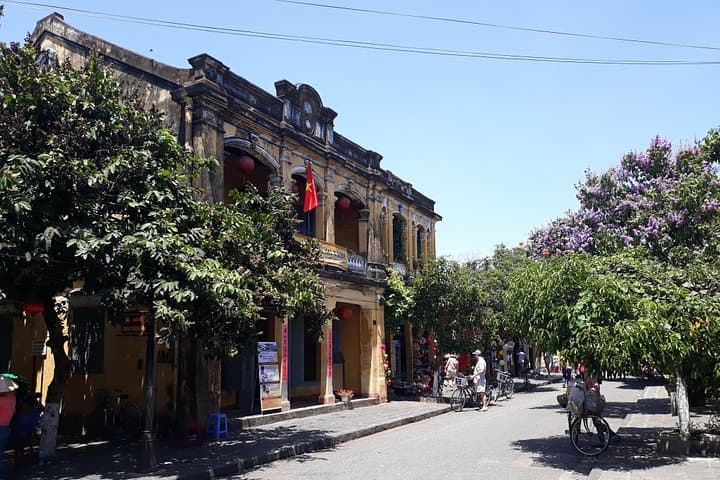
After a riverside lunch, the tour settles into Hoi An Old Town, where Chinese shophouses, a Japanese covered bridge and French colonial façades line lantern-lit alleys. This compact urban core reads as living history — merchants’ houses, riverfront markets and tailors trading timeworn skills.
Practical note: the full loop runs about 5–6 hours with moderate walking, many steps and short drives between sites. Bring sun protection and comfortable shoes for stone steps and temple floors. Timed right — early in the day or late afternoon — the light softens the limestone and the town’s colored walls, making photography and walking more pleasant.
easy.
5–6 hours.
Light fitness; able to walk moderate distances and climb multiple flights of stone steps
Expect approximately 5–6 hours total, including transfers, visits, lunch and local walking time.
The tour lists wheelchair and stroller accessibility for transport, but some sites (Marble Mountains caves and steps) have uneven terrain—full access may be limited.
Yes; admission fees and lunch are included, along with bottled water and a professional English‑speaking guide.
Morning or late afternoon is best to avoid midday heat and harsh light; Hoi An’s lanterns are most atmospheric after sunset if you stay later.
Hoi An grew as a trading port from the 15th to 19th centuries; Marble Mountains show karst geology shaped by sea and time and were a spiritual center before modern conflicts left visible marks.
Son Tra and nearby coastal areas are subject to conservation efforts to protect endemic forest and marine life; visitors should avoid feeding wildlife and stick to marked paths to limit erosion.
TTP Henry Travel Hoi An operates guided outdoor trips and adventures with an emphasis on safety, stewardship, and memorable experiences.


A ship’s gangway still hums behind you as the coach eases away from Tien Sa Port and the coastline opens like a map of limestone and sea.
A ship’s gangway still hums behind you as the coach eases away from Tien Sa Port and the coastline opens like a map of limestone and sea.
The first stop is Linh Ung Pagoda on Son Tra Peninsula, where the 67‑meter Lady Buddha presides over the harbor, her gaze sweeping the surf. The statue’s scale and the sea breeze make the place feel deliberate and steady, a spiritual marker for sailors and city dwellers alike.
A short drive brings you to the Marble Mountains — five limestone outcrops rising from coastal sands. These are karst ridges worn into caves, stair cuttings and Cham‑era niches; bullet scars in some vaults recall 20th‑century conflict while worn Buddhist altars link deeper histories. From a summit grotto the city and coast flatten into a patchwork: fishing boats, beaches and the river that fed Hoi An’s old port.
After a riverside lunch, the tour settles into Hoi An Old Town, where Chinese shophouses, a Japanese covered bridge and French colonial façades line lantern-lit alleys. This compact urban core reads as living history — merchants’ houses, riverfront markets and tailors trading timeworn skills.
Practical note: the full loop runs about 5–6 hours with moderate walking, many steps and short drives between sites. Bring sun protection and comfortable shoes for stone steps and temple floors. Timed right — early in the day or late afternoon — the light softens the limestone and the town’s colored walls, making photography and walking more pleasant.