THE ADVENTURE COLLECTIVE® · Independent discovery and booking for outdoor travel

A concise half-day excursion from Hoi An or Da Nang that combines coastal viewpoints, a towering Lady Buddha statue, and the carved caves and pagodas of the Marble Mountains. Ideal for travelers who want cultural context with short hikes and dramatic views.
A concise half-day excursion from Hoi An or Da Nang that combines coastal viewpoints, a towering Lady Buddha statue, and the carved caves and pagodas of the Marble Mountains. Ideal for travelers who want cultural context with short hikes and dramatic views.
You arrive with the sea on one side and a jagged skyline of limestone and jungle on the other; the van eases up Son Tra Peninsula and the 67-meter Lady Buddha rises like a watchful figure above Da Nang bay.
Verified experiences and guided adventures in the surrounding area.
Operated by Authentic HALONG · Da Nang, Da Nang
You arrive with the sea on one side and a jagged skyline of limestone and jungle on the other; the van eases up Son Tra Peninsula and the 67-meter Lady Buddha rises like a watchful figure above Da Nang bay.
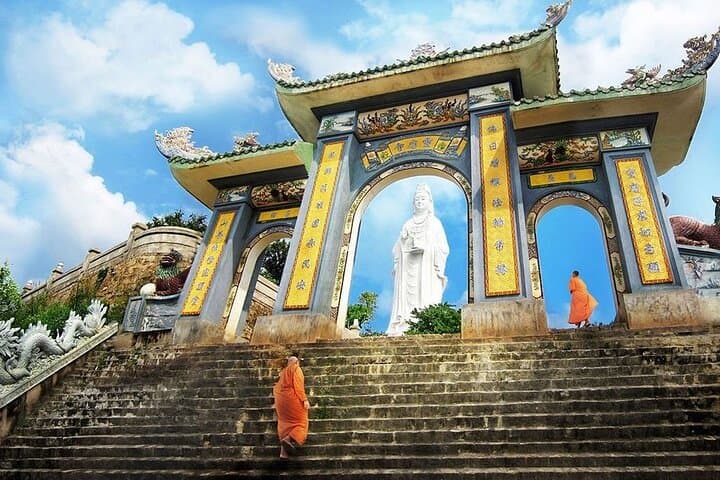
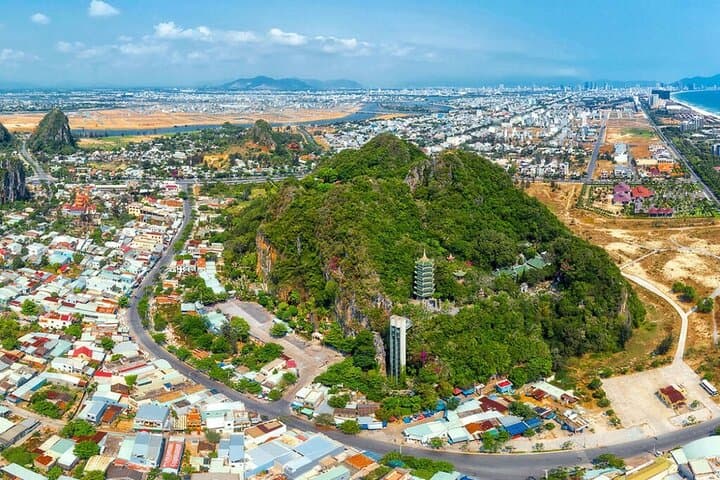
This half-day circuit links three distinct expressions of the region: Son Tra’s coastal ridge (commonly called Monkey Mountain), the coastal pagodas and gardens around Linh Ung with its giant statue, and the Marble Mountains—five marble and limestone outcrops carved by centuries of artisans and faith. Geologically the Marble Mountains are karst towers of limestone and marble, their caves hollowed by water and human hands; historic pagodas there date to the 19th century and reflect local Buddhist practice and stone-carving traditions that supply much of Da Nang’s sculpture trade.
Expect paved viewpoints, stepped climbs, short cave traverses, and narrow stone passages—elevations vary from sea level at Son Tra to modest climbs at Marble Mountains (roughly 100 m of ascent if you take stairs to the main peaks). Âm Phủ cave presents low-light, uneven footing and carved scenes depicting Buddhist stories.
Practical guidance: wear sturdy walking shoes for rocky steps and cave floors, bring a light sun layer and insect repellent, and carry a small bottle of water (one is included). Allow 4–5 hours including transfers (Hoi An to Da Nang ~30 km). Respect temple etiquette—shoulders and knees covered—and keep voices low in shrines and caves. Morning departures offer cooler air and softer light for photos; the route is accessible for most fitness levels with short, sharp stair sections.
easy.
4–5 hours.
Suitable for most travelers; able to manage short flights of stairs and uneven cave floors
The tour runs about 4–5 hours; typical hotel pickup is between 7:30–8:30 AM with return around 1:00 PM.
Entrance fees for Marble Mountains and Âm Phủ cave are included in the tour price as noted in the listing.
Yes—most sections are accessible to children and those with moderate mobility, though caves have uneven steps and some low passages.
Temples require modest dress; bring a scarf or shirt to cover shoulders and avoid very short shorts when entering pagodas.
The Marble Mountains have been a religious center since the Nguyen dynasty and supported stone-carving villages that supplied Buddhist sculpture across central Vietnam.
Son Tra Peninsula is protected for its biodiversity; avoid feeding or approaching wildlife, and stick to marked paths to limit erosion.
Authentic HALONG operates guided outdoor trips and adventures with an emphasis on safety, stewardship, and memorable experiences.
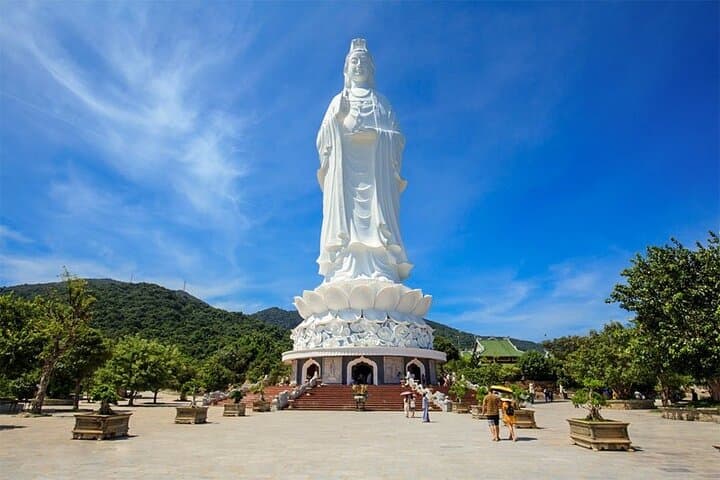
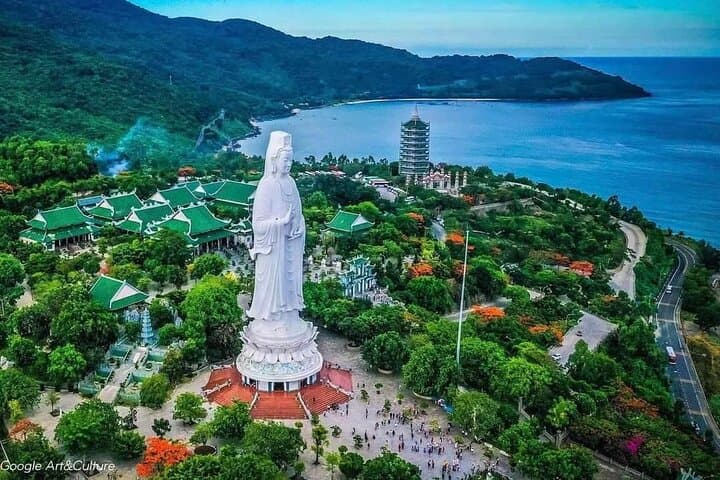
You arrive with the sea on one side and a jagged skyline of limestone and jungle on the other; the van eases up Son Tra Peninsula and the 67-meter Lady Buddha rises like a watchful figure above Da Nang bay.
You arrive with the sea on one side and a jagged skyline of limestone and jungle on the other; the van eases up Son Tra Peninsula and the 67-meter Lady Buddha rises like a watchful figure above Da Nang bay.
This half-day circuit links three distinct expressions of the region: Son Tra’s coastal ridge (commonly called Monkey Mountain), the coastal pagodas and gardens around Linh Ung with its giant statue, and the Marble Mountains—five marble and limestone outcrops carved by centuries of artisans and faith. Geologically the Marble Mountains are karst towers of limestone and marble, their caves hollowed by water and human hands; historic pagodas there date to the 19th century and reflect local Buddhist practice and stone-carving traditions that supply much of Da Nang’s sculpture trade.
Expect paved viewpoints, stepped climbs, short cave traverses, and narrow stone passages—elevations vary from sea level at Son Tra to modest climbs at Marble Mountains (roughly 100 m of ascent if you take stairs to the main peaks). Âm Phủ cave presents low-light, uneven footing and carved scenes depicting Buddhist stories.
Practical guidance: wear sturdy walking shoes for rocky steps and cave floors, bring a light sun layer and insect repellent, and carry a small bottle of water (one is included). Allow 4–5 hours including transfers (Hoi An to Da Nang ~30 km). Respect temple etiquette—shoulders and knees covered—and keep voices low in shrines and caves. Morning departures offer cooler air and softer light for photos; the route is accessible for most fitness levels with short, sharp stair sections.