THE ADVENTURE COLLECTIVE® · Independent discovery and booking for outdoor travel

Cycle a 10 km loop through Sri Lanka’s second ancient capital, riding beside irrigation tanks and 12th‑century stone monuments. This full‑day from Kandy mixes history, village lunch and panoramic lake views—ideal for riders with moderate fitness.
Cycle a 10 km loop through Sri Lanka’s second ancient capital, riding beside irrigation tanks and 12th‑century stone monuments. This full‑day from Kandy mixes history, village lunch and panoramic lake views—ideal for riders with moderate fitness.
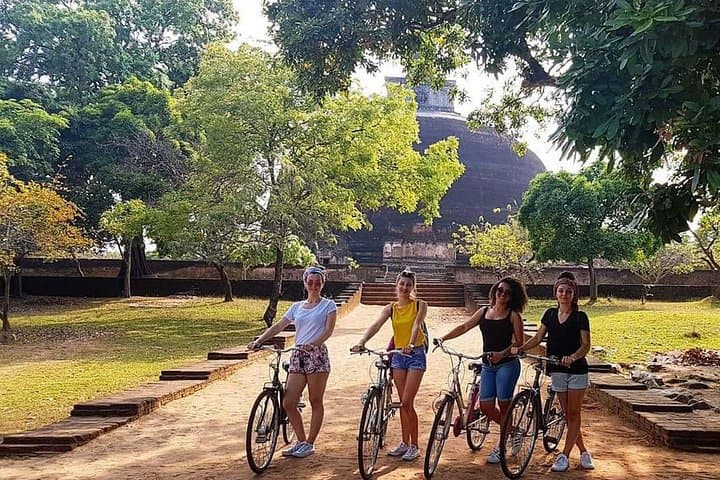
You leave Kandy before dawn, the road opening into low hills and then broad, sun-bright paddy plains. By midmorning the ruined towers of Polonnaruwa rise out of scrub—stone faces and balustrades weathered but still bluntly proud—while the lake margins catch the light and dare you to slow down and look.
Verified experiences and guided adventures in the surrounding area.
Operated by Ceylon Travel Dream · Polonnaruwa, North Central Province
You leave Kandy before dawn, the road opening into low hills and then broad, sun-bright paddy plains. By midmorning the ruined towers of Polonnaruwa rise out of scrub—stone faces and balustrades weathered but still bluntly proud—while the lake margins catch the light and dare you to slow down and look.
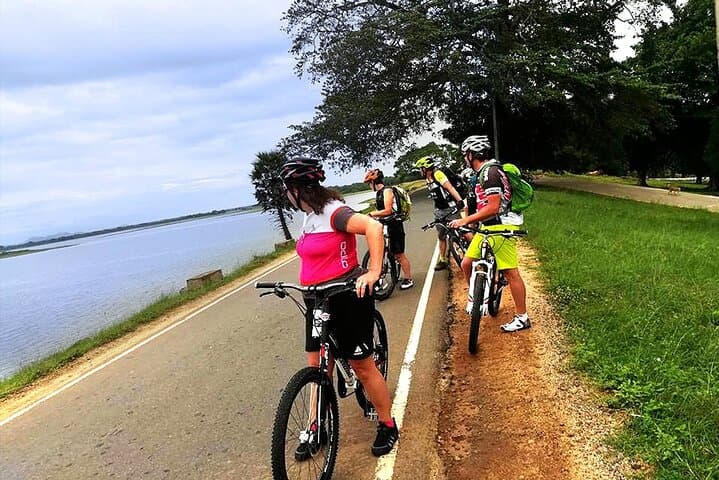
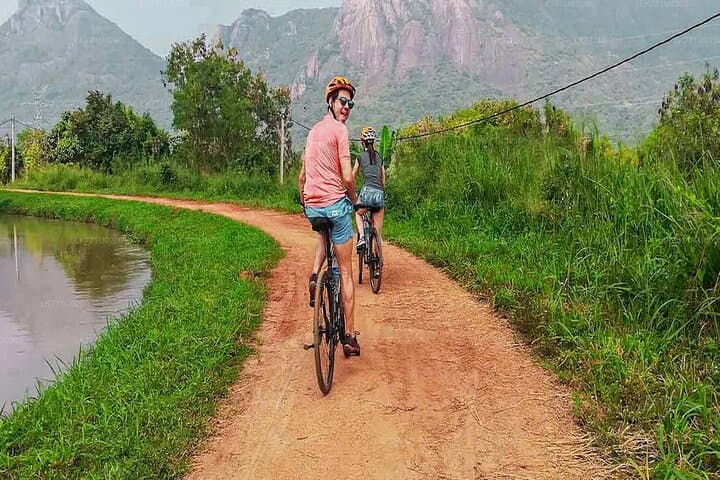
Polonnaruwa was Sri Lanka’s second medieval capital (11th–13th centuries), rebuilt after Anuradhapura and defined by monumental monasteries, carved Buddhas and vast irrigation reservoirs. Geology here is flat to gently undulating; the terrain alternates packed earth tracks, paved causeways and short stretches of quiet country road that thread beside tanks (reservoirs) and paddy fields. Local life persists beside the ruins: fishermen on shallow boats, farmers tending flooded plots, and village tea stalls serving a midday rice-and-curry that anchors the tour.
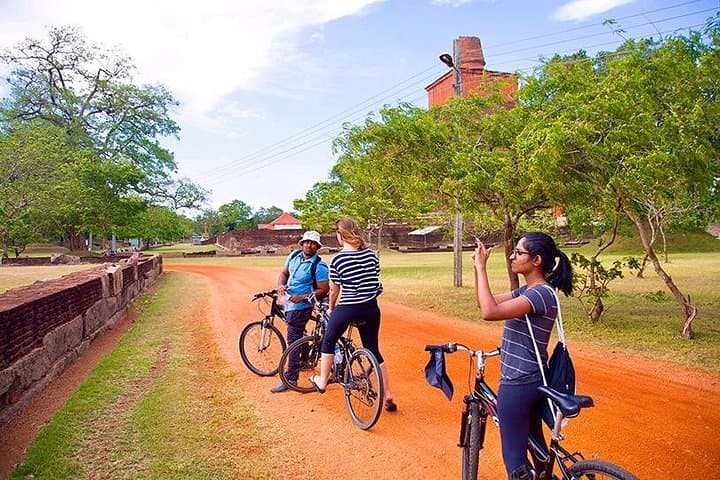
The 10 km cycling loop around the core archaeological zone is compact but rich—expect stops at carved stone Buddhas, the Gal Vihara group, and a modest on-site museum. Guides combine historical background with practical navigation of uneven surfaces and occasional loose gravel.
Practical notes: start early to avoid midday heat, bring sun protection and at least 2 liters of water, and be prepared for a relaxed village lunch and a chance to sample toddy. Bikes and helmets are provided, but confirm fit and brakes before setting off. Pace the ride: short bursts of walking at steep steps or tightly clustered ruins preserve both safety and the sites.
moderate.
12–14 hours.
Moderate fitness—able to cycle 10 km plus walk short steep sections and tolerate a full day of touring.
The guided circuit covers roughly 10 km of mixed surfaces, with multiple stops for walks and site visits—plan for several hours on the bike within a full‑day schedule.
Yes—bikes, helmets, bottled water and an English-speaking cycle guide are included; confirm helmet availability and size when you book.
Riders should be comfortable with basic cycling and short stretches of uneven ground; those with serious mobility or cardiovascular issues are not recommended to participate.
A village-style rice-and-curry lunch is typical, and there’s usually an opportunity to taste local toddy; notify the operator of dietary restrictions in advance.
Polonnaruwa served as Sri Lanka’s second major medieval capital; its monuments date mainly to the 11th–13th centuries and reflect a concentrated period of royal patronage and irrigation engineering.
The archaeological park is managed to balance tourism with preservation—stay on marked paths and avoid touching carvings to reduce erosion and conservation stress.
Ceylon Travel Dream operates guided outdoor trips and adventures with an emphasis on safety, stewardship, and memorable experiences.
You leave Kandy before dawn, the road opening into low hills and then broad, sun-bright paddy plains. By midmorning the ruined towers of Polonnaruwa rise out of scrub—stone faces and balustrades weathered but still bluntly proud—while the lake margins catch the light and dare you to slow down and look.
You leave Kandy before dawn, the road opening into low hills and then broad, sun-bright paddy plains. By midmorning the ruined towers of Polonnaruwa rise out of scrub—stone faces and balustrades weathered but still bluntly proud—while the lake margins catch the light and dare you to slow down and look.
Polonnaruwa was Sri Lanka’s second medieval capital (11th–13th centuries), rebuilt after Anuradhapura and defined by monumental monasteries, carved Buddhas and vast irrigation reservoirs. Geology here is flat to gently undulating; the terrain alternates packed earth tracks, paved causeways and short stretches of quiet country road that thread beside tanks (reservoirs) and paddy fields. Local life persists beside the ruins: fishermen on shallow boats, farmers tending flooded plots, and village tea stalls serving a midday rice-and-curry that anchors the tour.
The 10 km cycling loop around the core archaeological zone is compact but rich—expect stops at carved stone Buddhas, the Gal Vihara group, and a modest on-site museum. Guides combine historical background with practical navigation of uneven surfaces and occasional loose gravel.
Practical notes: start early to avoid midday heat, bring sun protection and at least 2 liters of water, and be prepared for a relaxed village lunch and a chance to sample toddy. Bikes and helmets are provided, but confirm fit and brakes before setting off. Pace the ride: short bursts of walking at steep steps or tightly clustered ruins preserve both safety and the sites.