THE ADVENTURE COLLECTIVE® · Independent discovery and booking for outdoor travel

Ride between Angkor’s major temples on a single-day guided cycling circuit from Siem Reap. This easy, full-day tour combines short stretches of paved and compact dirt roads with on-foot exploration of Angkor Wat, Bayon, Ta Prohm and lesser-known ruins.
Ride between Angkor’s major temples on a single-day guided cycling circuit from Siem Reap. This easy, full-day tour combines short stretches of paved and compact dirt roads with on-foot exploration of Angkor Wat, Bayon, Ta Prohm and lesser-known ruins.
A cool morning breaks over the moat as your tires hum across the bridge toward Angkor Wat, the temple’s silhouette emerging through a thin mist. The guide steers with practiced ease, weaving past banyan roots and low stone walls while local vendors set out trays of fruit and coffee. You feel the temple stones under your palms when you dismount, and the bike is a ticket to quiet corners larger tour buses miss.
Verified experiences and guided adventures in the surrounding area.
Operated by Angkor Pro Travel · Siem Reap, Siem Reap Province
A cool morning breaks over the moat as your tires hum across the bridge toward Angkor Wat, the temple’s silhouette emerging through a thin mist. The guide steers with practiced ease, weaving past banyan roots and low stone walls while local vendors set out trays of fruit and coffee. You feel the temple stones under your palms when you dismount, and the bike is a ticket to quiet corners larger tour buses miss.
Angkor sits on Cambodge’s central plain—sandstone galleries carved in the 12th century under Khmer kings, later embraced by Ta Prohm’s kapok trees and Bayon’s inscrutable faces. Geology matters here: the temples were cut from sandstone blocks lifted from nearby quarries and arranged on laterite foundations that drain the rainy season. Culture is immediate—monks in saffron, villagers tending rice, and the lingering rituals that shape how sites are visited.
Practically, expect mostly flat riding on paved roads with short stretches of compact dirt; total distance for a short circuit is roughly 12–20 km and elevation gain is negligible. The operator provides a bicycle, helmet, bottled water and hotel pickup; you usually buy the Angkor pass at the ticket office before entering. Move deliberately—soft-soled shoes for steps, lightweight clothing, and respectful behavior around shrines. Midday heat builds quickly; mornings and late afternoons offer the best light and temperatures for steady pedaling and photography.
This tour combines gentle exercise with deep cultural reward: it’s a day that leaves you sweaty, informed, and very likely to remember the way ancient stone and forest press close together at Angkor.
easy.
8 hours.
Suitable for travelers in regular, moderate fitness who can cycle 12–20 km over mixed flat terrain; frequent short walks and stairs.
You can buy the pass at the ticket office before visits; many guides can escort you directly to the booth early to avoid queues.
The tour is rated easy: expect 12–20 km of cycling on flat roads with frequent stops and short walks—basic cycling fitness is sufficient.
Yes—operators often provide child seats and the pace is leisurely; tell the operator your needs when booking so they can adapt pickups and pacing.
Cover shoulders and knees out of respect—lightweight sarongs or long shirts work well in the heat.
Angkor Wat and Angkor Thom were built and expanded by Khmer monarchs in the 12th century, reflecting Hindu then Buddhist statecraft and monumental sandstone architecture.
Rising tourism pressures require visitors to stay on paths, avoid touching carvings, and support local community donations; choose operators that practice low-impact visits.
Angkor Pro Travel operates guided outdoor trips and adventures with an emphasis on safety, stewardship, and memorable experiences.
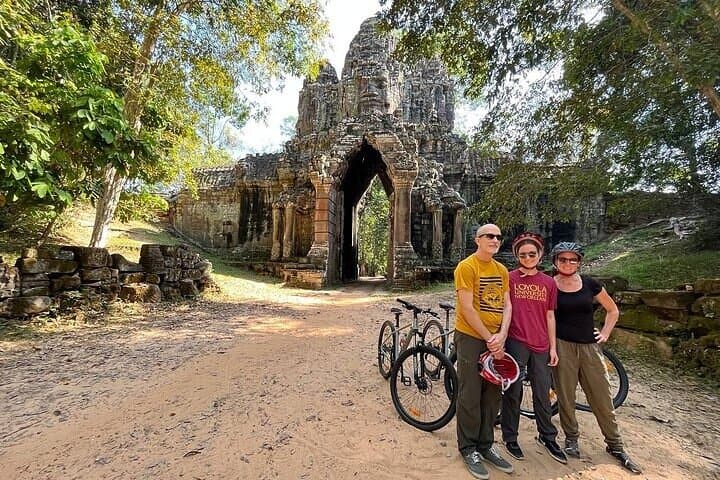


A cool morning breaks over the moat as your tires hum across the bridge toward Angkor Wat, the temple’s silhouette emerging through a thin mist. The guide steers with practiced ease, weaving past banyan roots and low stone walls while local vendors set out trays of fruit and coffee. You feel the temple stones under your palms when you dismount, and the bike is a ticket to quiet corners larger tour buses miss.
A cool morning breaks over the moat as your tires hum across the bridge toward Angkor Wat, the temple’s silhouette emerging through a thin mist. The guide steers with practiced ease, weaving past banyan roots and low stone walls while local vendors set out trays of fruit and coffee. You feel the temple stones under your palms when you dismount, and the bike is a ticket to quiet corners larger tour buses miss.
Angkor sits on Cambodge’s central plain—sandstone galleries carved in the 12th century under Khmer kings, later embraced by Ta Prohm’s kapok trees and Bayon’s inscrutable faces. Geology matters here: the temples were cut from sandstone blocks lifted from nearby quarries and arranged on laterite foundations that drain the rainy season. Culture is immediate—monks in saffron, villagers tending rice, and the lingering rituals that shape how sites are visited.
Practically, expect mostly flat riding on paved roads with short stretches of compact dirt; total distance for a short circuit is roughly 12–20 km and elevation gain is negligible. The operator provides a bicycle, helmet, bottled water and hotel pickup; you usually buy the Angkor pass at the ticket office before entering. Move deliberately—soft-soled shoes for steps, lightweight clothing, and respectful behavior around shrines. Midday heat builds quickly; mornings and late afternoons offer the best light and temperatures for steady pedaling and photography.
This tour combines gentle exercise with deep cultural reward: it’s a day that leaves you sweaty, informed, and very likely to remember the way ancient stone and forest press close together at Angkor.