THE ADVENTURE COLLECTIVE® · Independent discovery and booking for outdoor travel

Pedal through dawn mist, rice paddies and towering stone faces on a full‑day bike tour that links Angkor Wat, Angkor Thom and Ta Prohm. Expect flat but sustained riding, temple stairs, and a local guide who brings Khmer history to life.
Pedal through dawn mist, rice paddies and towering stone faces on a full‑day bike tour that links Angkor Wat, Angkor Thom and Ta Prohm. Expect flat but sustained riding, temple stairs, and a local guide who brings Khmer history to life.
Dawn light spreads across flooded rice paddies as you clip into the pedals and roll toward the temple causeway. The air is warm and slightly sweet with river mud; temple towers rise like stone islands ahead. Riding here feels contrary—fast-moving exertion against structures that have hardly shifted in nine centuries.
Verified experiences and guided adventures in the surrounding area.
Operated by Remorque Cambodia Tour · Siem Reap, Siem Reap Province
Dawn light spreads across flooded rice paddies as you clip into the pedals and roll toward the temple causeway. The air is warm and slightly sweet with river mud; temple towers rise like stone islands ahead. Riding here feels contrary—fast-moving exertion against structures that have hardly shifted in nine centuries.
This full-day bike tour threads Angkor Wat’s great moat and arcs through Angkor Thom’s Victory Gate to the Bayon’s watchful carved faces. You’ll push past the Baphuon and the royal terraces that once staged Khmer pageantry, then slow to pick through Ta Prohm’s ruined corridors where strangler figs and silk cotton trees dare the stones to give way. The temples are sandstone and laterite—eroding slowly under monsoon cycles—set inside a low, flat plain ringed by forest and paddy.
Locally led guides tie the archaeology to the living culture: rice farming, Buddhist pilgrimage, and conservation efforts that manage visitor flow. Practicalities are simple but essential: the route is mostly flat with mixed surfaces (paved roads, compact dirt, stepped temple approaches); expect 25–35 km of riding across the day with low cumulative elevation gain.
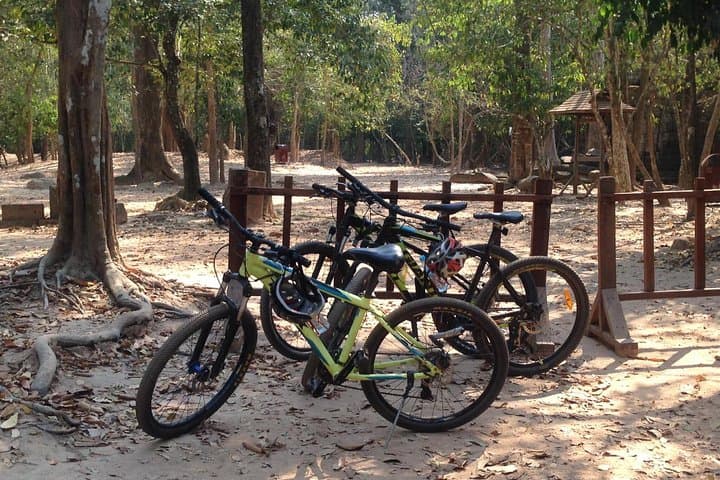
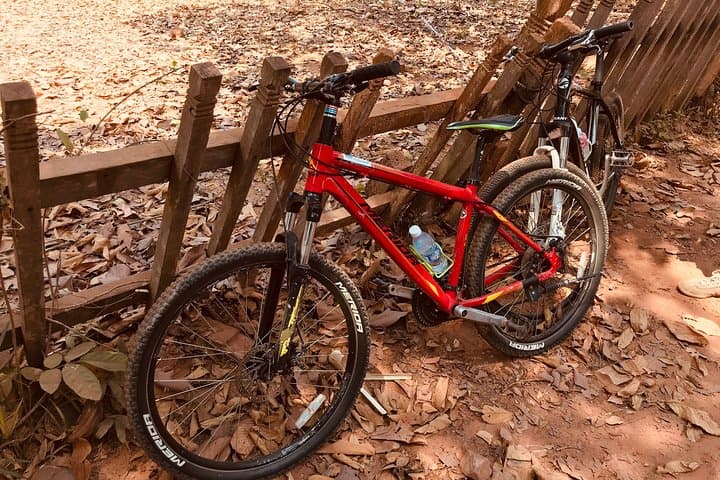
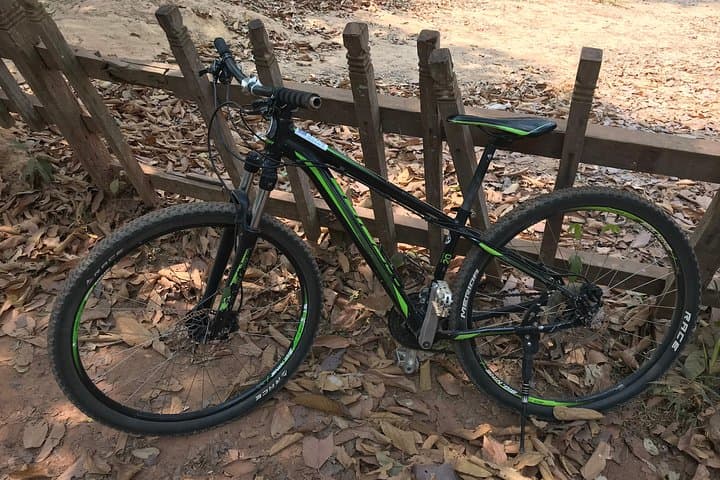
Bring sun protection, a robust water system, and a bike you trust; guides typically provide mountain bikes and bottled water. Start early to avoid mid‑day heat and buy your Angkor Park pass at the entrance before riding. Pace yourself on tight temple steps and yield to pedestrians and ox carts in villages.
This ride balances sustained effort with immersive history—momentum carries you from one monumental frame to the next while the landscape, quietly persistent, keeps tugging you forward.
challenging.
6–8 hours.
Suitable for riders with good endurance who can pedal 25–35 km over mixed surfaces and handle multiple short, steep stair sections.
Yes — all visitors must buy an Angkor Park pass at the ticket center before entering the park; guides can advise on where to buy it.
The tour runs about 6–8 hours covering roughly 25–35 km with mostly flat terrain; it's physically demanding due to length, not steep climbs.
Guides typically supply mountain bikes (including children’s sizes) and bottled water; confirm helmet availability when booking.
Families with children 10 and older can join, though parts of the itinerary include stairs and uneven surfaces that require supervision.
Angkor was the seat of the Khmer Empire (9th–15th centuries); Angkor Wat was built in the early 12th century by King Suryavarman II as a Hindu temple later transformed by Buddhism.
Visitor management and temple stabilization projects aim to limit erosion and vegetation damage; stick to marked paths and follow your guide to minimize impact.
Remorque Cambodia Tour operates guided outdoor trips and adventures with an emphasis on safety, stewardship, and memorable experiences.
Dawn light spreads across flooded rice paddies as you clip into the pedals and roll toward the temple causeway. The air is warm and slightly sweet with river mud; temple towers rise like stone islands ahead. Riding here feels contrary—fast-moving exertion against structures that have hardly shifted in nine centuries.
Dawn light spreads across flooded rice paddies as you clip into the pedals and roll toward the temple causeway. The air is warm and slightly sweet with river mud; temple towers rise like stone islands ahead. Riding here feels contrary—fast-moving exertion against structures that have hardly shifted in nine centuries.
This full-day bike tour threads Angkor Wat’s great moat and arcs through Angkor Thom’s Victory Gate to the Bayon’s watchful carved faces. You’ll push past the Baphuon and the royal terraces that once staged Khmer pageantry, then slow to pick through Ta Prohm’s ruined corridors where strangler figs and silk cotton trees dare the stones to give way. The temples are sandstone and laterite—eroding slowly under monsoon cycles—set inside a low, flat plain ringed by forest and paddy.
Locally led guides tie the archaeology to the living culture: rice farming, Buddhist pilgrimage, and conservation efforts that manage visitor flow. Practicalities are simple but essential: the route is mostly flat with mixed surfaces (paved roads, compact dirt, stepped temple approaches); expect 25–35 km of riding across the day with low cumulative elevation gain.
Bring sun protection, a robust water system, and a bike you trust; guides typically provide mountain bikes and bottled water. Start early to avoid mid‑day heat and buy your Angkor Park pass at the entrance before riding. Pace yourself on tight temple steps and yield to pedestrians and ox carts in villages.
This ride balances sustained effort with immersive history—momentum carries you from one monumental frame to the next while the landscape, quietly persistent, keeps tugging you forward.