THE ADVENTURE COLLECTIVE® · Independent discovery and booking for outdoor travel

A four-hour mountain-biking loop from Oudtshoorn that climbs Swartberg Pass to 1,575 m and rolls down through changing Karoo landscapes. Expect gravel climbs, dramatic geology, and vehicle support for a safe, scenic descent.
A four-hour mountain-biking loop from Oudtshoorn that climbs Swartberg Pass to 1,575 m and rolls down through changing Karoo landscapes. Expect gravel climbs, dramatic geology, and vehicle support for a safe, scenic descent.
You push off from Oudtshoorn as the Klein Karoo wakes—dry scrub releasing a dust-scented breeze while the road climbs toward a serrated ridge.
Verified experiences and guided adventures in the surrounding area.
Operated by Via Tours and Shuttles · Oudtshoorn, Western Cape
You push off from Oudtshoorn as the Klein Karoo wakes—dry scrub releasing a dust-scented breeze while the road climbs toward a serrated ridge.
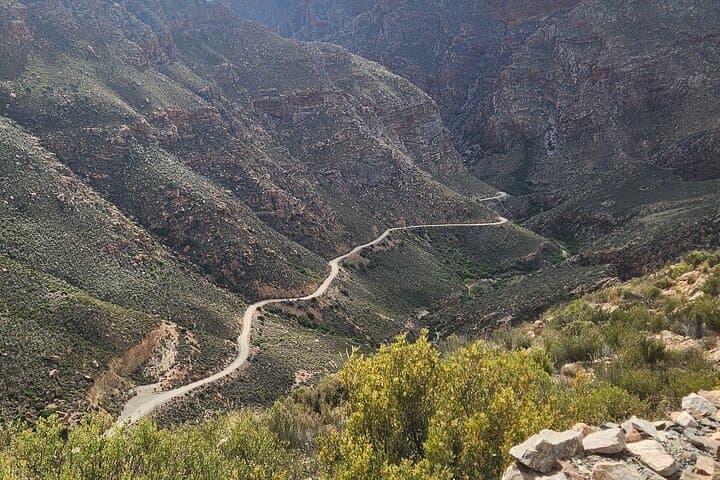
Within minutes the landscape changes: chenopod bushes give way to craggy sandstone spires and the ribbon of the Swartberg Pass unfolds beneath your wheels. The pass, engineered by Thomas Bain in the 1880s, threads the Cape Fold Belt with hairpins and dry-stone drainage lines you can still admire from the saddle. The mountains here are old, their banded quartzite and shale folded into cliffs that throw long shadows across the valley.
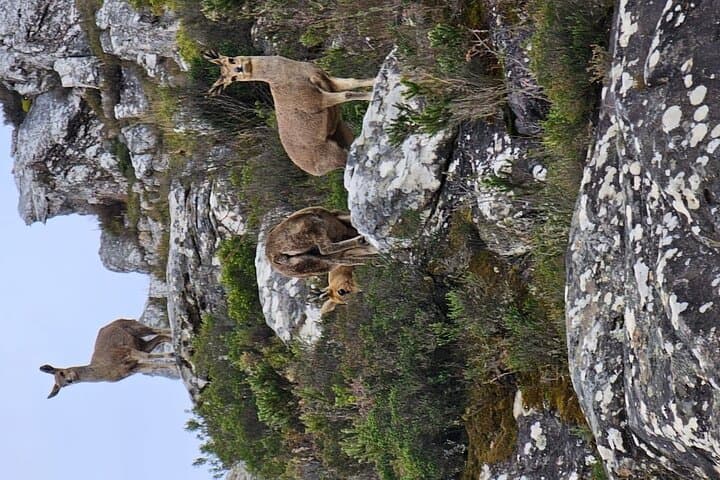
Culturally the route sits between the Klein Karoo’s ostrich-farming towns and the quieter Groot Karoo; you’ll notice stone homesteads and small Karoo farms below. Birds and rock hyrax (dassies) often peek from ledges; vultures and raptors use the thermals above.
Practical guidance: the tour climbs to roughly 1,575 m at the summit and lasts about four hours total, including an air-conditioned transfer out and a guided descent on a hardtail mountain bike. A support vehicle follows to carry water, tools and provide assistance if needed.
Expect gravel and compacted dirt with steep pitches and loose sections on the descent—moderate technical skill is useful. Start early to avoid the midday heat and bring sunscreen, a wind layer for the summit and enough electrolytes for sustained effort.
Ride with respect: keep to the road, carry out waste and give wildlife plenty of space—this is a fragile, UNESCO-linked floral region with weather that can change quickly.
moderate.
4 hours.
Requires a moderate level of fitness: regular cycling or cardio training helps for sustained climbs and handling technical descents.
The vehicle transfer eases the ascent; the ride includes steep gravel pitches on the descent, with the summit at about 1,575 m above sea level.
A moderate skill level is recommended—participants should be comfortable on uneven gravel and managing speed on descents.
A following vehicle carries spare equipment, bottled water and can transport riders who choose not to complete the descent.
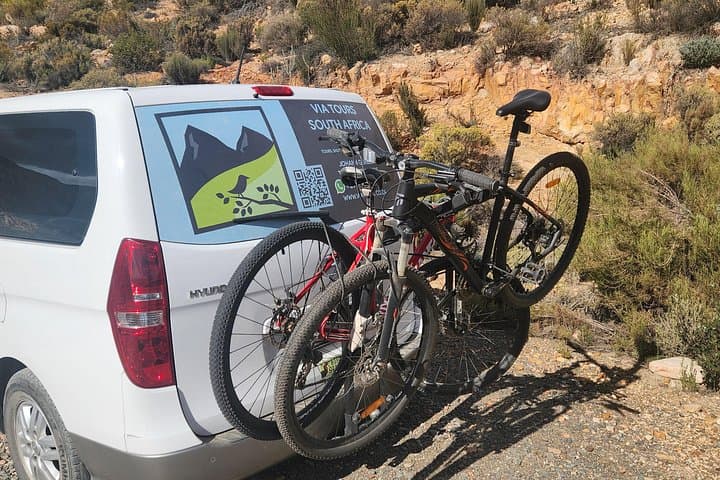
The tour provides hardtail mountain bikes; contact the operator in advance if you prefer to use your own and confirm fit and transport options.
Swartberg Pass was engineered by Thomas Bain in the 1880s and remains a notable example of 19th-century road-building through the Cape Fold Belt.
The Swartberg sits within the Cape Floral Region; stick to established roads and pack out waste to protect slow-growing Karoo vegetation.
Via Tours and Shuttles operates guided outdoor trips and adventures with an emphasis on safety, stewardship, and memorable experiences.
You push off from Oudtshoorn as the Klein Karoo wakes—dry scrub releasing a dust-scented breeze while the road climbs toward a serrated ridge.
You push off from Oudtshoorn as the Klein Karoo wakes—dry scrub releasing a dust-scented breeze while the road climbs toward a serrated ridge.
Within minutes the landscape changes: chenopod bushes give way to craggy sandstone spires and the ribbon of the Swartberg Pass unfolds beneath your wheels. The pass, engineered by Thomas Bain in the 1880s, threads the Cape Fold Belt with hairpins and dry-stone drainage lines you can still admire from the saddle. The mountains here are old, their banded quartzite and shale folded into cliffs that throw long shadows across the valley.
Culturally the route sits between the Klein Karoo’s ostrich-farming towns and the quieter Groot Karoo; you’ll notice stone homesteads and small Karoo farms below. Birds and rock hyrax (dassies) often peek from ledges; vultures and raptors use the thermals above.
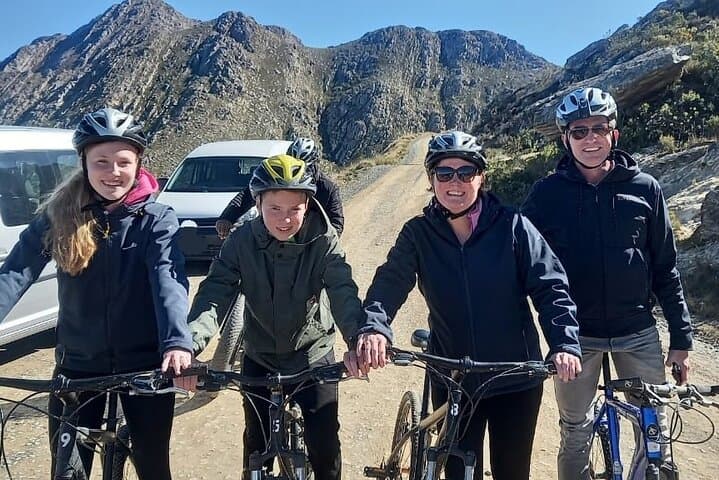
Practical guidance: the tour climbs to roughly 1,575 m at the summit and lasts about four hours total, including an air-conditioned transfer out and a guided descent on a hardtail mountain bike. A support vehicle follows to carry water, tools and provide assistance if needed.
Expect gravel and compacted dirt with steep pitches and loose sections on the descent—moderate technical skill is useful. Start early to avoid the midday heat and bring sunscreen, a wind layer for the summit and enough electrolytes for sustained effort.
Ride with respect: keep to the road, carry out waste and give wildlife plenty of space—this is a fragile, UNESCO-linked floral region with weather that can change quickly.