THE ADVENTURE COLLECTIVE® · Independent discovery and booking for outdoor travel

Ride the iconic Stanley Park Seawall on a self-guided audio cycling tour that pairs coastal views with local stories. Learn park history and spot totems, sea lions, and Lion’s Gate Bridge while following a mostly flat 9 km loop.
Ride the iconic Stanley Park Seawall on a self-guided audio cycling tour that pairs coastal views with local stories. Learn park history and spot totems, sea lions, and Lion’s Gate Bridge while following a mostly flat 9 km loop.
You start on two wheels with the ocean on your right and the city’s skyline shrinking behind you—salt-laced wind nudges the spokes as the Seawall unfurls around Stanley Park. Cyclists move past sculpted totems, the steady arch of Lion’s Gate Bridge, and rocky outcrops where the water seems to dare you closer. The route is mostly flat, paved, and wide, a ribbon of asphalt that frames beaches, forested trails, and harbor views.
Verified experiences and guided adventures in the surrounding area.
Operated by VoiceMap Audio Tours · Vancouver, British Columbia
You start on two wheels with the ocean on your right and the city’s skyline shrinking behind you—salt-laced wind nudges the spokes as the Seawall unfurls around Stanley Park. Cyclists move past sculpted totems, the steady arch of Lion’s Gate Bridge, and rocky outcrops where the water seems to dare you closer. The route is mostly flat, paved, and wide, a ribbon of asphalt that frames beaches, forested trails, and harbor views.
Stanley Park sits on land long stewarded by Coast Salish peoples and later transformed in the late 19th century as Vancouver expanded; landmarks like the Brockton Point Totem Poles and the Nine O’Clock Gun speak to layered civic and Indigenous histories. Geologically the headland is Vancouver’s coastal bedrock meeting tidal channels; wind and waves have carved the outcrops you pass—Siwash Rock and Deadman’s Island catch the eye and the camera.
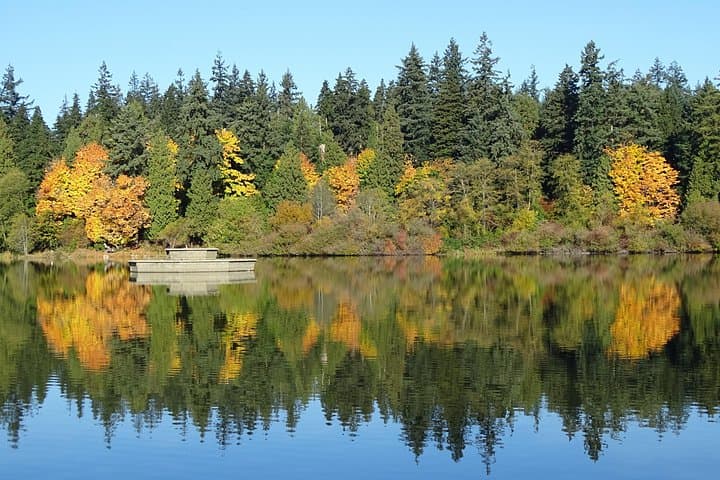
Culturally the park bridges urban life and nature: rowers at Lost Lagoon, lifeguards at Second Beach, and informal cricket matches in summer create the park’s pulse. The audio tour adds context—stories about the cannon, local lore, and points of interest—without needing a guide.
Practical side: expect a 9 km (≈5.5 mi) loop that most riders complete in 45–60 minutes at an easy pace; allow extra time for stops. The path is shared with pedestrians—ring a bell and pass left. Rentals and bike lanes are plentiful near Coal Harbour; bring a helmet, layered windproof clothing, water, and a charged phone for the VoiceMap offline audio. Aim for early morning or late afternoon to avoid peak foot traffic and catch the best light for views of the mountains and harbour.
easy.
45–60 minutes.
Suitable for riders comfortable on a bike for short urban rides; minimal elevation and frequent stops make it accessible to most fitness levels.
The full Stanley Park Seawall loop is roughly 9 km (5.5 miles) and typically takes 45–60 minutes by bike at a relaxed pace.
Yes—bike rental shops are concentrated near Coal Harbour and the waterfront; many offer hourly rentals and helmets.
Yes, the main Seawall is paved and accessible, though some connecting trails inside the park are steeper and uneven.
Yes—the tour includes lifetime access to offline audio, maps, and geodata through the VoiceMap app for iOS and Android.
Stanley Park occupies traditional Coast Salish territories and became a municipal park in the late 1800s; the totem poles at Brockton Point are modern displays that reflect both Indigenous art and colonial-era collecting practices.
High visitor numbers drive park management priorities—stay on paved paths, avoid feeding wildlife, and use trash/recycling bins to minimize impact.
VoiceMap Audio Tours operates guided outdoor trips and adventures with an emphasis on safety, stewardship, and memorable experiences.
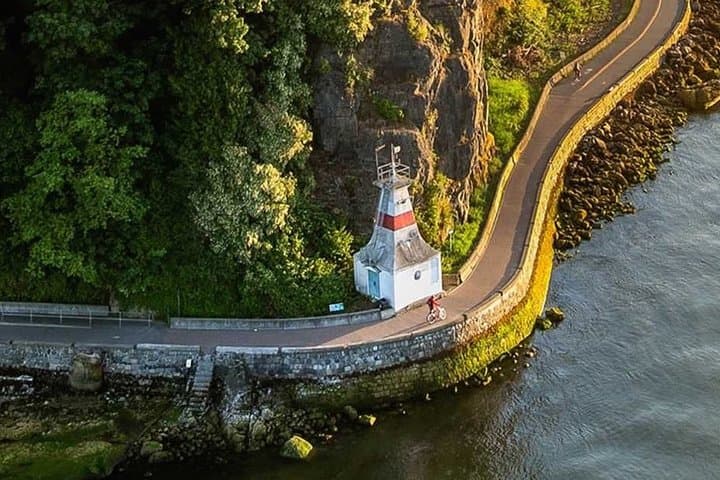
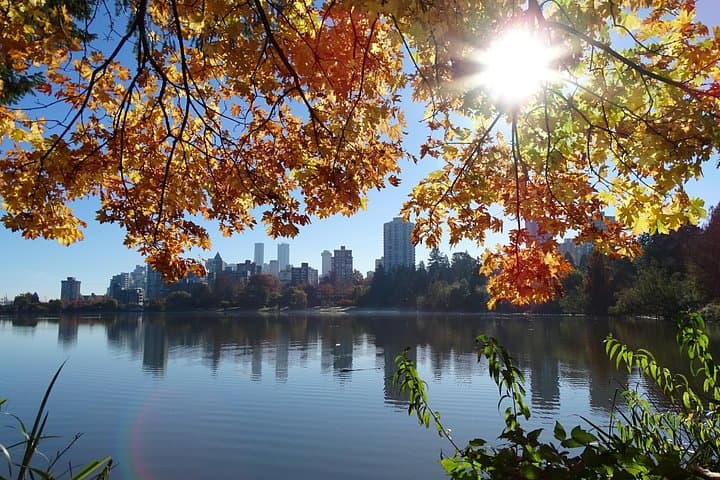
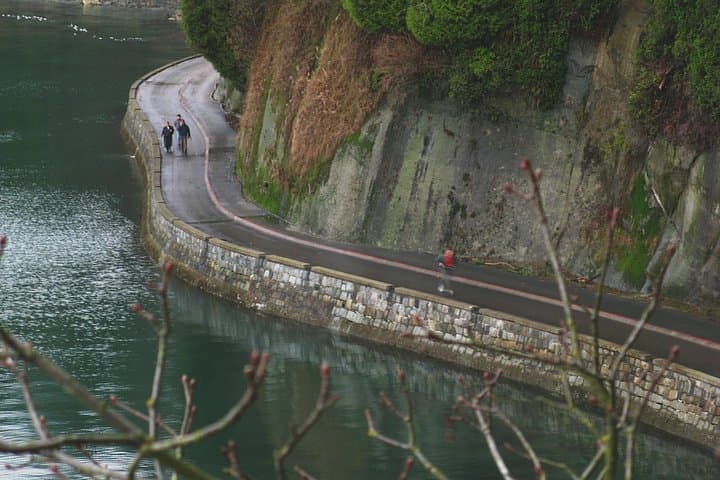
You start on two wheels with the ocean on your right and the city’s skyline shrinking behind you—salt-laced wind nudges the spokes as the Seawall unfurls around Stanley Park. Cyclists move past sculpted totems, the steady arch of Lion’s Gate Bridge, and rocky outcrops where the water seems to dare you closer. The route is mostly flat, paved, and wide, a ribbon of asphalt that frames beaches, forested trails, and harbor views.
You start on two wheels with the ocean on your right and the city’s skyline shrinking behind you—salt-laced wind nudges the spokes as the Seawall unfurls around Stanley Park. Cyclists move past sculpted totems, the steady arch of Lion’s Gate Bridge, and rocky outcrops where the water seems to dare you closer. The route is mostly flat, paved, and wide, a ribbon of asphalt that frames beaches, forested trails, and harbor views.
Stanley Park sits on land long stewarded by Coast Salish peoples and later transformed in the late 19th century as Vancouver expanded; landmarks like the Brockton Point Totem Poles and the Nine O’Clock Gun speak to layered civic and Indigenous histories. Geologically the headland is Vancouver’s coastal bedrock meeting tidal channels; wind and waves have carved the outcrops you pass—Siwash Rock and Deadman’s Island catch the eye and the camera.
Culturally the park bridges urban life and nature: rowers at Lost Lagoon, lifeguards at Second Beach, and informal cricket matches in summer create the park’s pulse. The audio tour adds context—stories about the cannon, local lore, and points of interest—without needing a guide.
Practical side: expect a 9 km (≈5.5 mi) loop that most riders complete in 45–60 minutes at an easy pace; allow extra time for stops. The path is shared with pedestrians—ring a bell and pass left. Rentals and bike lanes are plentiful near Coal Harbour; bring a helmet, layered windproof clothing, water, and a charged phone for the VoiceMap offline audio. Aim for early morning or late afternoon to avoid peak foot traffic and catch the best light for views of the mountains and harbour.