THE ADVENTURE COLLECTIVE® · Independent discovery and booking for outdoor travel

Follow the Firth of Forth for 20 miles of coastal lanes, Roman remains and stately homes. This mixed-surface ride—manual or e‑bike—combines UNESCO bridge views with a village coffee stop in South Queensferry.
Follow the Firth of Forth for 20 miles of coastal lanes, Roman remains and stately homes. This mixed-surface ride—manual or e‑bike—combines UNESCO bridge views with a village coffee stop in South Queensferry.
You set off from the urban edge of Edinburgh with the Firth of Forth at your shoulder, tires clicking on a mix of quiet lanes and coastal paths. Salt air pushes at your face as the three Forth bridges appear—a metal arc, a Victorian lattice and a modern sweep—each demanding a different kind of attention from the rider.
Verified experiences and guided adventures in the surrounding area.
Operated by The Tartan Bicycle Co · Edinburgh, Scotland
You set off from the urban edge of Edinburgh with the Firth of Forth at your shoulder, tires clicking on a mix of quiet lanes and coastal paths. Salt air pushes at your face as the three Forth bridges appear—a metal arc, a Victorian lattice and a modern sweep—each demanding a different kind of attention from the rider.
This 20-mile (32 km) loop threads Cramond’s tidal causeway and the remains of a Roman fort, then crosses country estates where sheep graze and, occasionally, a Highland cow lifts its head. Geology is visible in the shoreline shelves of sandstone and the broad estuary that funnels tides into the North Sea; the Forth Rail Bridge here is a UNESCO World Heritage Site that speaks to 19th-century engineering ambition.
Culturally the route is suburban and rural in quick succession: quiet villages, grand houses, and the Royal Burgh of South Queensferry for coffee and cake. Expect a mostly flat ride with short rolling sections around estate roads and causeways, and views that reward pauses as much as pace.
Practically: the tour takes 4–5 hours with options for a manual bike or an e‑bike for a gentler pedal. Helmets, panniers and waterproofs are provided, but bring layered clothing, charged phone and a small snack. Check tide times if you want to step onto Cramond Island at low tide, and prepare for changeable Scottish weather—sun can turn to rain in minutes. Ride steady, respect farmland boundaries, and you’ll leave with a book of bridge views and a clear sense of Firth of Forth country.
moderate.
4–5 hours.
Moderate fitness: regular walkers or recreational cyclists will manage, e‑bikes lower the effort required.
Yes—participants can choose a quality manual bike or a popular e‑bike for a more relaxed experience.
The tour covers about 20 miles (32 km) and runs 4–5 hours; it’s rated moderate with mostly flat terrain and short rolling sections.
Yes—the itinerary includes a stop in South Queensferry for refreshments and a longer break for photos and food.
Yes—Cramond Island access depends on low tide and the operator may cancel in poor weather; check tide times and dress for changeable conditions.
The route passes an 1,800‑year‑old Roman fort site and offers repeated views of the 19th‑century Forth Rail Bridge, a UNESCO World Heritage structure.
Stay on designated lanes, avoid disturbing shorebirds and livestock, and carry out any litter—coastal habitats here are sensitive to trampling and disturbance.
The Tartan Bicycle Co operates guided outdoor trips and adventures with an emphasis on safety, stewardship, and memorable experiences.
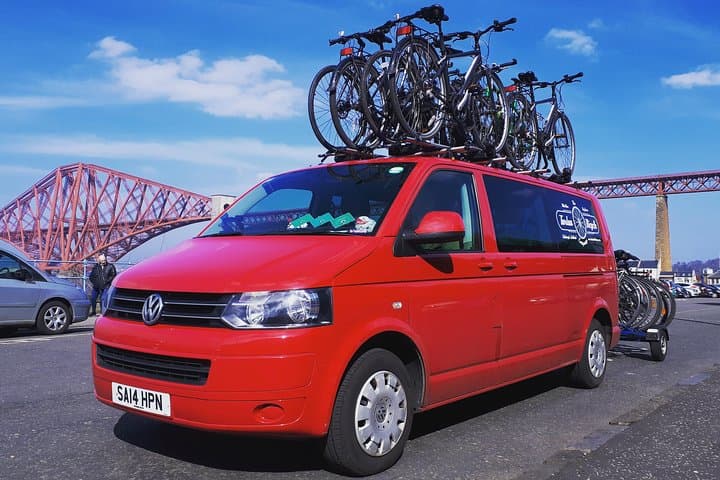
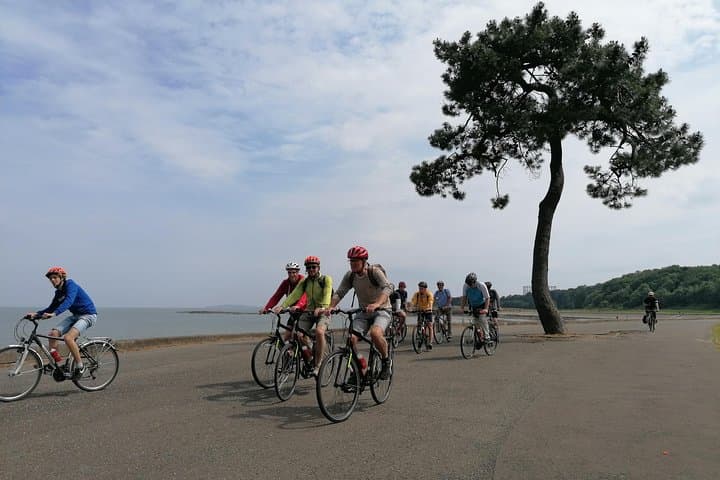
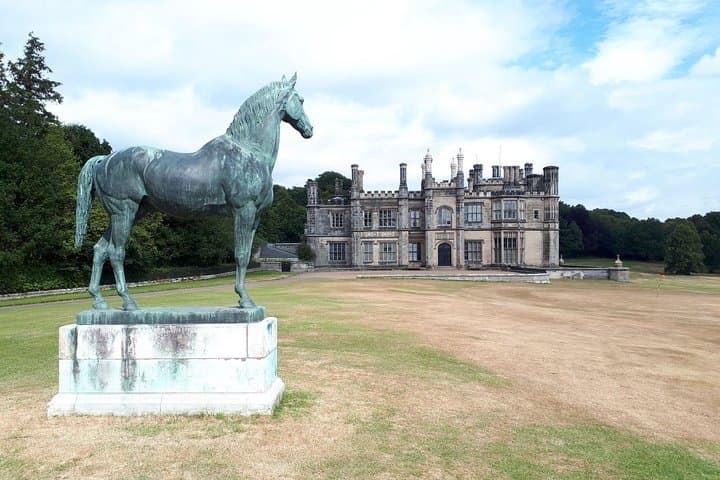
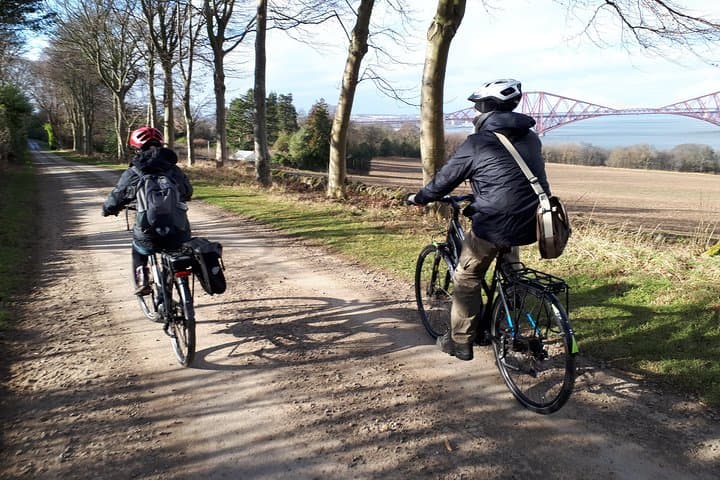
You set off from the urban edge of Edinburgh with the Firth of Forth at your shoulder, tires clicking on a mix of quiet lanes and coastal paths. Salt air pushes at your face as the three Forth bridges appear—a metal arc, a Victorian lattice and a modern sweep—each demanding a different kind of attention from the rider.
You set off from the urban edge of Edinburgh with the Firth of Forth at your shoulder, tires clicking on a mix of quiet lanes and coastal paths. Salt air pushes at your face as the three Forth bridges appear—a metal arc, a Victorian lattice and a modern sweep—each demanding a different kind of attention from the rider.
This 20-mile (32 km) loop threads Cramond’s tidal causeway and the remains of a Roman fort, then crosses country estates where sheep graze and, occasionally, a Highland cow lifts its head. Geology is visible in the shoreline shelves of sandstone and the broad estuary that funnels tides into the North Sea; the Forth Rail Bridge here is a UNESCO World Heritage Site that speaks to 19th-century engineering ambition.
Culturally the route is suburban and rural in quick succession: quiet villages, grand houses, and the Royal Burgh of South Queensferry for coffee and cake. Expect a mostly flat ride with short rolling sections around estate roads and causeways, and views that reward pauses as much as pace.
Practically: the tour takes 4–5 hours with options for a manual bike or an e‑bike for a gentler pedal. Helmets, panniers and waterproofs are provided, but bring layered clothing, charged phone and a small snack. Check tide times if you want to step onto Cramond Island at low tide, and prepare for changeable Scottish weather—sun can turn to rain in minutes. Ride steady, respect farmland boundaries, and you’ll leave with a book of bridge views and a clear sense of Firth of Forth country.