THE ADVENTURE COLLECTIVE® · Independent discovery and booking for outdoor travel

Ride the old Okutama trade road from village springs to Lake Okutama: wasabi fields, mountain shrines, a floating bridge and an onsen foot soak await on this 3–4 hour guided cycling tour.
Ride the old Okutama trade road from village springs to Lake Okutama: wasabi fields, mountain shrines, a floating bridge and an onsen foot soak await on this 3–4 hour guided cycling tour.
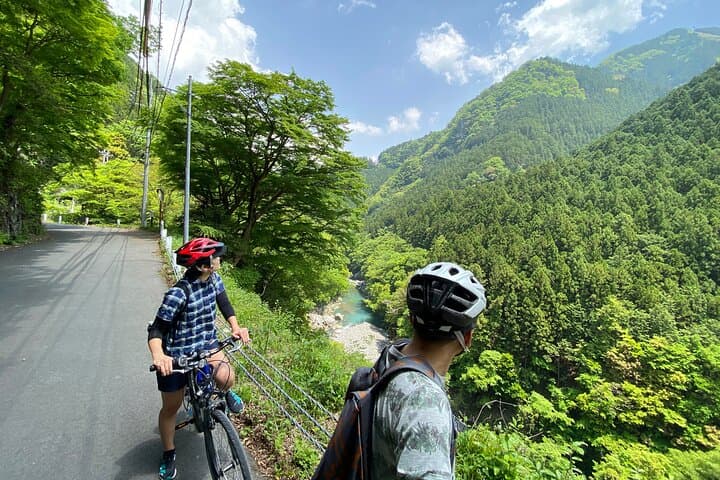
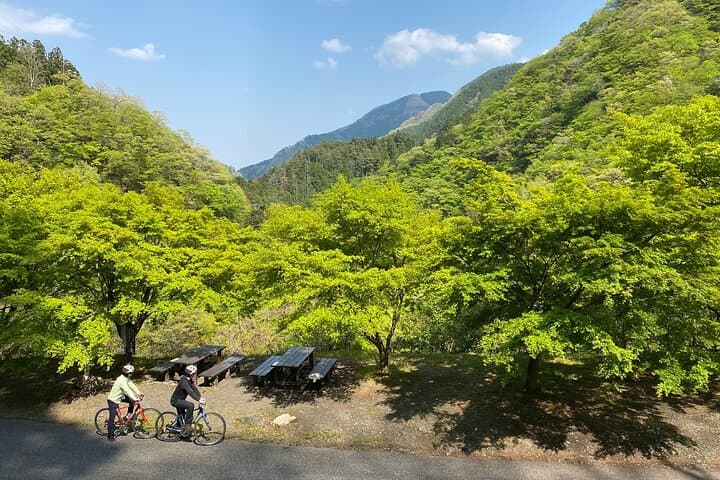
You push off from a quiet town square and the hum of Tokyo fades to a green hush. Narrow asphalt climbs under a forest canopy, sunlight spiking through cedar boughs as the old trade road unwinds toward the mountains. Springs gurgle at the roadside, wasabi beds glint in shaded water channels, and stone shrines lean against outcrops where villagers once paused for safe passage.
Verified experiences and guided adventures in the surrounding area.
Operated by Trekkling - cycling tours and rentals · Okutama, Tokyo
You push off from a quiet town square and the hum of Tokyo fades to a green hush. Narrow asphalt climbs under a forest canopy, sunlight spiking through cedar boughs as the old trade road unwinds toward the mountains. Springs gurgle at the roadside, wasabi beds glint in shaded water channels, and stone shrines lean against outcrops where villagers once paused for safe passage.
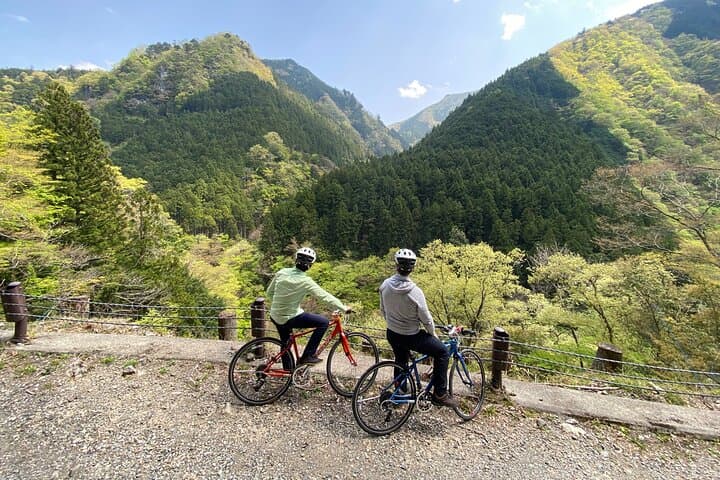
This ride traces a route used to move goods into Edo-era Tokyo, now framed by the geology of steep granite valleys carved by rivers. The focal point is Lake Okutama — a large reservoir created when the Ogōchi Dam was built in the mid-20th century to secure Tokyo’s water. Cultural touches thread the route: mountain shrines tucked under rocks, small museums cataloguing local life, and a floating bridge that puts you in the center of the lake’s calm, where the water seems to dare you to stay awhile.
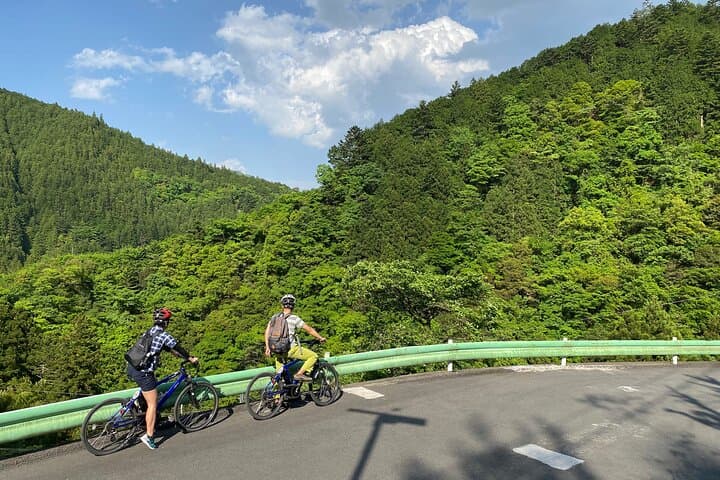
Expect paved country roads, short gravel approaches, and a few steady climbs — roughly 20–25 km total with about 300–400 m of elevation gain on a typical 3–4 hour tour. Wildlife sightings can include Japanese macaques along river bends and kingfishers skimming the water.
Practical notes: arrive 30 minutes early to check equipment, wear layered clothing for variable mountain weather, bring a refillable bottle (water provided but top-ups are handy) and comfortable flat-soled shoes for short walks. The route finishes with a communal onsen foot soak and a chance to browse local crafts — a proper reward after a ride that mixes history, geology, and the everyday life of Okutama.
moderate.
3–4 hours.
Moderate fitness; comfortable on rolling climbs and able to ride for 20–25 km with short uphill sections
The tour runs about 3–4 hours covering roughly 20–25 km with 300–400 m of climbing—suitable for riders with moderate fitness and basic hill-riding experience.
Yes—bicycle use and helmets (with intercom) are included; arrive early for fit and safety briefing.
The operator may cancel for bad weather—check the confirmation policy; dress in layers and bring a waterproof layer if light rain is possible.
Children 12 years and older or over 150 cm tall can join; the route still requires moderate stamina and cycling ability.
The old road served as a trade link into Edo-period Tokyo; the creation of Ogōchi Dam in the mid-20th century transformed the valley into Lake Okutama to supply Tokyo’s growing water needs.
Lake Okutama is part of Tokyo’s protected watershed—stick to paths, pack out trash, and avoid disturbing water sources to help preserve the area’s clean-water role.
Trekkling - cycling tours and rentals operates guided outdoor trips and adventures with an emphasis on safety, stewardship, and memorable experiences.
You push off from a quiet town square and the hum of Tokyo fades to a green hush. Narrow asphalt climbs under a forest canopy, sunlight spiking through cedar boughs as the old trade road unwinds toward the mountains. Springs gurgle at the roadside, wasabi beds glint in shaded water channels, and stone shrines lean against outcrops where villagers once paused for safe passage.
You push off from a quiet town square and the hum of Tokyo fades to a green hush. Narrow asphalt climbs under a forest canopy, sunlight spiking through cedar boughs as the old trade road unwinds toward the mountains. Springs gurgle at the roadside, wasabi beds glint in shaded water channels, and stone shrines lean against outcrops where villagers once paused for safe passage.
This ride traces a route used to move goods into Edo-era Tokyo, now framed by the geology of steep granite valleys carved by rivers. The focal point is Lake Okutama — a large reservoir created when the Ogōchi Dam was built in the mid-20th century to secure Tokyo’s water. Cultural touches thread the route: mountain shrines tucked under rocks, small museums cataloguing local life, and a floating bridge that puts you in the center of the lake’s calm, where the water seems to dare you to stay awhile.
Expect paved country roads, short gravel approaches, and a few steady climbs — roughly 20–25 km total with about 300–400 m of elevation gain on a typical 3–4 hour tour. Wildlife sightings can include Japanese macaques along river bends and kingfishers skimming the water.
Practical notes: arrive 30 minutes early to check equipment, wear layered clothing for variable mountain weather, bring a refillable bottle (water provided but top-ups are handy) and comfortable flat-soled shoes for short walks. The route finishes with a communal onsen foot soak and a chance to browse local crafts — a proper reward after a ride that mixes history, geology, and the everyday life of Okutama.