THE ADVENTURE COLLECTIVE® · Independent discovery and booking for outdoor travel

Explore Naha’s hidden lanes by electric bicycle on a four-hour pilgrimage to Zodiac shrines, sacred springs, and Ryukyuan-era mausoleums. This guided ride mixes urban cycling with cultural insight and includes helmets, a pilgrim’s book, and snacks.
Explore Naha’s hidden lanes by electric bicycle on a four-hour pilgrimage to Zodiac shrines, sacred springs, and Ryukyuan-era mausoleums. This guided ride mixes urban cycling with cultural insight and includes helmets, a pilgrim’s book, and snacks.
You push off from the shop a minute from Makishi Monorail Station and the city opens as a patchwork of narrow lanes, vermilion gates, and low-roofed houses. Electric bikes hum beneath you; the air carries a hint of sea salt and incense as your guide threads the group through alleys that most visitors never see.
Verified experiences and guided adventures in the surrounding area.
Operated by Discovery Bicycle Tours Okinawa / e-CHARIty Naha · Naha, Okinawa Prefecture
You push off from the shop a minute from Makishi Monorail Station and the city opens as a patchwork of narrow lanes, vermilion gates, and low-roofed houses. Electric bikes hum beneath you; the air carries a hint of sea salt and incense as your guide threads the group through alleys that most visitors never see.
The route stitches together small Shinto shrines, Buddhist temples, sacred springs and the royal mausoleums of the Ryukyu Kingdom. Stone torii and banyan roots mark places where centuries of ritual still continue—pilgrims notch stamps in a goshuin-cho while locals leave coins and whispered prayers. Geology here is subtle: coral-derived limestone underlies the island, so expect short, steep pitches around Shuri and generally flat asphalt through the old town.
Culturally this is a living pilgrimage, part devotional practice and part neighborhood life. Guides point out Ryukyuan carvings and postwar rebuilding, explaining how Okinawan belief blends ancestor reverence, kami, and Buddhist care for the community.
Practically: the tour is four hours, runs on electric bikes, and includes helmets, a pilgrims’ book and snacks. You’ll ride mostly on quiet streets with a few short hills and a downhill toward the royal tombs. Bring a compact daypack, water, and cash for small shrine donations. If rain probability exceeds 70% the operator may reschedule—check weather and wear layers for sun and sudden showers. This is an easy, low-impact way to move through history at human speed—fast enough to cover the city, slow enough to listen.
easy.
4 hours.
Suitable for most fitness levels; you should be comfortable riding an e-bike for 3–12 miles with short climbs.
The tour lasts about four hours and covers roughly 6–12 kilometers on electric bicycles, with several short stops for shrines and viewpoints.
Yes—electric bicycles, helmets and a pilgrims’ book (goshuin-cho) are included in the tour price.
Yes. The ride is rated easy; children (1–5) can use a child seat if pre-arranged—check with staff when booking.
If the precipitation probability exceeds about 70% or severe weather is forecast, the operator may reschedule or cancel and will contact you the day before.
The route follows sites tied to the Ryukyu Kingdom (15th–19th centuries), including royal mausoleums and temples that reflect Okinawa’s blend of native and imported religious practices.
Respect shrine grounds—no climbing on monuments or leaving offerings other than traditional coins; stay on public streets to avoid damaging private property.
Discovery Bicycle Tours Okinawa / e-CHARIty Naha operates guided outdoor trips and adventures with an emphasis on safety, stewardship, and memorable experiences.
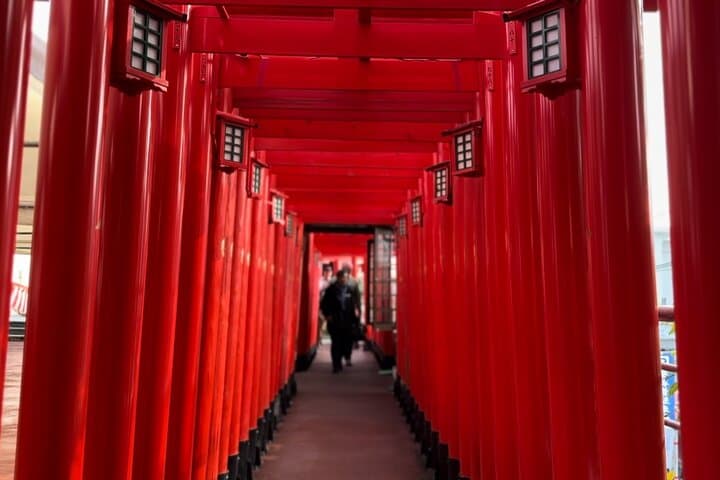
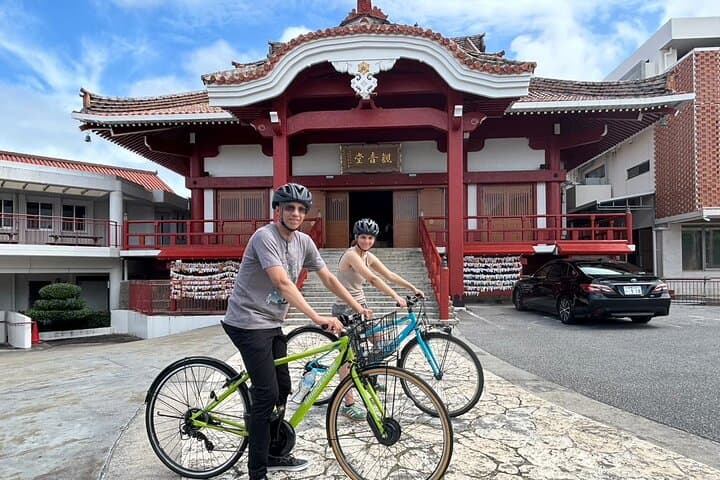
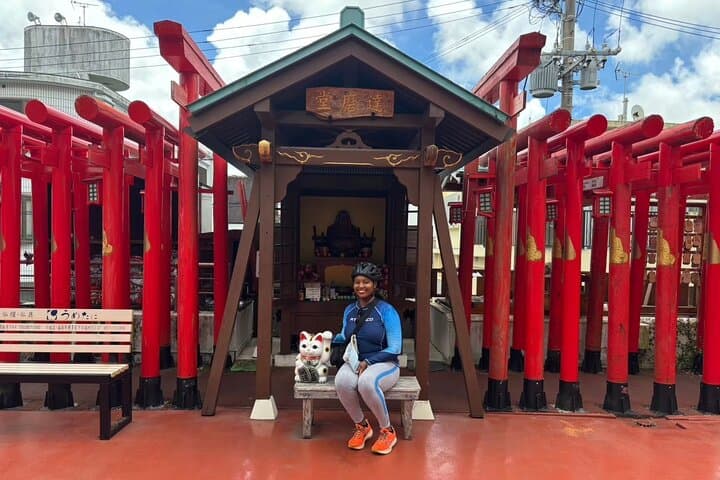
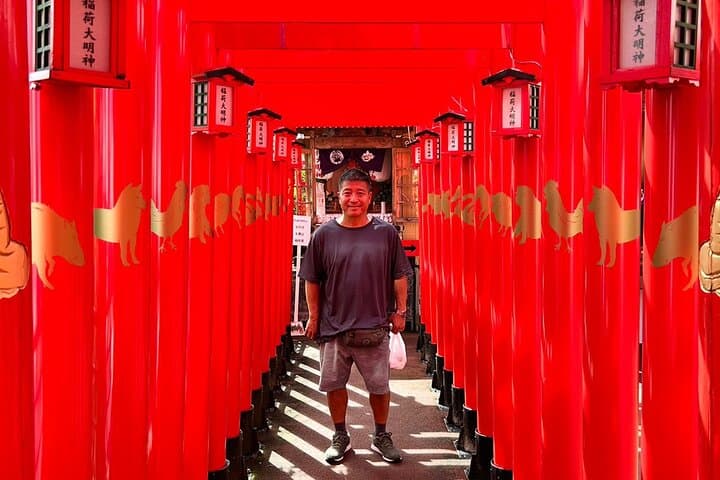
You push off from the shop a minute from Makishi Monorail Station and the city opens as a patchwork of narrow lanes, vermilion gates, and low-roofed houses. Electric bikes hum beneath you; the air carries a hint of sea salt and incense as your guide threads the group through alleys that most visitors never see.
You push off from the shop a minute from Makishi Monorail Station and the city opens as a patchwork of narrow lanes, vermilion gates, and low-roofed houses. Electric bikes hum beneath you; the air carries a hint of sea salt and incense as your guide threads the group through alleys that most visitors never see.
The route stitches together small Shinto shrines, Buddhist temples, sacred springs and the royal mausoleums of the Ryukyu Kingdom. Stone torii and banyan roots mark places where centuries of ritual still continue—pilgrims notch stamps in a goshuin-cho while locals leave coins and whispered prayers. Geology here is subtle: coral-derived limestone underlies the island, so expect short, steep pitches around Shuri and generally flat asphalt through the old town.
Culturally this is a living pilgrimage, part devotional practice and part neighborhood life. Guides point out Ryukyuan carvings and postwar rebuilding, explaining how Okinawan belief blends ancestor reverence, kami, and Buddhist care for the community.
Practically: the tour is four hours, runs on electric bikes, and includes helmets, a pilgrims’ book and snacks. You’ll ride mostly on quiet streets with a few short hills and a downhill toward the royal tombs. Bring a compact daypack, water, and cash for small shrine donations. If rain probability exceeds 70% the operator may reschedule—check weather and wear layers for sun and sudden showers. This is an easy, low-impact way to move through history at human speed—fast enough to cover the city, slow enough to listen.