THE ADVENTURE COLLECTIVE® · Independent discovery and booking for outdoor travel

Pedal off a single-car train and into Kakunodate’s samurai streets and rural lanes on a private 3‑hour bike tour. Expect preserved Edo-era residences, chestnut groves, rice paddies and a mix of quiet paved roads and short gravel stretches.
Pedal off a single-car train and into Kakunodate’s samurai streets and rural lanes on a private 3‑hour bike tour. Expect preserved Edo-era residences, chestnut groves, rice paddies and a mix of quiet paved roads and short gravel stretches.
You step off a one-car Nairiku Line train onto a quiet, unmanned platform; the air is cool and the road ahead invites a slow, deliberate pedal. Within minutes the modern world yields to narrow lanes framed by rice paddies, low temple roofs and rows of samurai residences whose carved eaves watch over the town. The ride threads through Kakunodate’s preserved Edo-period district—often called Michinoku’s Little Kyoto—then pushes into farmland where chestnut groves and small rivers press at the roadside.
Verified experiences and guided adventures in the surrounding area.
Operated by Akita INAKA Travel · Kakunodate, Akita Prefecture
You step off a one-car Nairiku Line train onto a quiet, unmanned platform; the air is cool and the road ahead invites a slow, deliberate pedal. Within minutes the modern world yields to narrow lanes framed by rice paddies, low temple roofs and rows of samurai residences whose carved eaves watch over the town. The ride threads through Kakunodate’s preserved Edo-period district—often called Michinoku’s Little Kyoto—then pushes into farmland where chestnut groves and small rivers press at the roadside.
Kakunodate grew as a samurai hub in the 17th century; today the main street of samurai homes is a National Important Preservation District. Geologically the area sits on broad alluvial plains fed by streams from the Ōu Mountains, producing the loamy soils that favor rice and the region’s famed Saimyoji chestnuts. Culturally, the town balances living neighborhoods with museum-like houses, local cafes and small shrines—each stop illustrates daily life across centuries.
Practical guidance: this private, 3‑hour cycle tour is a moderate outing—expect roughly 10–15 km of mostly paved rural roads, occasional gravel lanes and short walking sections into historic homes. Bikes and a helmet are provided; a Nairiku Line train ticket and snacks are included. Bring layered clothing for changing weather, a refillable water bottle, cash for small purchases, and a camera. Morning light is best for photos and cooler riding; fall chestnut season and spring cherry blossoms are peak windows. Ride respectfully through neighborhoods, follow your guide’s pace, and you’ll leave with an intimate sense of Akita’s countryside and samurai history.
moderate.
3 hours.
Moderate fitness; comfortable with sustained pedaling and short walks into sites
The tour includes bicycle use, a helmet, snacks and a Nairiku Line train ticket; specific samurai house entry may be covered according to the itinerary.
The ride is rated moderate—mostly flat paved roads with occasional gentle hills and short gravel sections; basic bike-handling skills are sufficient.
Participants should have moderate fitness; children or very inexperienced riders should be discussed with the operator in advance for safety and bike fit considerations.
Tours can be cancelled for bad weather—your booking allows a full refund if cancelled at least 24 hours before departure; check with the operator for same-day changes.
Kakunodate developed as a samurai town in the Edo period; its main street of samurai residences is a nationally protected preservation district.
The samurai district is actively preserved—visitors are asked to stay on designated paths, avoid loud behavior in residential areas, and carry out waste to protect fragile historic streets.
Akita INAKA Travel operates guided outdoor trips and adventures with an emphasis on safety, stewardship, and memorable experiences.
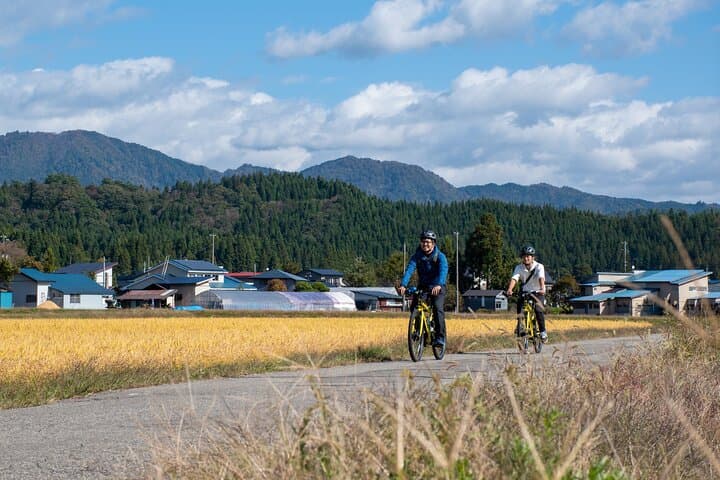
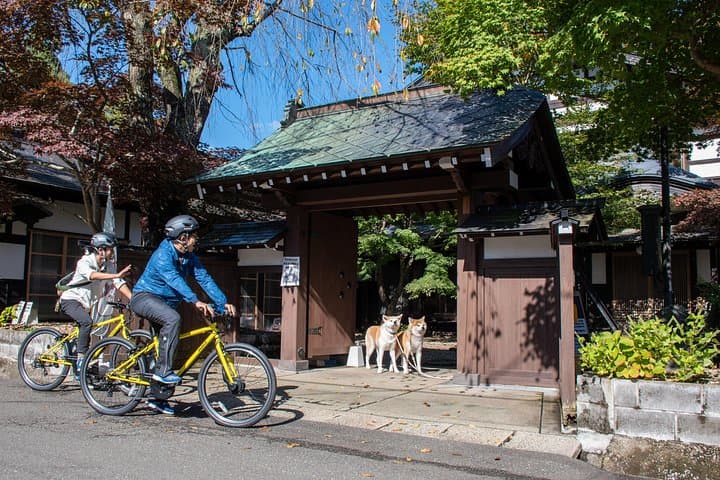
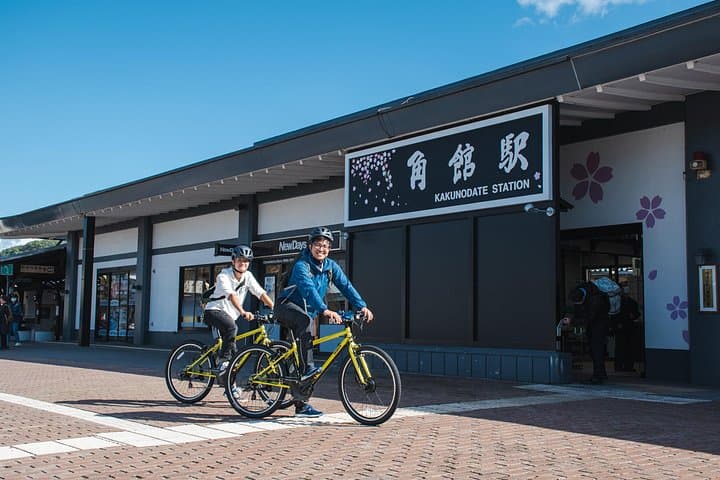
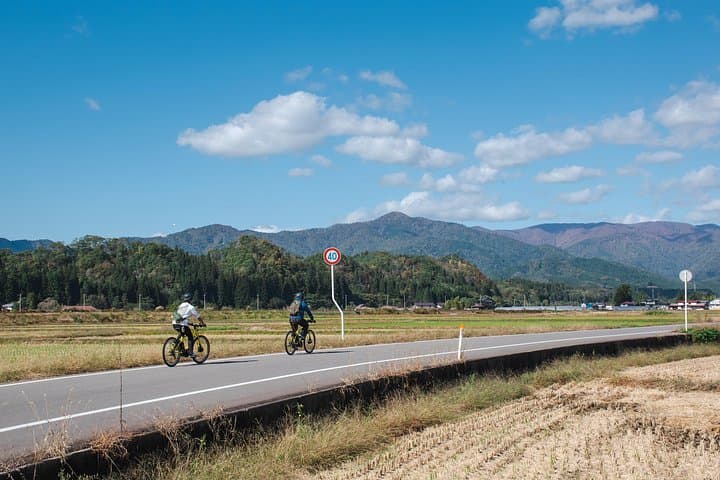
You step off a one-car Nairiku Line train onto a quiet, unmanned platform; the air is cool and the road ahead invites a slow, deliberate pedal. Within minutes the modern world yields to narrow lanes framed by rice paddies, low temple roofs and rows of samurai residences whose carved eaves watch over the town. The ride threads through Kakunodate’s preserved Edo-period district—often called Michinoku’s Little Kyoto—then pushes into farmland where chestnut groves and small rivers press at the roadside.
You step off a one-car Nairiku Line train onto a quiet, unmanned platform; the air is cool and the road ahead invites a slow, deliberate pedal. Within minutes the modern world yields to narrow lanes framed by rice paddies, low temple roofs and rows of samurai residences whose carved eaves watch over the town. The ride threads through Kakunodate’s preserved Edo-period district—often called Michinoku’s Little Kyoto—then pushes into farmland where chestnut groves and small rivers press at the roadside.
Kakunodate grew as a samurai hub in the 17th century; today the main street of samurai homes is a National Important Preservation District. Geologically the area sits on broad alluvial plains fed by streams from the Ōu Mountains, producing the loamy soils that favor rice and the region’s famed Saimyoji chestnuts. Culturally, the town balances living neighborhoods with museum-like houses, local cafes and small shrines—each stop illustrates daily life across centuries.
Practical guidance: this private, 3‑hour cycle tour is a moderate outing—expect roughly 10–15 km of mostly paved rural roads, occasional gravel lanes and short walking sections into historic homes. Bikes and a helmet are provided; a Nairiku Line train ticket and snacks are included. Bring layered clothing for changing weather, a refillable water bottle, cash for small purchases, and a camera. Morning light is best for photos and cooler riding; fall chestnut season and spring cherry blossoms are peak windows. Ride respectfully through neighborhoods, follow your guide’s pace, and you’ll leave with an intimate sense of Akita’s countryside and samurai history.