THE ADVENTURE COLLECTIVE® · Independent discovery and booking for outdoor travel

Pedal between the great temples of Angkor on a leisurely half-day ride: sandstone galleries, jungle ramparts and Bayon’s smiling faces, with a village stop and local lunch. Ideal for travelers who want close-up temple access without a strenuous trek.
Pedal between the great temples of Angkor on a leisurely half-day ride: sandstone galleries, jungle ramparts and Bayon’s smiling faces, with a village stop and local lunch. Ideal for travelers who want close-up temple access without a strenuous trek.
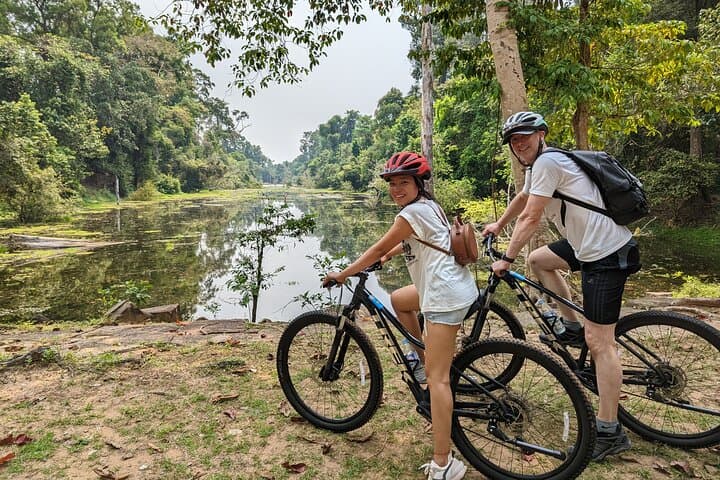
Morning light slices across carved faces as a group of cyclists eases out of Siem Reap, tires whispering on packed earth. The jungle leans in—vines tug at old stones, the moat dares you to cross its mirror. This half-day circuit moves at a relaxed pace, alternating quiet temple corridors with wide ramparts where the countryside unfurls.
Verified experiences and guided adventures in the surrounding area.
Operated by Angkor Cycling Tour · Siem Reap, Siem Reap Province
Morning light slices across carved faces as a group of cyclists eases out of Siem Reap, tires whispering on packed earth. The jungle leans in—vines tug at old stones, the moat dares you to cross its mirror. This half-day circuit moves at a relaxed pace, alternating quiet temple corridors with wide ramparts where the countryside unfurls.
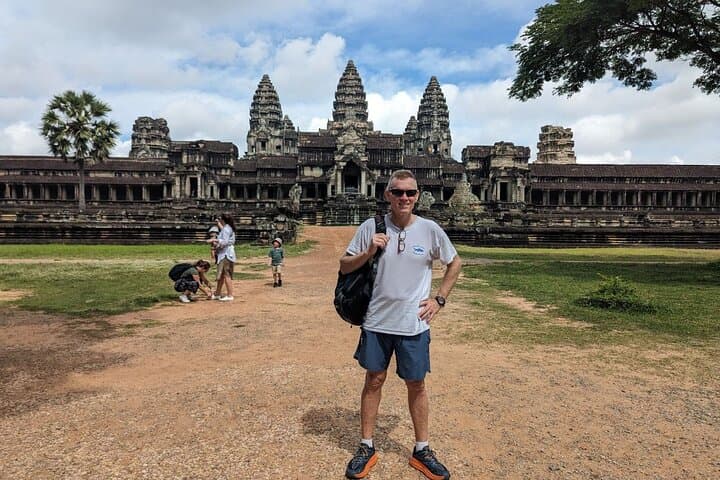
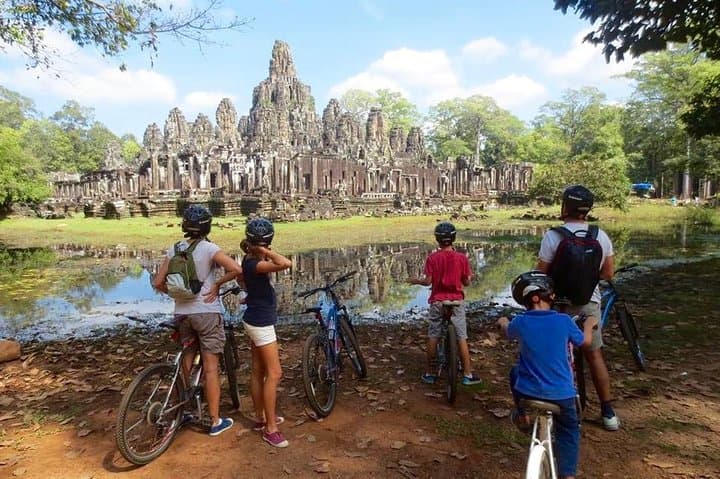
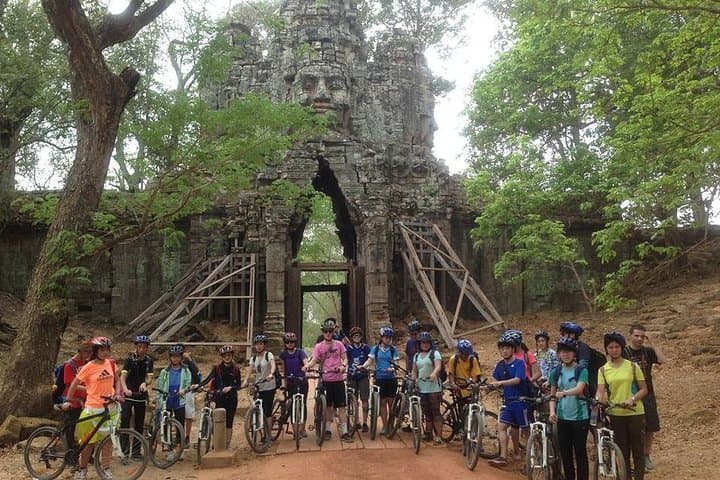
Angkor Wat, begun in the 12th century under Suryavarman II, anchors the route: sandstone galleries, mythic bas-reliefs and a central tower that still reads like a map of Khmer cosmology. Nearby, Angkor Thom’s South and West gates display the empire’s defensive geometry; Bayon’s 54 towers and 216 carved faces offer a softer, uncanny presence—stone sentries that watch the canopy.
Geology and climate shaped these ruins: laterite foundations and sandstone facades weather under monsoon cycles, and roots pry open thresholds. Local life threads through the itinerary—fishing on the irrigation ponds, palm groves, and small villages where a yellow balloon sometimes hovers above rice paddies—reminders that Angkor remains a living cultural landscape.
Practicalities: the tour lasts about five hours and supplies a Trek mountain bike, helmet, water, coconut refreshment and lunch. Expect mostly flat, easy dirt and paved tracks with a few short climbs onto the protective wall. Bring sun protection, modest temple clothing (shoulders and knees covered), and an Angkor Park pass (not included). Pace the ride to avoid midday heat, respect active worship at shrines, and keep cameras steady—many details reward slow attention.
This ride is ideal for travelers wanting a sensory, low-impact way to touch Angkor’s major sites while feeling the countryside under tire and sky.
easy.
4–5 hours.
Suitable for most people with basic cycling ability; some standing and short climbs onto walls are required.
No—the park entrance ticket is not included; buy it at the ticket center in Siem Reap or arrange before your tour.
The ride is described as easy: mostly flat trails with short climbs onto walls—basic cycling fitness and balance are sufficient.
Yes: the tour includes lunch, pure drinking water and a refreshing coconut drink; notify guides of dietary restrictions when booking.
Families are welcome; specialized infant seats are available but check age recommendations and comfort on a shared group tour.
Angkor was the heart of the Khmer Empire (9th–15th centuries); Angkor Wat was built in the early 12th century by King Suryavarman II and later centers like Bayon reflect Jayavarman VII’s 12th‑century rebuilding.
Tourism is managed to protect fragile carvings and local communities—stay on marked paths, avoid touching bas‑reliefs and support licensed local guides.
Angkor Cycling Tour operates guided outdoor trips and adventures with an emphasis on safety, stewardship, and memorable experiences.
Morning light slices across carved faces as a group of cyclists eases out of Siem Reap, tires whispering on packed earth. The jungle leans in—vines tug at old stones, the moat dares you to cross its mirror. This half-day circuit moves at a relaxed pace, alternating quiet temple corridors with wide ramparts where the countryside unfurls.
Morning light slices across carved faces as a group of cyclists eases out of Siem Reap, tires whispering on packed earth. The jungle leans in—vines tug at old stones, the moat dares you to cross its mirror. This half-day circuit moves at a relaxed pace, alternating quiet temple corridors with wide ramparts where the countryside unfurls.
Angkor Wat, begun in the 12th century under Suryavarman II, anchors the route: sandstone galleries, mythic bas-reliefs and a central tower that still reads like a map of Khmer cosmology. Nearby, Angkor Thom’s South and West gates display the empire’s defensive geometry; Bayon’s 54 towers and 216 carved faces offer a softer, uncanny presence—stone sentries that watch the canopy.
Geology and climate shaped these ruins: laterite foundations and sandstone facades weather under monsoon cycles, and roots pry open thresholds. Local life threads through the itinerary—fishing on the irrigation ponds, palm groves, and small villages where a yellow balloon sometimes hovers above rice paddies—reminders that Angkor remains a living cultural landscape.
Practicalities: the tour lasts about five hours and supplies a Trek mountain bike, helmet, water, coconut refreshment and lunch. Expect mostly flat, easy dirt and paved tracks with a few short climbs onto the protective wall. Bring sun protection, modest temple clothing (shoulders and knees covered), and an Angkor Park pass (not included). Pace the ride to avoid midday heat, respect active worship at shrines, and keep cameras steady—many details reward slow attention.
This ride is ideal for travelers wanting a sensory, low-impact way to touch Angkor’s major sites while feeling the countryside under tire and sky.