THE ADVENTURE COLLECTIVE® · Independent discovery and booking for outdoor travel

Ride between towering sandstone faces and temple moats on a guided cycling tour of Angkor Wat and Bayon. This leisurely 5–6 hour trip mixes quiet trails, cultural storytelling, and close-up views of Cambodia’s most iconic ruins.
Ride between towering sandstone faces and temple moats on a guided cycling tour of Angkor Wat and Bayon. This leisurely 5–6 hour trip mixes quiet trails, cultural storytelling, and close-up views of Cambodia’s most iconic ruins.
You push off from a quiet Siem Reap lane as dawn lifts heat from the rice paddies; palms blur, and the silhouettes of stone towers appear through a thinning mist. The route winds on compact dirt and paved causeways, and each temple approaches like a living map—Bas-reliefs watching, jungle vines tugging at corners of carved faces.
Verified experiences and guided adventures in the surrounding area.
Operated by Angkor Pro Travel · Siem Reap, Siem Reap Province
You push off from a quiet Siem Reap lane as dawn lifts heat from the rice paddies; palms blur, and the silhouettes of stone towers appear through a thinning mist. The route winds on compact dirt and paved causeways, and each temple approaches like a living map—Bas-reliefs watching, jungle vines tugging at corners of carved faces.
Angkor sits on a Khmer empire footprint that peaked in the 12th century. Angkor Wat’s sandstone galleries and Bayon’s 216 stone faces reflect a blend of Hindu and Buddhist design and the shifting politics of the Angkorian court. Geologically, the temples rise from flat lowlands of alluvial plains; laterite and sandstone were shaped and moved by human hands over centuries, while the surrounding moat systems still regulate water that once powered the capital.
Culture here is tactile: monks in saffron pass cyclists on causeways, local vendors call out for a coconut break, and guides translate iconography into stories of kings and cosmology. Hidden trails between temples bring butterflies and the hush of old stone.
Practical guide: this is a leisurely 5–6 hour ride over mostly flat terrain, with short walks up temple staircases. Angkor entry tickets are required and not included; purchase in advance to avoid queues. Bring sun protection, at least 1.5–2 liters of water, mosquito repellent, and comfortable closed shoes for temple climbs. Expect dusty tracks and occasional mud after rain; start early to beat heat and crowds. A local guide will handle logistics and history, leaving riders free to watch temple faces smile as the afternoon light shifts.
easy.
5–6 hours.
Suitable for most fitness levels; riders should be comfortable on a bike for several hours and able to climb short temple staircases.
No. Angkor park tickets are not included; buy a 1‑day, 3‑day, or 7‑day pass at the official ticket center or online before the tour.
The ride is described as leisurely and suitable for all fitness levels—most terrain is flat with short periods of pedaling between sites and light walking at temples.
Yes, the tour supplies premium TREK mountain bikes and helmets, along with bottled water and a coconut drink at stops.
Yes—this tour accommodates families; infants may ride in specialized seats and the route is gentle, though some temple staircases may be steep for small children.
Angkor was the political and spiritual heart of the Khmer empire; Bayon’s smiling faces date to King Jayavarman VII’s 12th‑century Buddhist overhaul of the capital.
Visitor impact is monitored by the APSARA Authority; stick to designated paths, avoid climbing unrestored structures, and use refillable bottles to reduce plastic waste.
Angkor Pro Travel operates guided outdoor trips and adventures with an emphasis on safety, stewardship, and memorable experiences.
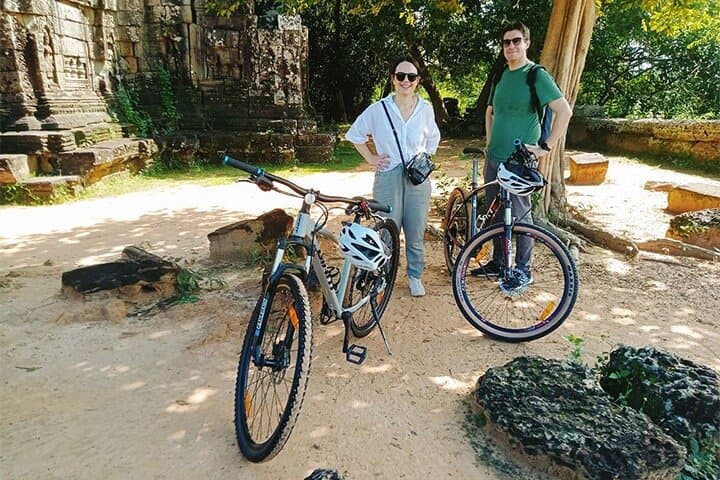
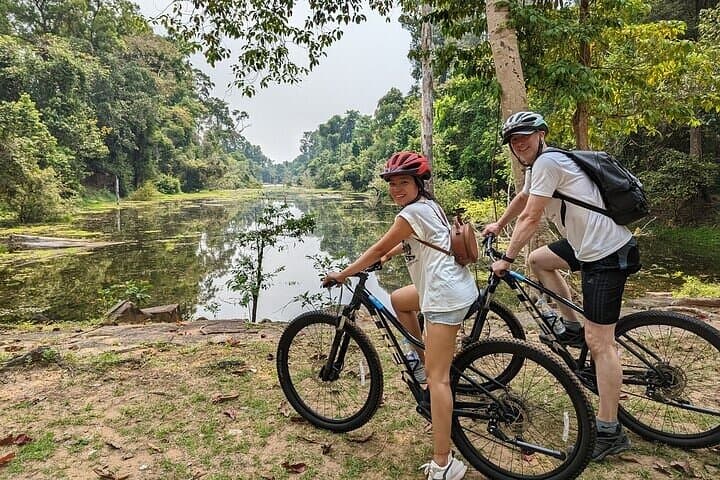
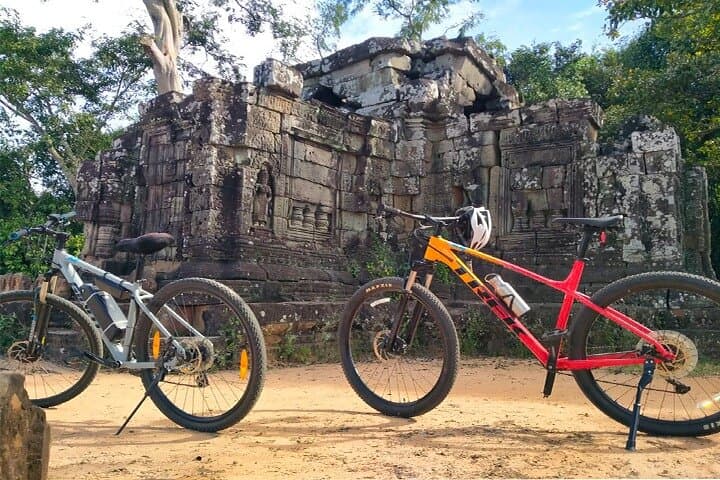
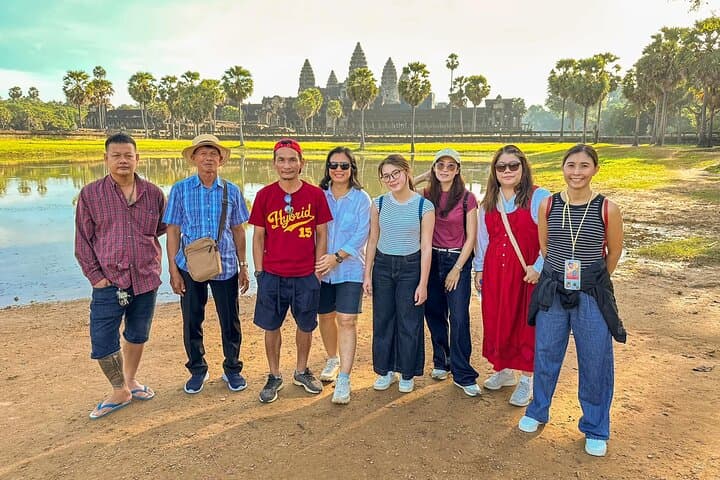
You push off from a quiet Siem Reap lane as dawn lifts heat from the rice paddies; palms blur, and the silhouettes of stone towers appear through a thinning mist. The route winds on compact dirt and paved causeways, and each temple approaches like a living map—Bas-reliefs watching, jungle vines tugging at corners of carved faces.
You push off from a quiet Siem Reap lane as dawn lifts heat from the rice paddies; palms blur, and the silhouettes of stone towers appear through a thinning mist. The route winds on compact dirt and paved causeways, and each temple approaches like a living map—Bas-reliefs watching, jungle vines tugging at corners of carved faces.
Angkor sits on a Khmer empire footprint that peaked in the 12th century. Angkor Wat’s sandstone galleries and Bayon’s 216 stone faces reflect a blend of Hindu and Buddhist design and the shifting politics of the Angkorian court. Geologically, the temples rise from flat lowlands of alluvial plains; laterite and sandstone were shaped and moved by human hands over centuries, while the surrounding moat systems still regulate water that once powered the capital.
Culture here is tactile: monks in saffron pass cyclists on causeways, local vendors call out for a coconut break, and guides translate iconography into stories of kings and cosmology. Hidden trails between temples bring butterflies and the hush of old stone.
Practical guide: this is a leisurely 5–6 hour ride over mostly flat terrain, with short walks up temple staircases. Angkor entry tickets are required and not included; purchase in advance to avoid queues. Bring sun protection, at least 1.5–2 liters of water, mosquito repellent, and comfortable closed shoes for temple climbs. Expect dusty tracks and occasional mud after rain; start early to beat heat and crowds. A local guide will handle logistics and history, leaving riders free to watch temple faces smile as the afternoon light shifts.