THE ADVENTURE COLLECTIVE® · Independent discovery and booking for outdoor travel

Skip the bus and pedal into Angkor’s quieter corners. This full‑day guided mountain‑bike tour covers hidden jungle roads and major monuments—Angkor Wat, Bayon, and Ta Prohm—while a local guide explains history and logistics.
Skip the bus and pedal into Angkor’s quieter corners. This full‑day guided mountain‑bike tour covers hidden jungle roads and major monuments—Angkor Wat, Bayon, and Ta Prohm—while a local guide explains history and logistics.
The morning air in Siem Reap feels like a held breath—sticky, warm, and full of possibilities—when pedals begin to turn toward the jungle.
Verified experiences and guided adventures in the surrounding area.
Operated by Angkor Dynasty Travel · Siem Reap, Siem Reap Province
The morning air in Siem Reap feels like a held breath—sticky, warm, and full of possibilities—when pedals begin to turn toward the jungle.
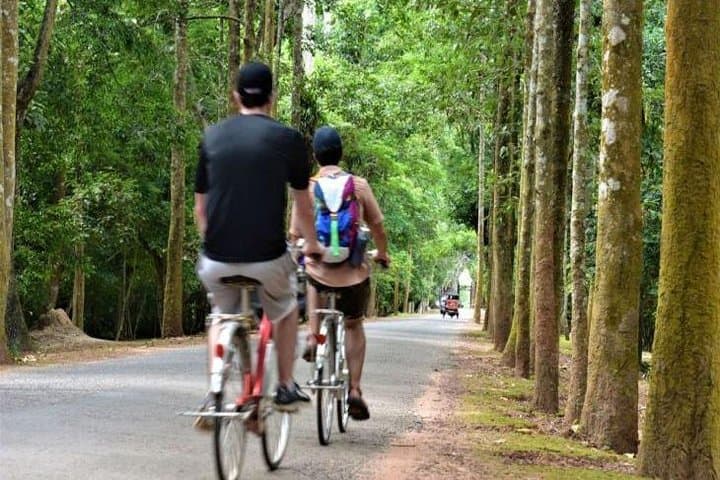
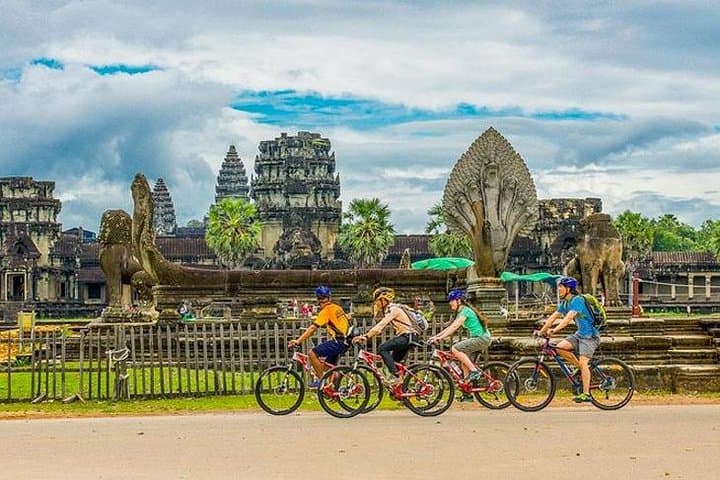
You roll away from the town, past low houses and rice paddies, and into tracks where roots and red dust push at your wheels. The ride threads through smaller, wooded temple sites before emerging into the vast stone of Angkor Archaeological Park: the mirrored moat and towers of Angkor Wat, the 200 watchful faces of the Bayon, and Ta Prohm’s massive tree roots clinging to crumbling walls. Each site speaks to Khmer power from the 9th–15th centuries; the stones carry reliefs of daily life and war, and the jungle keeps time with slow, persistent growth.
Geology here is flat limestone and laterite with clay soils that can become chunky and slick when wet; elevation gain is minimal but terrain alternates between paved roads, packed dirt, and loose forest paths. Cultural notes: guides explain temple symbology, Angkor Thom’s urban plan, and how water management made the city possible.
Practical guidance: plan 25–35 km over an 8-hour day, start at first light to avoid heat and crowds, bring 2–3 liters of water, sunscreen, and insect repellent. Expect frequent stops for interpretation and photos; private tuk‑tuk support is often available if you prefer to skip a leg. Bikes are modern hardtail mountain models suited to mixed surfaces, but basic bike handling on uneven tracks is necessary. Ride respectfully—these are active heritage sites—and you’ll leave with both sweat and perspective.
moderate.
8 hours.
Moderate fitness—able to cycle 25–35 km over mixed surfaces for most of a day with short walking sections
No—your tour provides guiding and bike use but the Angkor Archaeological Park ticket is purchased separately at the park entrance.
Expect roughly 25–35 km depending on specific route and stops; the day includes frequent short walks at temple sites.
Most operators provide a private tuk‑tuk backup to transfer participants back to Siem Reap—notify the guide in advance or on the ride.
High‑performance hardtail mountain bikes are supplied and fit a range of sizes; basic cycling competency on mixed terrain is recommended.
Angkor was the political and spiritual center of the Khmer Empire from the 9th to 15th centuries; its hydraulic network and temple cities demonstrate advanced medieval urban planning.
Angkor is a UNESCO World Heritage site facing visitor pressure—stay on marked paths, avoid touching carvings, and support guides who follow site‑management rules.
Angkor Dynasty Travel operates guided outdoor trips and adventures with an emphasis on safety, stewardship, and memorable experiences.
The morning air in Siem Reap feels like a held breath—sticky, warm, and full of possibilities—when pedals begin to turn toward the jungle.
The morning air in Siem Reap feels like a held breath—sticky, warm, and full of possibilities—when pedals begin to turn toward the jungle.
You roll away from the town, past low houses and rice paddies, and into tracks where roots and red dust push at your wheels. The ride threads through smaller, wooded temple sites before emerging into the vast stone of Angkor Archaeological Park: the mirrored moat and towers of Angkor Wat, the 200 watchful faces of the Bayon, and Ta Prohm’s massive tree roots clinging to crumbling walls. Each site speaks to Khmer power from the 9th–15th centuries; the stones carry reliefs of daily life and war, and the jungle keeps time with slow, persistent growth.
Geology here is flat limestone and laterite with clay soils that can become chunky and slick when wet; elevation gain is minimal but terrain alternates between paved roads, packed dirt, and loose forest paths. Cultural notes: guides explain temple symbology, Angkor Thom’s urban plan, and how water management made the city possible.
Practical guidance: plan 25–35 km over an 8-hour day, start at first light to avoid heat and crowds, bring 2–3 liters of water, sunscreen, and insect repellent. Expect frequent stops for interpretation and photos; private tuk‑tuk support is often available if you prefer to skip a leg. Bikes are modern hardtail mountain models suited to mixed surfaces, but basic bike handling on uneven tracks is necessary. Ride respectfully—these are active heritage sites—and you’ll leave with both sweat and perspective.