THE ADVENTURE COLLECTIVE® · Independent discovery and booking for outdoor travel

Pedal past flooded rice and towering karst, visit Hoa Lu’s ancient temples and glide through Tam Coc’s cave-studded river on a full-day trip from Hanoi. This blend of easy cycling and a serene boat ride showcases Ninh Binh’s history and geology in one active day.
Pedal past flooded rice and towering karst, visit Hoa Lu’s ancient temples and glide through Tam Coc’s cave-studded river on a full-day trip from Hanoi. This blend of easy cycling and a serene boat ride showcases Ninh Binh’s history and geology in one active day.
A low morning sun peels back the mist over paddy fields as a minibus eases out of Hanoi toward Ninh Binh. By the time cyclists swing their legs over rental bikes, limestone towers stand like weathered giants above a quilt of flooded rice, and the air smells faintly of wet earth and frying shallots.
Verified experiences and guided adventures in the surrounding area.
Operated by Vina Cruise · Tam Coc, Ninh Binh Province
A low morning sun peels back the mist over paddy fields as a minibus eases out of Hanoi toward Ninh Binh. By the time cyclists swing their legs over rental bikes, limestone towers stand like weathered giants above a quilt of flooded rice, and the air smells faintly of wet earth and frying shallots.
This route stitches together two distinct stories: Hoa Lu, the 10th–11th century capital where temples to the Dinh and Le kings hold carved wooden altars, and Tam Coc, where the Ngo Dong River threads three dark caves through karst cliffs—Vietnam’s answer to a landlocked Ha Long Bay. The karst here is old reef and limestone sculpted by millennia of rain and river; its caves and fissures guide both water and rice farmers’ channels.
Culturally the pace is deliberate: farmers steer buffalos along dikes, conical hats bob at market stalls, and locals still repair nets by hand. The guided trip pairs easy, mostly flat cycling on country roads with a calm 90-minute sampan ride through caves, offering both human history and geological spectacle.
Practically, expect a 6–7 hour day including two hours each way from Hanoi, mostly flat terrain with short village-grade surfaces and occasional busy road sections. Bring sun protection, insect repellent and a light rain shell—seasonal downpours can turn paths slick and the river level quick. Helmets and raincoats are often provided, but well-fitting shoes and a refillable water bottle make the day significantly more comfortable. Timing matters: early light yields the clearest photos, late afternoon softens the limestone into warm tones.
moderate.
6–7 hours.
Suitable for travelers with basic fitness who can ride a bike for short intervals; minimal elevation makes it accessible to most.
The typical sampan boat ride is about 60–90 minutes, taking you through three caves and along rice paddies; shared boats are rowed by local boatmen.
No—routes are mostly flat with short stretches of village road; basic cycling ability is sufficient and the tour offers vehicle transfers if you prefer not to ride.
Bring small Vietnamese dong for optional tips, souvenirs, or extras; entrance fees and lunch are usually included on organized tours.
Tours often provide raincoats and can proceed in light rain; heavy weather may prompt cancellation or rescheduling for safety.
Hoa Lu was the political center of early unified Vietnam under the Dinh and Le dynasties; temples there commemorate those early rulers and were reconstructed in later centuries.
Ninh Binh’s rice-field landscapes are working agriculture; visitors should stick to paths, avoid littering, and support local boatmen and homestays to sustain the community.
Vina Cruise operates guided outdoor trips and adventures with an emphasis on safety, stewardship, and memorable experiences.


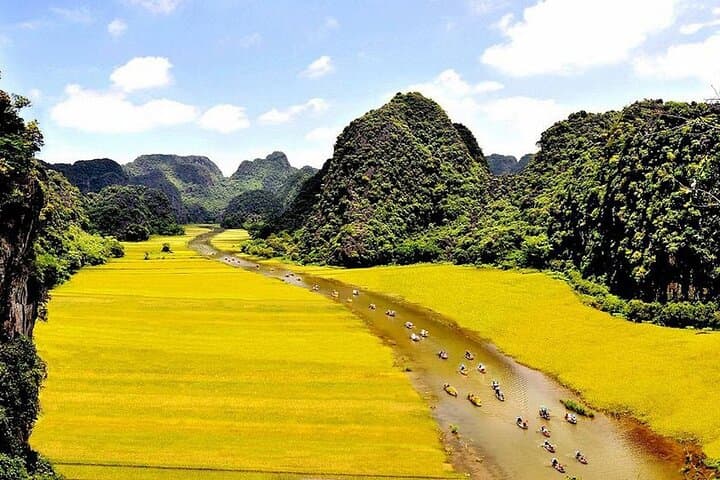

A low morning sun peels back the mist over paddy fields as a minibus eases out of Hanoi toward Ninh Binh. By the time cyclists swing their legs over rental bikes, limestone towers stand like weathered giants above a quilt of flooded rice, and the air smells faintly of wet earth and frying shallots.
A low morning sun peels back the mist over paddy fields as a minibus eases out of Hanoi toward Ninh Binh. By the time cyclists swing their legs over rental bikes, limestone towers stand like weathered giants above a quilt of flooded rice, and the air smells faintly of wet earth and frying shallots.
This route stitches together two distinct stories: Hoa Lu, the 10th–11th century capital where temples to the Dinh and Le kings hold carved wooden altars, and Tam Coc, where the Ngo Dong River threads three dark caves through karst cliffs—Vietnam’s answer to a landlocked Ha Long Bay. The karst here is old reef and limestone sculpted by millennia of rain and river; its caves and fissures guide both water and rice farmers’ channels.
Culturally the pace is deliberate: farmers steer buffalos along dikes, conical hats bob at market stalls, and locals still repair nets by hand. The guided trip pairs easy, mostly flat cycling on country roads with a calm 90-minute sampan ride through caves, offering both human history and geological spectacle.
Practically, expect a 6–7 hour day including two hours each way from Hanoi, mostly flat terrain with short village-grade surfaces and occasional busy road sections. Bring sun protection, insect repellent and a light rain shell—seasonal downpours can turn paths slick and the river level quick. Helmets and raincoats are often provided, but well-fitting shoes and a refillable water bottle make the day significantly more comfortable. Timing matters: early light yields the clearest photos, late afternoon softens the limestone into warm tones.