THE ADVENTURE COLLECTIVE® · Independent discovery and booking for outdoor travel

Spend a day shaping Kyoto to your interests with a private English-speaking driver. Visit temples, stroll bamboo groves, and sample market bites while skipping the guesswork in transit.
Spend a day shaping Kyoto to your interests with a private English-speaking driver. Visit temples, stroll bamboo groves, and sample market bites while skipping the guesswork in transit.
You step into Kyoto through a car window: streets loosen into rivers, temples peer through tidy pines, and the driver eases you past a patchwork of neighborhoods that have kept their rhythms for centuries.
Verified experiences and guided adventures in the surrounding area.
Operated by willy kin · Kyoto, Kyoto
You step into Kyoto through a car window: streets loosen into rivers, temples peer through tidy pines, and the driver eases you past a patchwork of neighborhoods that have kept their rhythms for centuries.
This private, full-day tour (8–10 hours) lets you stitch together those rhythms — Togetsukyo Bridge and Arashiyama's bamboo walk, the gilded reflection of Kinkakuji, the torii tunnels of Fushimi Inari, the wooden stage of Kiyomizudera, and Gion's narrow machiya streets. Kyoto was Japan’s capital from 794–1868; its wooden halls and stone gates record political shifts and religious practice, while volcanic ash and river sediments shaped the low hills the city occupies.
Culture is immediate: monks' chants at dawn, market vendors slicing sushi, and fox statues that guard rice god shrines. Nature here has agency — the Kamo River pushes the city’s pulse, the bamboo grove leans and sighs in wind — and your guide interprets both history and pedestrian logistics.
Practical guide: plan an early start to avoid crowds at Fushimi Inari (the full mountain trail gains about 233 m if you hike to the summit), allow 45–60 minutes for Kinkakuji and Kiyomizudera viewpoints, and budget time for walking and short stair climbs (Kiyomizudera’s stage juts roughly 13 m over the slope). Carry cash for smaller temples and market stalls; many sites are wheelchair accessible but expect steps at older shrines. For a balanced day, mix an iconic landmark, a neighborhood stroll, and a food stop at Nishiki Market.
With a private driver you control pacing — build in pauses for light rain or sudden clearings, and let Kyoto’s quieter lanes reveal themselves between the well-known stops.
easy.
8–10 hours.
Moderate mobility recommended: mostly car travel with multiple short walks and some stairs; comfortable for most travelers who can handle several 30–60 minute walking segments.
Yes—private pickup is typically arranged; you'll confirm a pickup point when booking and the driver will pick you up at the agreed location.
Yes: the tour is customizable and the driver will adjust the plan for traffic, energy levels, or sudden closures when possible.
Many stops and the vehicle are wheelchair accessible, but some historic temples have steps; notify the operator at booking to plan accessible options.
Some attractions in the sample itinerary list admission included, but confirm details with the operator — certain sites may require separate tickets or cash payment.
Kyoto served as Japan’s imperial capital for over a millennium (794–1868), and many current temples and districts reflect samurai-era urban planning and religious patronage.
High visitation stresses historic sites—stick to marked paths, avoid feeding wildlife, and support local businesses and conservation fees when provided.
willy kin operates guided outdoor trips and adventures with an emphasis on safety, stewardship, and memorable experiences.


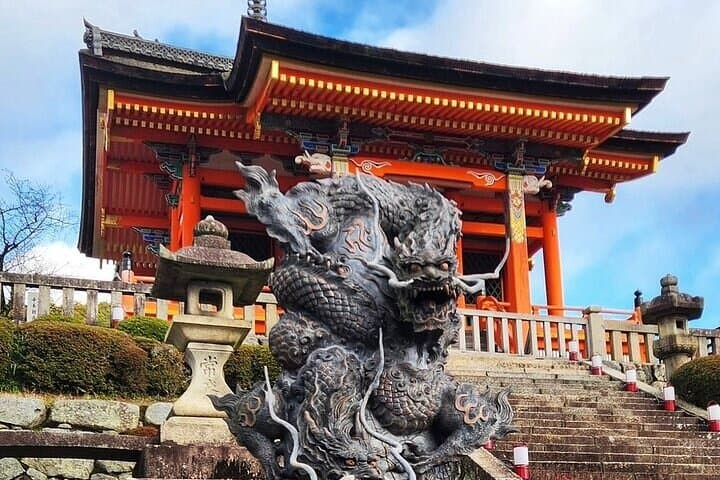

You step into Kyoto through a car window: streets loosen into rivers, temples peer through tidy pines, and the driver eases you past a patchwork of neighborhoods that have kept their rhythms for centuries.
You step into Kyoto through a car window: streets loosen into rivers, temples peer through tidy pines, and the driver eases you past a patchwork of neighborhoods that have kept their rhythms for centuries.
This private, full-day tour (8–10 hours) lets you stitch together those rhythms — Togetsukyo Bridge and Arashiyama's bamboo walk, the gilded reflection of Kinkakuji, the torii tunnels of Fushimi Inari, the wooden stage of Kiyomizudera, and Gion's narrow machiya streets. Kyoto was Japan’s capital from 794–1868; its wooden halls and stone gates record political shifts and religious practice, while volcanic ash and river sediments shaped the low hills the city occupies.
Culture is immediate: monks' chants at dawn, market vendors slicing sushi, and fox statues that guard rice god shrines. Nature here has agency — the Kamo River pushes the city’s pulse, the bamboo grove leans and sighs in wind — and your guide interprets both history and pedestrian logistics.
Practical guide: plan an early start to avoid crowds at Fushimi Inari (the full mountain trail gains about 233 m if you hike to the summit), allow 45–60 minutes for Kinkakuji and Kiyomizudera viewpoints, and budget time for walking and short stair climbs (Kiyomizudera’s stage juts roughly 13 m over the slope). Carry cash for smaller temples and market stalls; many sites are wheelchair accessible but expect steps at older shrines. For a balanced day, mix an iconic landmark, a neighborhood stroll, and a food stop at Nishiki Market.
With a private driver you control pacing — build in pauses for light rain or sudden clearings, and let Kyoto’s quieter lanes reveal themselves between the well-known stops.