THE ADVENTURE COLLECTIVE® · Independent discovery and booking for outdoor travel

A brisk, customizable 45–60 minute loop through downtown Greenville that highlights textile-era buildings, public art, and local stories. Guides tailor the route to your interests and give candid recommendations on food and sights.
A brisk, customizable 45–60 minute loop through downtown Greenville that highlights textile-era buildings, public art, and local stories. Guides tailor the route to your interests and give candid recommendations on food and sights.
You meet your guide on the stone steps outside the Westin Poinsett; the fountain hisses behind them and Main Street hums with delivery trucks and morning traffic. The tour moves at the town’s rhythm — a quick, conversational loop that stops at facades and plaques, pauses beneath murals, and threads through the blocks that shaped Greenville’s rise from mill town to modern city.
Verified experiences and guided adventures in the surrounding area.
Operated by Crossed Roads Tours · Greenville, South Carolina
You meet your guide on the stone steps outside the Westin Poinsett; the fountain hisses behind them and Main Street hums with delivery trucks and morning traffic. The tour moves at the town’s rhythm — a quick, conversational loop that stops at facades and plaques, pauses beneath murals, and threads through the blocks that shaped Greenville’s rise from mill town to modern city.
Greenville’s story is visible in brick: Huguenot Mill and the old textile warehouses that became offices, the American Cigar Factory’s industrial face, and the stately monuments that mark civic memory. The guide traces the city’s Huguenot and textile roots, Max Heller’s civic revival, and Main Street’s music history on Brown Street. You’ll glimpse the sealed-up tunnels at Coffee Underground and the quieter stories in Springwood Cemetery.
Geologically the city sits on the Piedmont’s rolling metamorphic bedrock, giving Main Street its gentle rise and the Reedy River its narrow falls nearby; culturally, downtown is a palimpsest of immigrant labor, segregation and revival — all discussed plainly, with local verdicts on where to eat and what to skip.
Practicalities are pragmatic: the walk runs about 45–60 minutes, mostly flat sidewalks with short curb cuts; it’s wheelchair- and stroller-accessible. Tours are customized on the fly, so tell the guide your interests. Bring a refillable bottle, comfortable shoes, and a light layer for spring or evening breezes. If you need to cancel, notify the operator at least 24 hours in advance.
easy.
45–60 minutes.
Suitable for most fitness levels; expect light standing and short walking intervals
Yes — guides ask about your preferences at the start and will alter stops and stories to prioritize architecture, music, food, or social history.
Most of the downtown route uses sidewalks with curb cuts and is listed as wheelchair accessible; notify the operator if you need special accommodations.
The advertised duration is up to 60 minutes; tours typically run 45–60 minutes depending on group pace and chosen stops.
For a full refund, cancel at least 24 hours before the scheduled departure time per the operator’s standard policy.
Downtown Greenville grew around 19th-century textile mills and immigrant labor; figures like Joel Poinsett and civic leaders such as Max Heller shaped its public profile and revitalization.
Tour operators emphasize respect for private property and preserved facades; staying on marked paths and following local guidance helps protect historic structures and minimize impact.
Crossed Roads Tours operates guided outdoor trips and adventures with an emphasis on safety, stewardship, and memorable experiences.
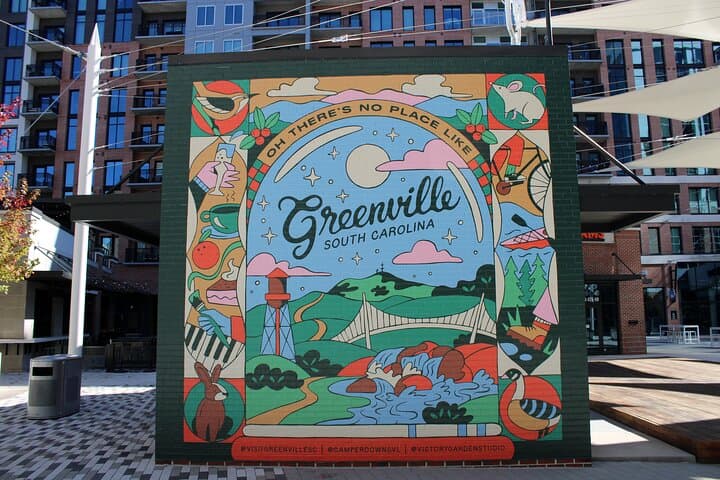
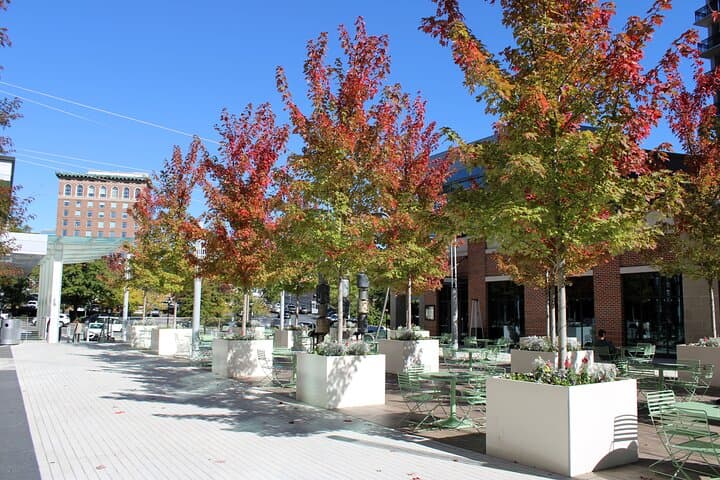
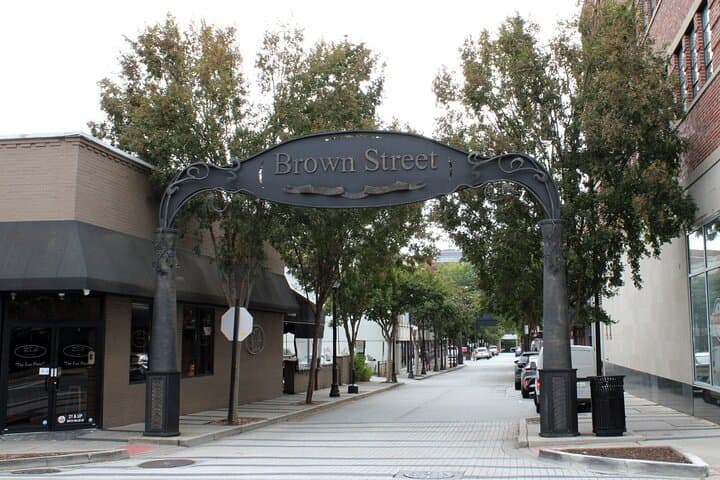
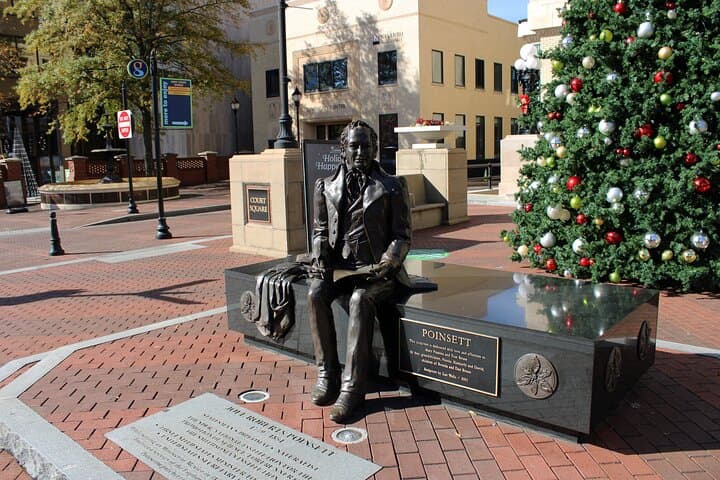
You meet your guide on the stone steps outside the Westin Poinsett; the fountain hisses behind them and Main Street hums with delivery trucks and morning traffic. The tour moves at the town’s rhythm — a quick, conversational loop that stops at facades and plaques, pauses beneath murals, and threads through the blocks that shaped Greenville’s rise from mill town to modern city.
You meet your guide on the stone steps outside the Westin Poinsett; the fountain hisses behind them and Main Street hums with delivery trucks and morning traffic. The tour moves at the town’s rhythm — a quick, conversational loop that stops at facades and plaques, pauses beneath murals, and threads through the blocks that shaped Greenville’s rise from mill town to modern city.
Greenville’s story is visible in brick: Huguenot Mill and the old textile warehouses that became offices, the American Cigar Factory’s industrial face, and the stately monuments that mark civic memory. The guide traces the city’s Huguenot and textile roots, Max Heller’s civic revival, and Main Street’s music history on Brown Street. You’ll glimpse the sealed-up tunnels at Coffee Underground and the quieter stories in Springwood Cemetery.
Geologically the city sits on the Piedmont’s rolling metamorphic bedrock, giving Main Street its gentle rise and the Reedy River its narrow falls nearby; culturally, downtown is a palimpsest of immigrant labor, segregation and revival — all discussed plainly, with local verdicts on where to eat and what to skip.
Practicalities are pragmatic: the walk runs about 45–60 minutes, mostly flat sidewalks with short curb cuts; it’s wheelchair- and stroller-accessible. Tours are customized on the fly, so tell the guide your interests. Bring a refillable bottle, comfortable shoes, and a light layer for spring or evening breezes. If you need to cancel, notify the operator at least 24 hours in advance.