THE ADVENTURE COLLECTIVE® · Independent discovery and booking for outdoor travel

Fly four ziplines above Andean ridgelines, then take control of an ATV en route to the gleaming salt pans of Maras and the agricultural terraces of Moray. This full-day Cusco excursion pairs adrenaline with cultural and geological insight.
Fly four ziplines above Andean ridgelines, then take control of an ATV en route to the gleaming salt pans of Maras and the agricultural terraces of Moray. This full-day Cusco excursion pairs adrenaline with cultural and geological insight.
Wind rakes at 3,500 meters as you clip into the first zipline; straight ahead, the Andes open into terraces and salt pans that seem carved by meticulous hands. The morning begins in Cusco and climbs into the Sacred Valley, where each cable rushes you past steep ridgelines and across wind-scoured gullies, then hands you over to an ATV for a rattle-and-roar ride toward Maras and the concentric circles of Moray.
Verified experiences and guided adventures in the surrounding area.
Operated by Amaru Explorer Peru · Cusco, Cusco Region
Wind rakes at 3,500 meters as you clip into the first zipline; straight ahead, the Andes open into terraces and salt pans that seem carved by meticulous hands. The morning begins in Cusco and climbs into the Sacred Valley, where each cable rushes you past steep ridgelines and across wind-scoured gullies, then hands you over to an ATV for a rattle-and-roar ride toward Maras and the concentric circles of Moray.
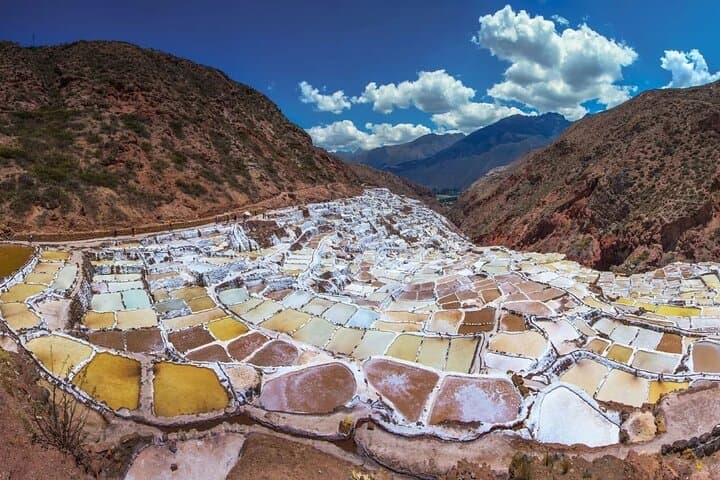
The landscape here is decades of human ingenuity on a geologic stage: salt extraction in Maras follows pre-Columbian evaporation ponds that still reflect the sky, while Moray’s stepped amphitheaters reveal deliberate soil experiments probably used by the Inca to test microclimates. Local Quechua communities maintain many of these systems, and a bilingual guide will explain how water, altitude and centuries of farming practices shape the valley.
Practically: expect 7–8 hours away from Cusco with multiple short stops, a safety briefing for ziplines, and an ATV orientation. Trails on ATVs range from firm dirt tracks to loose scree; ziplines require no prior experience but demand comfort with heights. Bring layered clothing for sun and wind, high-SPF sunscreen, snacks, and water — food is not included.
Timing matters: start early to avoid afternoon winds and get clearer views. Maintain respectful distance around salt pans and terraces; these are working landscapes. The day balances adrenaline with cultural context, delivering panoramic vistas and a hands-on look at how the valley’s people have shaped this high-altitude environment.
challenging.
7–8 hours.
Best for people with good cardiovascular fitness and comfort with heights; expect periods of standing, walking on uneven ground, and handling an ATV.
The experience runs about 7–8 hours (approximately 450 minutes) and typically returns to Cusco mid-to-late afternoon.
Yes—guides provide a safety briefing and basic ATV instruction; however participants should be comfortable with heights and physically able to handle bumps and basic vehicle control.
No—food is not included; bring snacks and a substantial lunch or plan to eat after returning to Cusco.
This tour is not recommended for children under 14, pregnant travelers, or those with serious heart or spinal conditions; travelers should have a high fitness level.
Moray’s concentric terraces are believed to have been an agricultural research site for the Inca, using microclimates to trial crops at different temperatures and altitudes.
Salt pans in Maras are still managed by local families—respect fenced areas and avoid throwing trash; stay on designated paths to protect fragile terraces.
Amaru Explorer Peru operates guided outdoor trips and adventures with an emphasis on safety, stewardship, and memorable experiences.



Wind rakes at 3,500 meters as you clip into the first zipline; straight ahead, the Andes open into terraces and salt pans that seem carved by meticulous hands. The morning begins in Cusco and climbs into the Sacred Valley, where each cable rushes you past steep ridgelines and across wind-scoured gullies, then hands you over to an ATV for a rattle-and-roar ride toward Maras and the concentric circles of Moray.
Wind rakes at 3,500 meters as you clip into the first zipline; straight ahead, the Andes open into terraces and salt pans that seem carved by meticulous hands. The morning begins in Cusco and climbs into the Sacred Valley, where each cable rushes you past steep ridgelines and across wind-scoured gullies, then hands you over to an ATV for a rattle-and-roar ride toward Maras and the concentric circles of Moray.
The landscape here is decades of human ingenuity on a geologic stage: salt extraction in Maras follows pre-Columbian evaporation ponds that still reflect the sky, while Moray’s stepped amphitheaters reveal deliberate soil experiments probably used by the Inca to test microclimates. Local Quechua communities maintain many of these systems, and a bilingual guide will explain how water, altitude and centuries of farming practices shape the valley.
Practically: expect 7–8 hours away from Cusco with multiple short stops, a safety briefing for ziplines, and an ATV orientation. Trails on ATVs range from firm dirt tracks to loose scree; ziplines require no prior experience but demand comfort with heights. Bring layered clothing for sun and wind, high-SPF sunscreen, snacks, and water — food is not included.
Timing matters: start early to avoid afternoon winds and get clearer views. Maintain respectful distance around salt pans and terraces; these are working landscapes. The day balances adrenaline with cultural context, delivering panoramic vistas and a hands-on look at how the valley’s people have shaped this high-altitude environment.