THE ADVENTURE COLLECTIVE® · Independent discovery and booking for outdoor travel

Walk the layers of Cusco—Inca foundations beneath colonial facades, artisan alleys in San Blas, and the sweeping city views from hilltop miradors. This 2.5-hour guided tour orients first-time visitors and reveals local stories you won’t find in guidebooks.
Walk the layers of Cusco—Inca foundations beneath colonial facades, artisan alleys in San Blas, and the sweeping city views from hilltop miradors. This 2.5-hour guided tour orients first-time visitors and reveals local stories you won’t find in guidebooks.
Morning light sharpens the stonework of Plaza de Armas as a local guide leads a compact group down cobbled lanes. The city breathes history here—Inca foundations under Spanish churches, vendors calling from shaded doorways, and steep alleys that open into sudden city views. Participants move at an easy pace, stopping at the 12-Angled Stone, the sun-worn steps of Qoricancha, and the San Blas viewpoint where the city spills down the valley.
Verified experiences and guided adventures in the surrounding area.
Operated by Bloody Bueno Peru · Cusco, Cusco
Morning light sharpens the stonework of Plaza de Armas as a local guide leads a compact group down cobbled lanes. The city breathes history here—Inca foundations under Spanish churches, vendors calling from shaded doorways, and steep alleys that open into sudden city views. Participants move at an easy pace, stopping at the 12-Angled Stone, the sun-worn steps of Qoricancha, and the San Blas viewpoint where the city spills down the valley.
Cusco was the heart of the Inca Empire and later the focus of Spanish colonial urban remaking; much of the colonial architecture sits directly atop Inca masonry. The surrounding geology—folded Andean ranges and river valleys—lends the streets a pressed, high-altitude feel: every climb gains breath and perspective. Cultural life is immediate: artisan workshops in San Blas, market stalls selling coca and fresh fruit, and the constant presence of llamas in tourist photos.
Practically, expect 2–3 hours of walking over uneven, often steep cobbles at roughly 3,400 m (11,150 ft). Pace yourself for altitude; bring water, sunscreen, and sturdy shoes. The meeting point is inside the Starbucks on Plaza de Armas, and tours run in English and Spanish. Guides often include a small Pisco Sour tasting and local stories that illuminate how modern Cusco balances preservation and city life. This is an orientation walk—accessible but demanding in thin air—ideal early in a Cusco itinerary to orient both body and curiosity.
moderate.
2–3 hours.
Suitable for people who can walk 2–4 km on uneven cobblestones and manage short uphill sections at high altitude
The tour meets inside Starbucks on Plaza de Armas—look for the guide near the main entrance about 10 minutes before departure.
Cusco’s historic core has uneven cobbles and steps; the tour is not wheelchair accessible and may be difficult for those with significant mobility limitations.
This walking tour focuses on exterior viewpoints and stories; specific admissions (if any) are noted in the tour details—ask your guide in advance for any optional stops that require tickets.
Tours are available in English and Spanish according to the schedule; confirm language when booking to ensure availability.
Cusco was the imperial capital of the Inca state; Spanish colonizers built churches and plazas directly atop Inca foundations, creating visible layers of history in the urban fabric.
Cusco’s popularity strains water and waste systems; support licensed local guides, avoid buying animal-derived ‘souvenirs’ from street sellers, and minimize single-use plastics.
Bloody Bueno Peru operates guided outdoor trips and adventures with an emphasis on safety, stewardship, and memorable experiences.
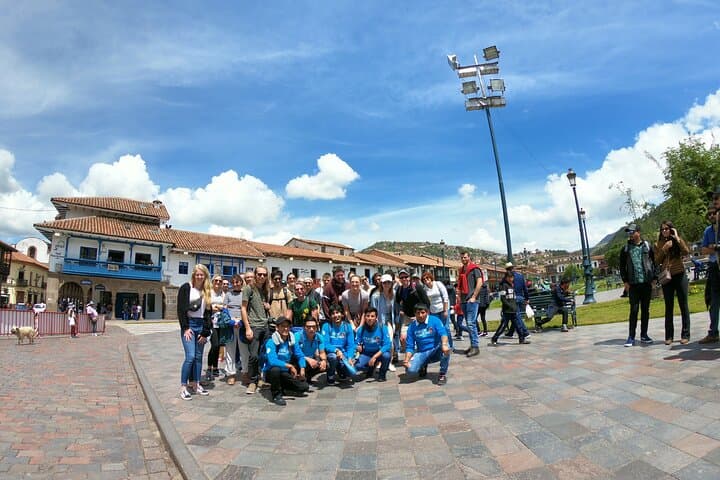
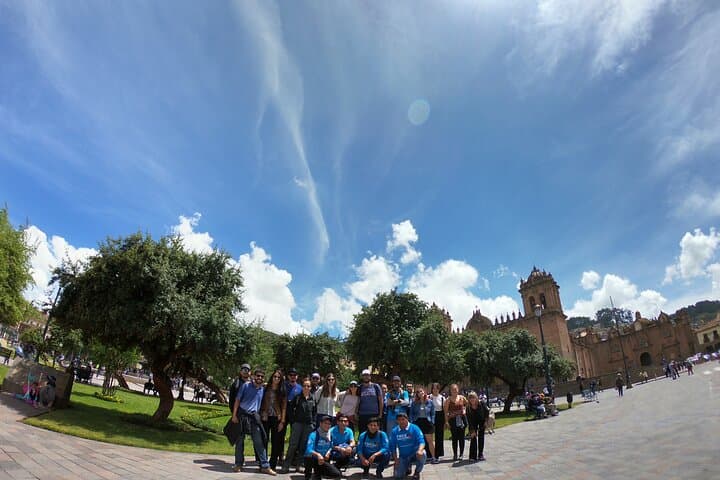
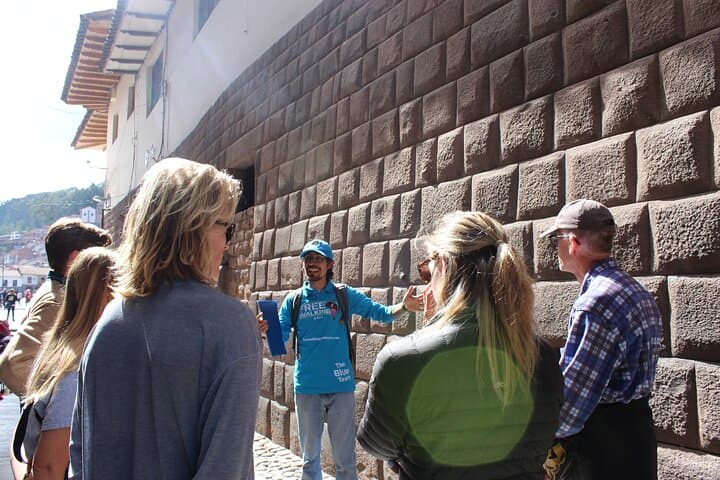
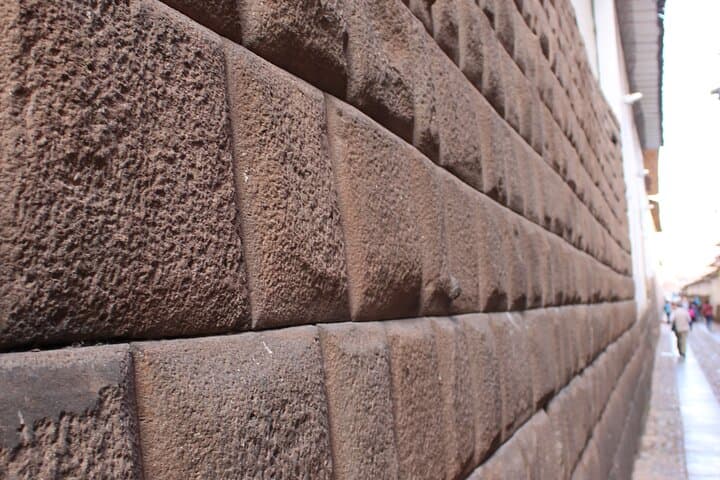
Morning light sharpens the stonework of Plaza de Armas as a local guide leads a compact group down cobbled lanes. The city breathes history here—Inca foundations under Spanish churches, vendors calling from shaded doorways, and steep alleys that open into sudden city views. Participants move at an easy pace, stopping at the 12-Angled Stone, the sun-worn steps of Qoricancha, and the San Blas viewpoint where the city spills down the valley.
Morning light sharpens the stonework of Plaza de Armas as a local guide leads a compact group down cobbled lanes. The city breathes history here—Inca foundations under Spanish churches, vendors calling from shaded doorways, and steep alleys that open into sudden city views. Participants move at an easy pace, stopping at the 12-Angled Stone, the sun-worn steps of Qoricancha, and the San Blas viewpoint where the city spills down the valley.
Cusco was the heart of the Inca Empire and later the focus of Spanish colonial urban remaking; much of the colonial architecture sits directly atop Inca masonry. The surrounding geology—folded Andean ranges and river valleys—lends the streets a pressed, high-altitude feel: every climb gains breath and perspective. Cultural life is immediate: artisan workshops in San Blas, market stalls selling coca and fresh fruit, and the constant presence of llamas in tourist photos.
Practically, expect 2–3 hours of walking over uneven, often steep cobbles at roughly 3,400 m (11,150 ft). Pace yourself for altitude; bring water, sunscreen, and sturdy shoes. The meeting point is inside the Starbucks on Plaza de Armas, and tours run in English and Spanish. Guides often include a small Pisco Sour tasting and local stories that illuminate how modern Cusco balances preservation and city life. This is an orientation walk—accessible but demanding in thin air—ideal early in a Cusco itinerary to orient both body and curiosity.