THE ADVENTURE COLLECTIVE® · Independent discovery and booking for outdoor travel

Stand above Vinicunca’s banded slopes and feel the high Andes pull at your breath. This full-day hike from Cusco combines striking geology, Quechua culture, and real altitude—here’s what to expect and how to prepare.
Stand above Vinicunca’s banded slopes and feel the high Andes pull at your breath. This full-day hike from Cusco combines striking geology, Quechua culture, and real altitude—here’s what to expect and how to prepare.
You crest a high puna ridge and the world opens: bands of ochre, rust, mint and mustard fold across a scarred slope while thin air tugs at your breath. At 4,600–5,040 m the watchtower above Vinicunca gives a close view of the color strata—sediments exposed after the ice cap retreated—and a wide-angle look at the red valley falling away below.
Verified experiences and guided adventures in the surrounding area.
Operated by Ritisuyo · Cusco, Cusco
You crest a high puna ridge and the world opens: bands of ochre, rust, mint and mustard fold across a scarred slope while thin air tugs at your breath. At 4,600–5,040 m the watchtower above Vinicunca gives a close view of the color strata—sediments exposed after the ice cap retreated—and a wide-angle look at the red valley falling away below.
The colors come from mineral layers laid down and compressed over millennia: iron oxides and clays, manganese, and sandstone create the stripes now visible thanks to recent melting. The mountain sits in the shadow of the Ausangate massif, long significant in Andean cosmology; local Quechua communities still practice highland herding and maintain trails used for generations.
Expect thin, cold air and a landscape of high grass, glacial cirques and wind-sculpted rock. The standard outing from Cusco is a long day—early pickup, a 2-hour ascent from the 4,600 m trailhead to the 5,040 m watchtower (about 3.5 km uphill), a short extra ridge walk for Red Valley views, lunch, then a 1-hour descent and minibus return.
Practical guidance: acclimatize in Cusco for 48–72 hours if possible, hydrate and move deliberately uphill, and wear layered clothing for sun and sudden storms. Trekking poles, sun protection, and solid hiking boots make the climb manageable; don’t underestimate altitude—pacing matters more than speed. Aim to go on clear mornings for the best light and to avoid afternoon showers during the wet season.
moderate.
10–12 hours.
Reasonable aerobic fitness recommended; able to hike 3.5 km uphill at high altitude and manage steep terrain.
The hike is moderate: about 3.5 km and ~2 hours uphill from the trailhead to the watchtower, but altitude makes it harder than distance alone suggests.
Yes—spend at least 48 hours in Cusco or nearby before attempting the hike to lower the risk of altitude sickness.
Local operators sometimes offer horse assistance for parts of the ascent; availability varies and horses are not recommended for those with balance issues or severe altitude sickness.
The dry season (May–September) offers the most reliable views; mornings are best year-round to avoid afternoon precipitation and cloud cover.
Vinicunca’s colors were exposed as glacial ice receded; the region lies within traditional Quechua territory tied to Ausangate, an important mountain in Andean belief systems.
High visitor numbers stress fragile puna vegetation and cultural sites; stick to trail corridors, avoid camping above the trailhead, and follow local guides’ instructions to reduce impact.
Ritisuyo operates guided outdoor trips and adventures with an emphasis on safety, stewardship, and memorable experiences.
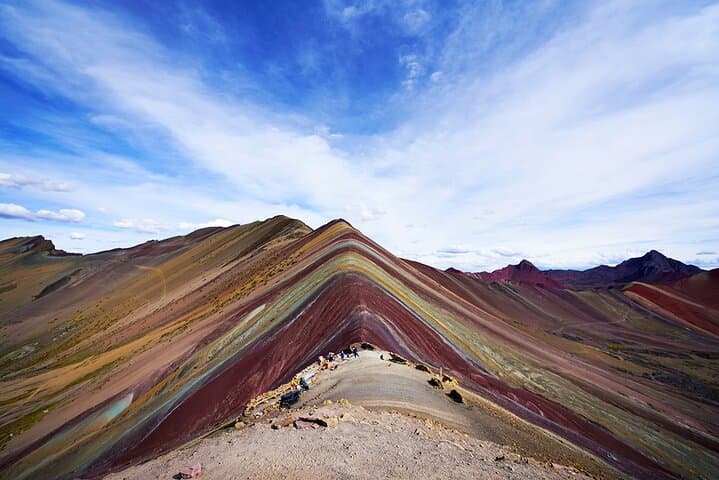
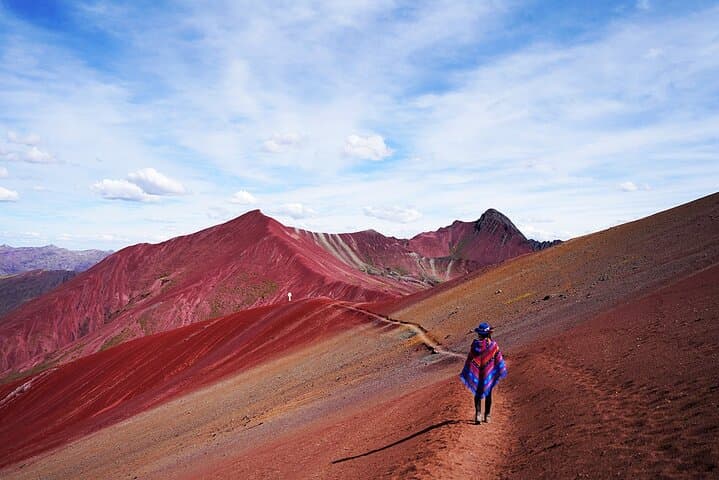
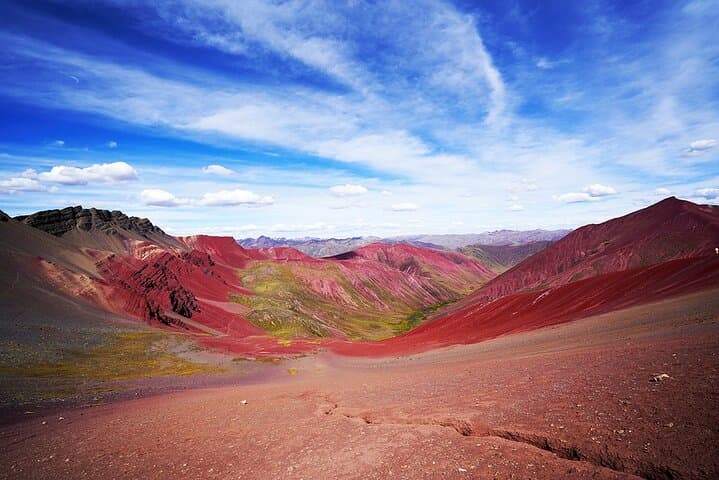
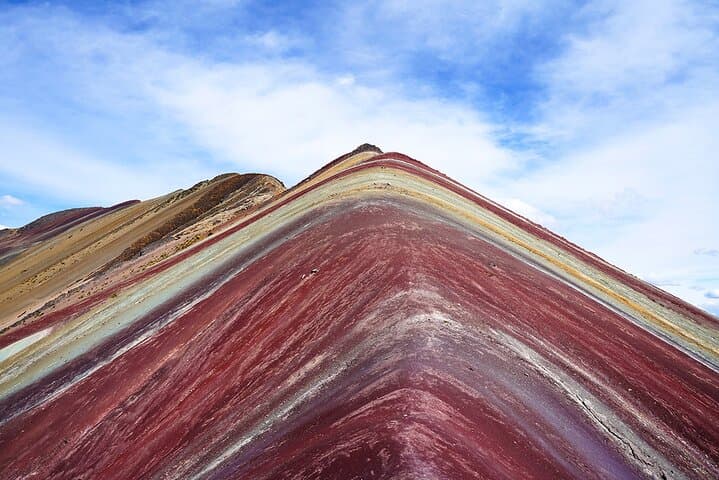
You crest a high puna ridge and the world opens: bands of ochre, rust, mint and mustard fold across a scarred slope while thin air tugs at your breath. At 4,600–5,040 m the watchtower above Vinicunca gives a close view of the color strata—sediments exposed after the ice cap retreated—and a wide-angle look at the red valley falling away below.
You crest a high puna ridge and the world opens: bands of ochre, rust, mint and mustard fold across a scarred slope while thin air tugs at your breath. At 4,600–5,040 m the watchtower above Vinicunca gives a close view of the color strata—sediments exposed after the ice cap retreated—and a wide-angle look at the red valley falling away below.
The colors come from mineral layers laid down and compressed over millennia: iron oxides and clays, manganese, and sandstone create the stripes now visible thanks to recent melting. The mountain sits in the shadow of the Ausangate massif, long significant in Andean cosmology; local Quechua communities still practice highland herding and maintain trails used for generations.
Expect thin, cold air and a landscape of high grass, glacial cirques and wind-sculpted rock. The standard outing from Cusco is a long day—early pickup, a 2-hour ascent from the 4,600 m trailhead to the 5,040 m watchtower (about 3.5 km uphill), a short extra ridge walk for Red Valley views, lunch, then a 1-hour descent and minibus return.
Practical guidance: acclimatize in Cusco for 48–72 hours if possible, hydrate and move deliberately uphill, and wear layered clothing for sun and sudden storms. Trekking poles, sun protection, and solid hiking boots make the climb manageable; don’t underestimate altitude—pacing matters more than speed. Aim to go on clear mornings for the best light and to avoid afternoon showers during the wet season.