THE ADVENTURE COLLECTIVE® · Independent discovery and booking for outdoor travel

A high‑altitude day hike from Cusco to Vinicunca (Rainbow Mountain) that pairs dramatic mineral stripes with Andean culture. Expect a 2‑hour ascent at 4,700–5,000 m, variable weather and limited summit services.
A high‑altitude day hike from Cusco to Vinicunca (Rainbow Mountain) that pairs dramatic mineral stripes with Andean culture. Expect a 2‑hour ascent at 4,700–5,000 m, variable weather and limited summit services.
Morning light cuts across a serrated skyline as the van climbs away from Cusco, revealing high puna grasslands and distant ice of Ausangate. By the time you step out at roughly 4,700–5,000 m, the air is thin and the slope ahead is raw rock and scree painted in bands of iron, copper and other minerals. The trail rises steadily for about two hours; when the colors open up you’re standing on a geological ledger page, each stripe a chapter of Peru’s deep past.
Verified experiences and guided adventures in the surrounding area.
Operated by Killamaru Perú travel · Cusco, Cusco
Morning light cuts across a serrated skyline as the van climbs away from Cusco, revealing high puna grasslands and distant ice of Ausangate. By the time you step out at roughly 4,700–5,000 m, the air is thin and the slope ahead is raw rock and scree painted in bands of iron, copper and other minerals. The trail rises steadily for about two hours; when the colors open up you’re standing on a geological ledger page, each stripe a chapter of Peru’s deep past.
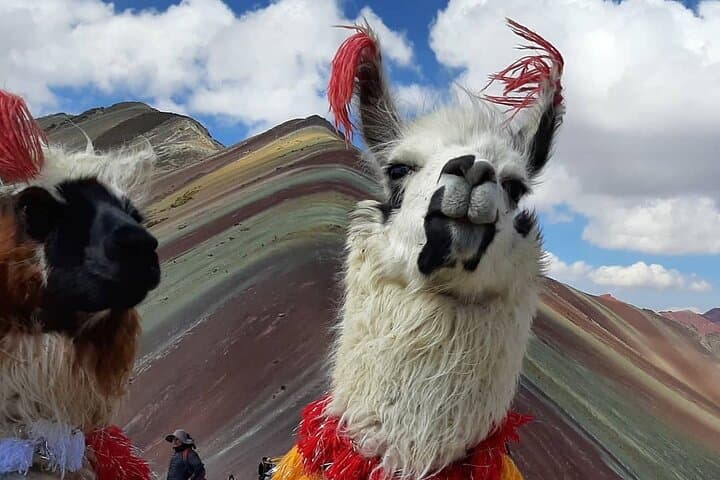
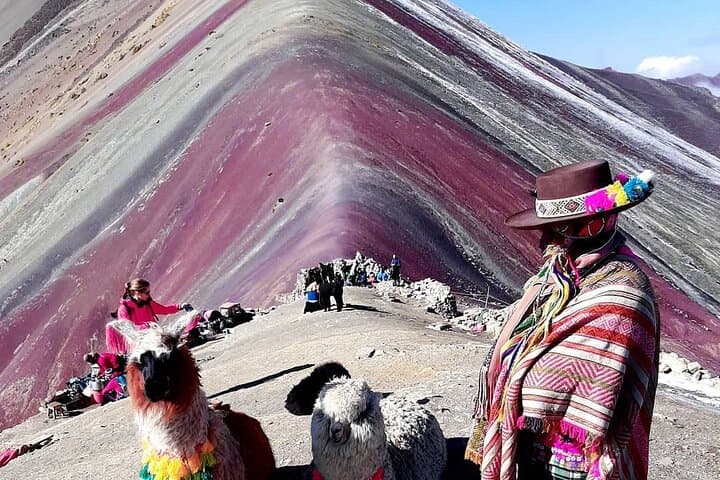
Vinicunca’s stripes are recent attention on ancient geology: red ochres, yellow limonites and green chlorites formed over millennia and were exposed by glacial retreat and erosion. The route follows Andean shepherd tracks and sits within Quechua-speaking communities that keep traditional textiles and herding practices alive—expect llamas, alpacas and locals offering simple roadside snacks.
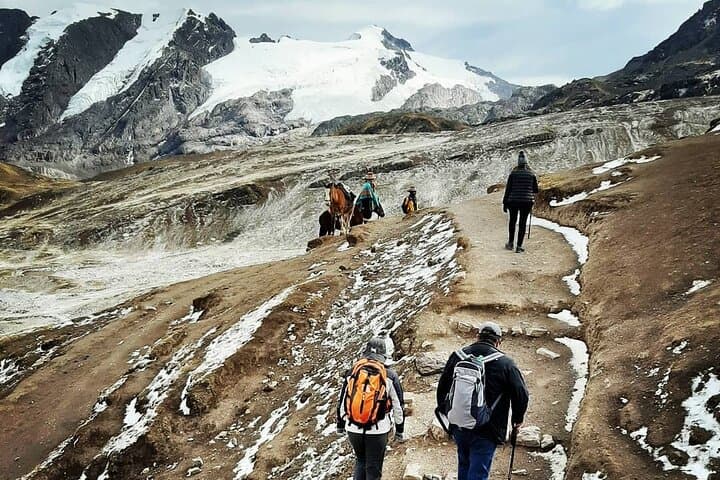
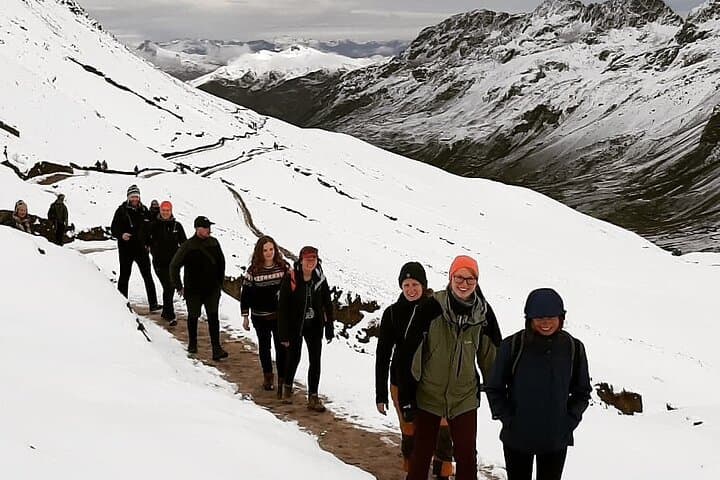
Practically, this is a high‑altitude day hike with minimal technical demands but significant physiological strain. The approach involves a 3–4 hour vehicle ride from Cusco, followed by a 2‑hour ascent (one way) across rocky, uneven ground. Weather changes fast—sun, wind, and snow are all possible in a single day—so layer and plan for limited services at the summit. Guides typically include breakfast, a buffet lunch and oxygen/first aid equipment; entrance fees support trail maintenance and local communities.
Aim to acclimatize in Cusco for 48+ hours before attempting the trek, hydrate the day prior, and start early to avoid afternoon storms and crowds. Move deliberately on the ascent, take short breaks, and keep your camera ready: the colors shift subtly with sun angle, and the view toward Ausangate rewards the effort.
challenging.
10–12 hours.
Good cardiovascular fitness and prior experience with day hikes at altitude help; expect breathlessness and slower pace.
The trail is non-technical but the altitude (4,700–5,000 m) makes it strenuous; a moderate to good fitness level and prior acclimatization are recommended.
Not recommended for very young children or pregnant travelers due to altitude; travelers with cardiovascular or spinal conditions should consult a doctor.
Services are minimal—no formal facilities at the viewpoint; guides usually carry first aid and oxygen, and food is provided at the base or en route.
Yes, but most visitors travel with organized tours for transport, local knowledge, and to ensure compliance with permit and conservation rules.
The colorful strata are exposed rock layers laid down over geological time and uplifted by Andean orogeny; the area lies along traditional Quechua pastoral lands with pathways used for centuries.
High visitor numbers accelerate erosion and waste; staying on marked trails, packing out trash and using licensed guides helps protect fragile alpine soils and local livelihoods.
Killamaru Perú travel operates guided outdoor trips and adventures with an emphasis on safety, stewardship, and memorable experiences.
Morning light cuts across a serrated skyline as the van climbs away from Cusco, revealing high puna grasslands and distant ice of Ausangate. By the time you step out at roughly 4,700–5,000 m, the air is thin and the slope ahead is raw rock and scree painted in bands of iron, copper and other minerals. The trail rises steadily for about two hours; when the colors open up you’re standing on a geological ledger page, each stripe a chapter of Peru’s deep past.
Morning light cuts across a serrated skyline as the van climbs away from Cusco, revealing high puna grasslands and distant ice of Ausangate. By the time you step out at roughly 4,700–5,000 m, the air is thin and the slope ahead is raw rock and scree painted in bands of iron, copper and other minerals. The trail rises steadily for about two hours; when the colors open up you’re standing on a geological ledger page, each stripe a chapter of Peru’s deep past.
Vinicunca’s stripes are recent attention on ancient geology: red ochres, yellow limonites and green chlorites formed over millennia and were exposed by glacial retreat and erosion. The route follows Andean shepherd tracks and sits within Quechua-speaking communities that keep traditional textiles and herding practices alive—expect llamas, alpacas and locals offering simple roadside snacks.
Practically, this is a high‑altitude day hike with minimal technical demands but significant physiological strain. The approach involves a 3–4 hour vehicle ride from Cusco, followed by a 2‑hour ascent (one way) across rocky, uneven ground. Weather changes fast—sun, wind, and snow are all possible in a single day—so layer and plan for limited services at the summit. Guides typically include breakfast, a buffet lunch and oxygen/first aid equipment; entrance fees support trail maintenance and local communities.
Aim to acclimatize in Cusco for 48+ hours before attempting the trek, hydrate the day prior, and start early to avoid afternoon storms and crowds. Move deliberately on the ascent, take short breaks, and keep your camera ready: the colors shift subtly with sun angle, and the view toward Ausangate rewards the effort.