THE ADVENTURE COLLECTIVE® · Independent discovery and booking for outdoor travel

A full-day trek from Cusco to Vinicunca (Rainbow Mountain) and optional Red Valley, offering vivid mineral bands, close encounters with camelids, and high-altitude Andean scenery. Perfect for acclimatized hikers prepared for steep climbs and strong sun.
A full-day trek from Cusco to Vinicunca (Rainbow Mountain) and optional Red Valley, offering vivid mineral bands, close encounters with camelids, and high-altitude Andean scenery. Perfect for acclimatized hikers prepared for steep climbs and strong sun.
Dawn breaks over the Andean plateau as your minivan peels out of Cusco, headlights slicing through thin mountain air.
Verified experiences and guided adventures in the surrounding area.
Operated by Peru Landers · Cusco, Cusco Region
Dawn breaks over the Andean plateau as your minivan peels out of Cusco, headlights slicing through thin mountain air.
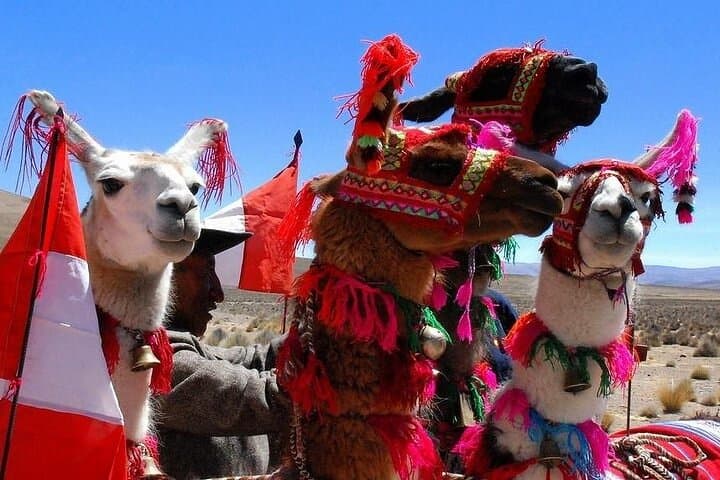
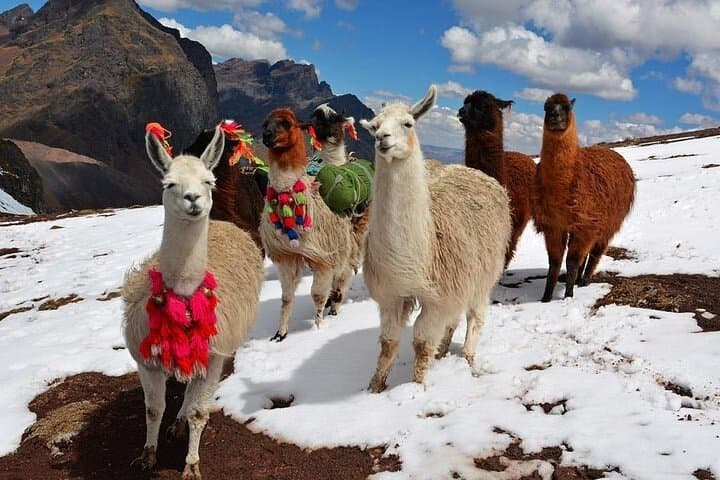
You’ll cross the high-altiplano toward Qollasuyo, alighting at Fulawasipata where the trailhead sits at about 4,850 m. The trek climbs 3.5 km one-way across rocky switchbacks and wind-swept tundra to the Rainbow Mountain ridge (≈5,010 m). Expect 1–2 hours uphill where altitude, not technical terrain, is the main challenge. Llamas and alpacas often graze nearby, their silhouettes punctuating a landscape formed by glaciers and the ancient uplift of the Ausangate massif.
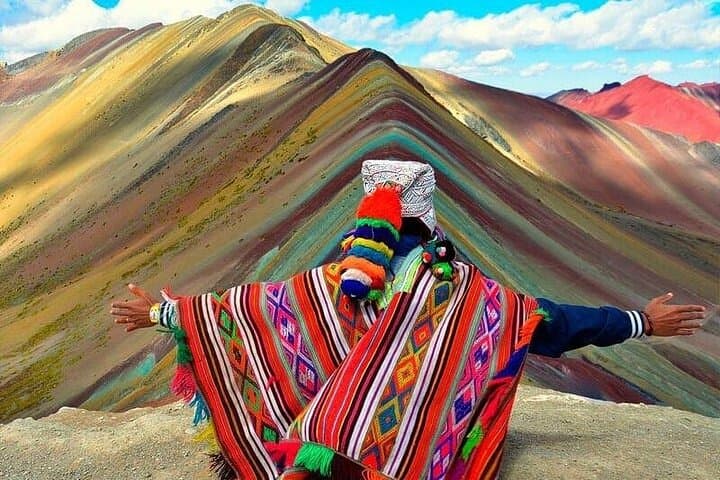
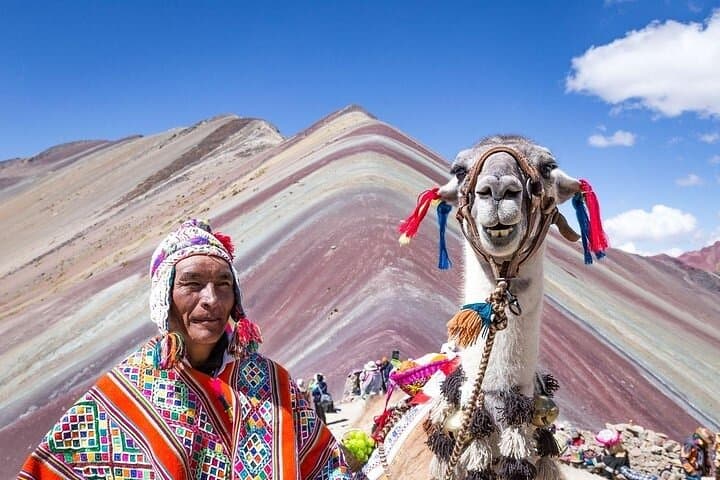
The colors of Vinicunca—bands of red, ochre, green and mauve—come from oxidized iron, sulfur, and other minerals in thin sedimentary layers exposed by glacial erosion. Local Quechua communities revere Ausangate as an apu (sacred mountain); along the route you’ll pass grazing grounds and trace a living pastoral tradition.
Practically: start early to avoid afternoon weather, carry 2 L of water, and plan for strong UV despite cold temperatures. The ascent is steep in sections but non-technical; walking poles ease knees on the descent. Facilities at the trailhead are basic—bring cash for snacks or restroom fees. Many tours include breakfast, oxygen back-up, and a post-hike buffet in Cusipata before returning to Cusco by late afternoon.
This is a high-altitude, high-reward day hike—brief in distance but dramatic in exposure, where thin air sharpens every view and the mountain seems to push you onward.
challenging.
10–12 hours (full day).
Good aerobic fitness recommended; must be acclimatized to 4,800–5,000 m and able to hike steep, sustained uphill for 1–2 hours.
The trek is about 3.5 km one-way with roughly 150–200 m of elevation gain from the trailhead (4,850 m) to the viewpoint (≈5,010 m). Expect 1–2 hours ascent and about an hour descent.
Mild altitude symptoms are common above 4,500 m; many tour operators carry oxygen and guides monitor guests—acclimatization beforehand is strongly recommended.
On some sections horses or horse taxis are available locally for an additional fee, but availability varies and animals may be tired—confirm with your operator if you need this option.
Dry season (May–September) offers clearer skies and more stable weather; afternoons can become windy, so early starts are standard year-round.
The Ausangate massif has been a sacred landscape for Quechua communities for centuries; local herders still maintain traditional grazing routes and rituals.
Rising visitor numbers stress fragile high‑altitude soils and water sources—stick to trails, avoid litter, and respect local grazing areas to limit impact.
Peru Landers operates guided outdoor trips and adventures with an emphasis on safety, stewardship, and memorable experiences.
Dawn breaks over the Andean plateau as your minivan peels out of Cusco, headlights slicing through thin mountain air.
Dawn breaks over the Andean plateau as your minivan peels out of Cusco, headlights slicing through thin mountain air.
You’ll cross the high-altiplano toward Qollasuyo, alighting at Fulawasipata where the trailhead sits at about 4,850 m. The trek climbs 3.5 km one-way across rocky switchbacks and wind-swept tundra to the Rainbow Mountain ridge (≈5,010 m). Expect 1–2 hours uphill where altitude, not technical terrain, is the main challenge. Llamas and alpacas often graze nearby, their silhouettes punctuating a landscape formed by glaciers and the ancient uplift of the Ausangate massif.
The colors of Vinicunca—bands of red, ochre, green and mauve—come from oxidized iron, sulfur, and other minerals in thin sedimentary layers exposed by glacial erosion. Local Quechua communities revere Ausangate as an apu (sacred mountain); along the route you’ll pass grazing grounds and trace a living pastoral tradition.
Practically: start early to avoid afternoon weather, carry 2 L of water, and plan for strong UV despite cold temperatures. The ascent is steep in sections but non-technical; walking poles ease knees on the descent. Facilities at the trailhead are basic—bring cash for snacks or restroom fees. Many tours include breakfast, oxygen back-up, and a post-hike buffet in Cusipata before returning to Cusco by late afternoon.
This is a high-altitude, high-reward day hike—brief in distance but dramatic in exposure, where thin air sharpens every view and the mountain seems to push you onward.