THE ADVENTURE COLLECTIVE® · Independent discovery and booking for outdoor travel

Spend a day tracing Inca agriculture, markets and stone cities along the Urubamba River. This six-hour loop from Cusco visits Pisac, Ollantaytambo and Chinchero—offering terraces, archaeological architecture and living Quechua traditions.
Spend a day tracing Inca agriculture, markets and stone cities along the Urubamba River. This six-hour loop from Cusco visits Pisac, Ollantaytambo and Chinchero—offering terraces, archaeological architecture and living Quechua traditions.
You step out onto a paved road that slides an hour from Cusco into a wide river valley where terraces climb like stacked steps toward the Vilcanota peaks. The Urubamba River threads the floor, daring you to follow its curve while villages—whitewashed houses and woven markets—pulse with everyday Andean life.
Verified experiences and guided adventures in the surrounding area.
Operated by PERU TRAVEL COMPANY · Urubamba, Cusco
You step out onto a paved road that slides an hour from Cusco into a wide river valley where terraces climb like stacked steps toward the Vilcanota peaks. The Urubamba River threads the floor, daring you to follow its curve while villages—whitewashed houses and woven markets—pulse with everyday Andean life.
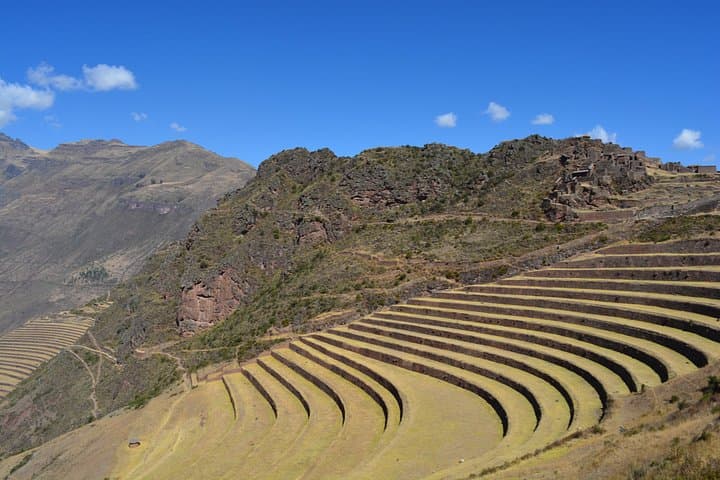
This day trip moves through sites that shaped Inca agricultural mastery. Pisac’s high terraces and market reflect a living exchange of food and craft; Ollantaytambo shows defensive stonework and urban planning where rivers and slopes were engineered for irrigation; Chinchero sits at 3,762 m with colonial churchwork set beside Inca foundations. Geologically the valley is a glacial trough carved by ancient ice and defined by volcanic and metamorphic backbones of the Andes—the result is steep, fertile slopes and dramatic microclimates.
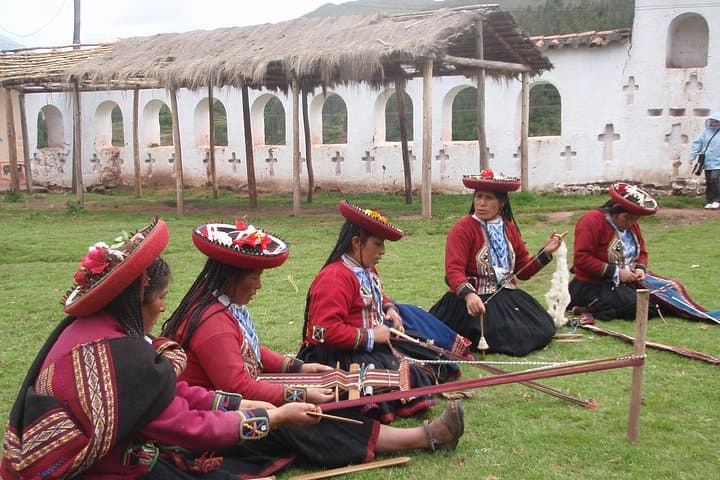
Culturally, the Sacred Valley remains an agricultural pantry: quinoa, corn and native tubers grow where the Incas optimized sun, slope and water. Modern vendors keep Quechua weaving traditions alive in markets between ruins.
Practical guidance: the tour is about 6 hours with hotel pickup and a buffet lunch. Expect short walks on uneven stone steps and altitudes ranging roughly 2,800–3,760 m; acclimatize in Cusco first. Bring layered clothing, a rain poncho in the wet season, sun protection, small cash in soles, and your passport if required for checkpoints. Wear sturdy walking shoes for terraces and cobbled streets. Start early for lower light and clearer views; mid-afternoon clouds and showers are common in summer months. The day balances accessible sightseeing with enough terrain and elevation to feel like real exploration of the Inca world.
easy.
6 hours.
Suitable for travelers in regular physical condition who can manage short walks on uneven surfaces and stairs at altitude.
The drive is roughly 45–75 minutes depending on the specific stop; the full tour operates about six hours including visits and a buffet lunch.
Yes—sites reach up to around 3,700 m; rest in Cusco beforehand, hydrate, avoid alcohol before the tour, and consult a doctor about medication if you're sensitive to altitude.
Check your booking details—many tours include transport and a guide; entrance fees to specific sites or the regional tourist ticket may be extra.
Short walks are family-friendly, and strollers can be used in flatter market areas, but terraces and ruins have many steps and uneven paths.
The Sacred Valley was a core agricultural and ceremonial zone for the Inca Empire; many terraces and towns were intentionally positioned to optimize microclimates for crops.
Rising tourism stresses fragile stonework and local water systems; stick to paths, avoid climbing on ruins, and support local cooperatives selling traditional crafts.
PERU TRAVEL COMPANY operates guided outdoor trips and adventures with an emphasis on safety, stewardship, and memorable experiences.
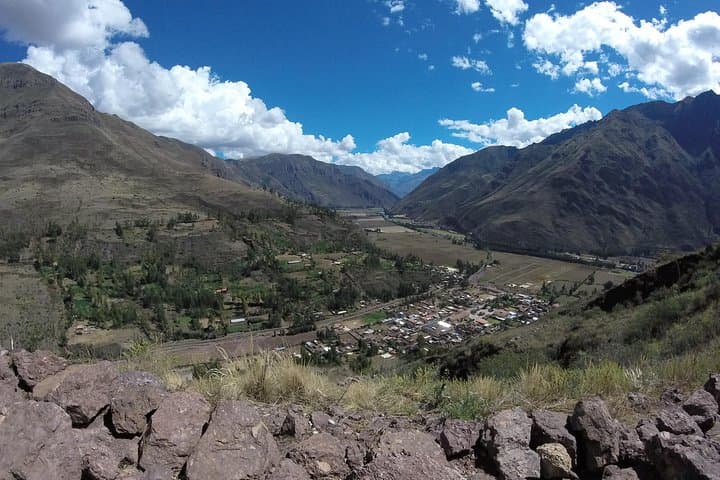
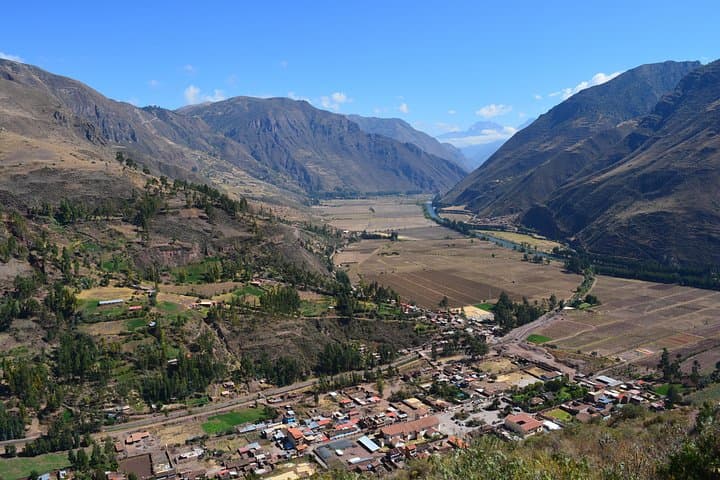
You step out onto a paved road that slides an hour from Cusco into a wide river valley where terraces climb like stacked steps toward the Vilcanota peaks. The Urubamba River threads the floor, daring you to follow its curve while villages—whitewashed houses and woven markets—pulse with everyday Andean life.
You step out onto a paved road that slides an hour from Cusco into a wide river valley where terraces climb like stacked steps toward the Vilcanota peaks. The Urubamba River threads the floor, daring you to follow its curve while villages—whitewashed houses and woven markets—pulse with everyday Andean life.
This day trip moves through sites that shaped Inca agricultural mastery. Pisac’s high terraces and market reflect a living exchange of food and craft; Ollantaytambo shows defensive stonework and urban planning where rivers and slopes were engineered for irrigation; Chinchero sits at 3,762 m with colonial churchwork set beside Inca foundations. Geologically the valley is a glacial trough carved by ancient ice and defined by volcanic and metamorphic backbones of the Andes—the result is steep, fertile slopes and dramatic microclimates.
Culturally, the Sacred Valley remains an agricultural pantry: quinoa, corn and native tubers grow where the Incas optimized sun, slope and water. Modern vendors keep Quechua weaving traditions alive in markets between ruins.
Practical guidance: the tour is about 6 hours with hotel pickup and a buffet lunch. Expect short walks on uneven stone steps and altitudes ranging roughly 2,800–3,760 m; acclimatize in Cusco first. Bring layered clothing, a rain poncho in the wet season, sun protection, small cash in soles, and your passport if required for checkpoints. Wear sturdy walking shoes for terraces and cobbled streets. Start early for lower light and clearer views; mid-afternoon clouds and showers are common in summer months. The day balances accessible sightseeing with enough terrain and elevation to feel like real exploration of the Inca world.