THE ADVENTURE COLLECTIVE® · Independent discovery and booking for outdoor travel

Early departures and local guides make the full‑day Vinicunca trek an accessible high‑altitude adventure from Cusco. Learn what the trail, terrain and logistics look like before you go.
Early departures and local guides make the full‑day Vinicunca trek an accessible high‑altitude adventure from Cusco. Learn what the trail, terrain and logistics look like before you go.
Morning light strips across the high plain, and the trail to Vinicunca opens like a folded map under an expansive sky. Travelers leave Cusco before sunrise, riding through terraced valleys until the road and village of Cusipata signal the start of the day. A thin air presses at the lungs; the mountain’s colored stripes sit above the puna, daring you to climb.
Verified experiences and guided adventures in the surrounding area.
Operated by Cabtours · Cusipata, Cusco
Morning light strips across the high plain, and the trail to Vinicunca opens like a folded map under an expansive sky. Travelers leave Cusco before sunrise, riding through terraced valleys until the road and village of Cusipata signal the start of the day. A thin air presses at the lungs; the mountain’s colored stripes sit above the puna, daring you to climb.
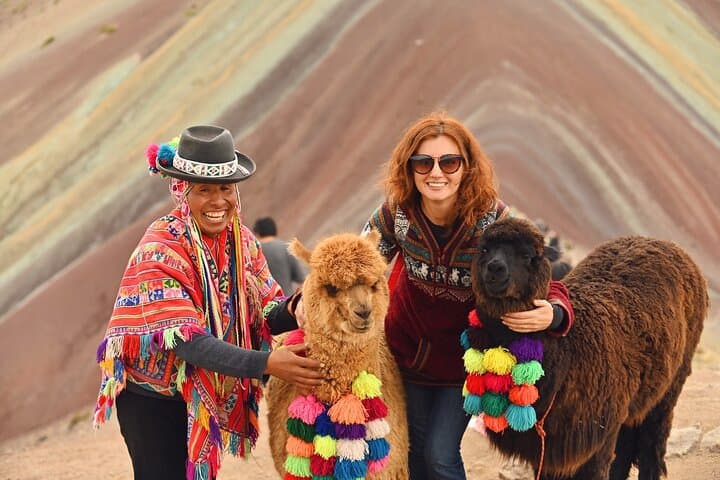
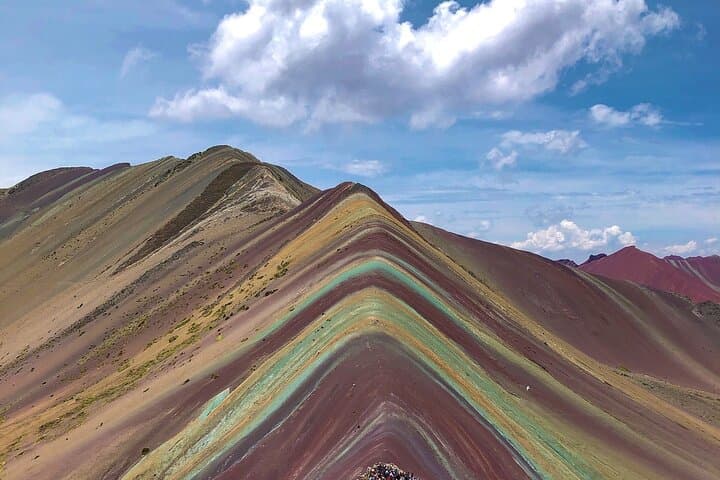
Geologically, Vinicunca’s stripes are the result of mineral deposits — iron oxides, clays and silicates — exposed by glacial retreat and erosion. Culturally, the area remains part of the Andean highlands where communities practice traditional weaving and herd llamas and alpacas on seasons-old grazing land. The mountain sits in a landscape shaped by glaciation and centuries of pastoral life, with Ausangate’s snow-capped mass visible on clear days.
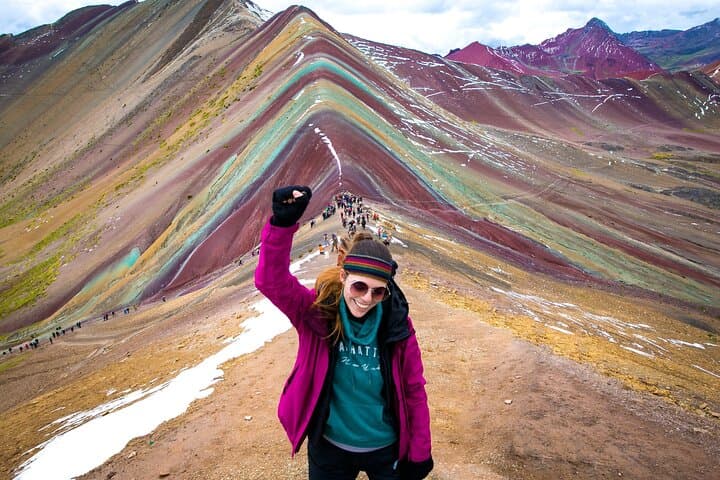
Expect a 1.5–2 hour ascent on uneven, high-altitude terrain (thin, rocky soil and puna grasses). The viewpoint rewards the effort with broad panoramas and an up-close look at the banded colors; the descent reveals a different palette as light shifts. Guides typically include a simple Andean breakfast in Cusipata and a cooked lunch after the hike.
Practical notes: acclimatize in Cusco for 48–72 hours if you can, carry at least 2 liters of water, and layer for wind and sun — conditions change quickly above 4,800 m. Stay on the marked trail to protect fragile vegetation, and plan for a 12–13 hour round trip including transport. With preparation, the climb is a vividly rewarding full-day adventure.
moderate.
12–13 hours.
Moderately fit—able to hike uphill for 1.5–2 hours at high altitude; prior acclimatization recommended
The ascent typically takes 1.5–2 hours depending on fitness and acclimatization, with a similar time descending.
Yes—Vinicunca sits above 4,800 m; spending 48–72 hours in Cusco or doing progressive altitude exposure is strongly recommended.
Yes—Palcoyo (Palccoyo) Rainbow Mountain is a lower‑altitude alternative with shorter walks and similar colored strata.
Eat a carbohydrate‑rich breakfast and avoid alcohol the night before; drink water and carry electrolyte snacks to maintain energy at altitude.
Local Quechua communities have grazed these highlands for centuries; mountains are traditionally regarded as powerful apus (sacred spirits).
High visitor numbers stress fragile puna ecosystems—follow guides, avoid litter, and support local services to ensure sustainable tourism.
Cabtours operates guided outdoor trips and adventures with an emphasis on safety, stewardship, and memorable experiences.
Morning light strips across the high plain, and the trail to Vinicunca opens like a folded map under an expansive sky. Travelers leave Cusco before sunrise, riding through terraced valleys until the road and village of Cusipata signal the start of the day. A thin air presses at the lungs; the mountain’s colored stripes sit above the puna, daring you to climb.
Morning light strips across the high plain, and the trail to Vinicunca opens like a folded map under an expansive sky. Travelers leave Cusco before sunrise, riding through terraced valleys until the road and village of Cusipata signal the start of the day. A thin air presses at the lungs; the mountain’s colored stripes sit above the puna, daring you to climb.
Geologically, Vinicunca’s stripes are the result of mineral deposits — iron oxides, clays and silicates — exposed by glacial retreat and erosion. Culturally, the area remains part of the Andean highlands where communities practice traditional weaving and herd llamas and alpacas on seasons-old grazing land. The mountain sits in a landscape shaped by glaciation and centuries of pastoral life, with Ausangate’s snow-capped mass visible on clear days.
Expect a 1.5–2 hour ascent on uneven, high-altitude terrain (thin, rocky soil and puna grasses). The viewpoint rewards the effort with broad panoramas and an up-close look at the banded colors; the descent reveals a different palette as light shifts. Guides typically include a simple Andean breakfast in Cusipata and a cooked lunch after the hike.
Practical notes: acclimatize in Cusco for 48–72 hours if you can, carry at least 2 liters of water, and layer for wind and sun — conditions change quickly above 4,800 m. Stay on the marked trail to protect fragile vegetation, and plan for a 12–13 hour round trip including transport. With preparation, the climb is a vividly rewarding full-day adventure.