THE ADVENTURE COLLECTIVE® · Independent discovery and booking for outdoor travel

Leave the stone streets of Cusco for a full‑day rush on the Vilcanota River: class III–IV rapids, a midday riverside lunch and two ziplines that skim the canyon. This one‑day outing blends technical whitewater with local culture and clear logistical structure—perfect for travelers with moderate fitness.
Leave the stone streets of Cusco for a full‑day rush on the Vilcanota River: class III–IV rapids, a midday riverside lunch and two ziplines that skim the canyon. This one‑day outing blends technical whitewater with local culture and clear logistical structure—perfect for travelers with moderate fitness.
You feel the van slow as the Andes open up—Cusco’s stone facades give way to terraced fields and distant summits catching morning light. By the time the driver eases into Oropesa you can smell baking bread; the town has been supplying local lunchboxes for generations. A quick stop for fresh loaves, a safety briefing on the riverbank, and you’re clipped into a paddle team facing the Vilcanota River as it narrows and takes on speed.
Verified experiences and guided adventures in the surrounding area.
Operated by Bamba Travel · Cusco, Cusco
You feel the van slow as the Andes open up—Cusco’s stone facades give way to terraced fields and distant summits catching morning light. By the time the driver eases into Oropesa you can smell baking bread; the town has been supplying local lunchboxes for generations. A quick stop for fresh loaves, a safety briefing on the riverbank, and you’re clipped into a paddle team facing the Vilcanota River as it narrows and takes on speed.
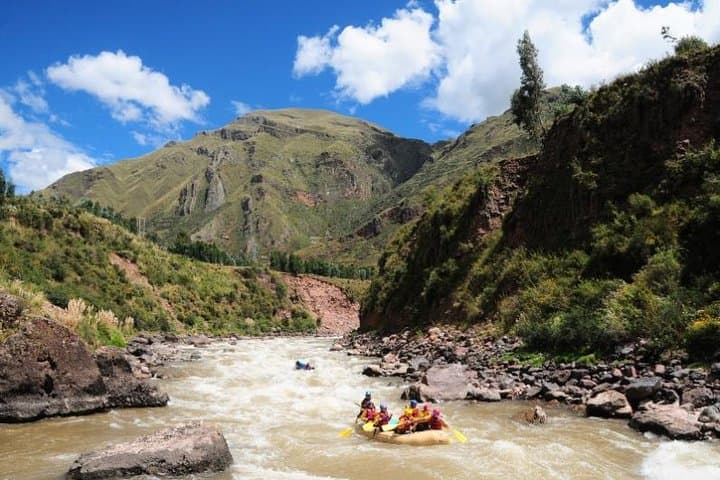
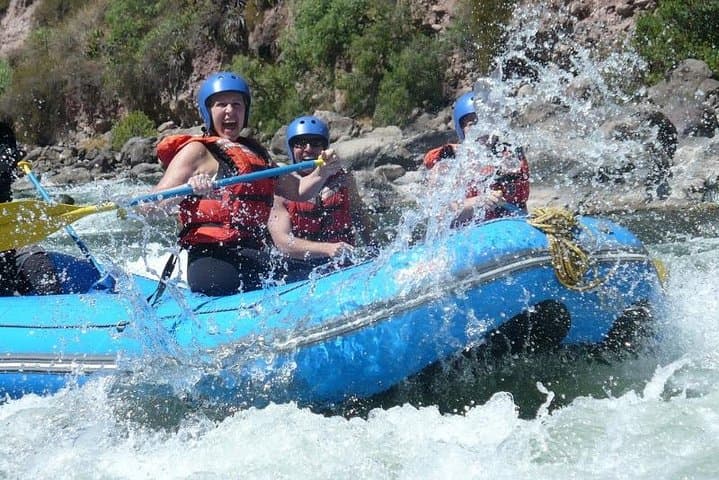
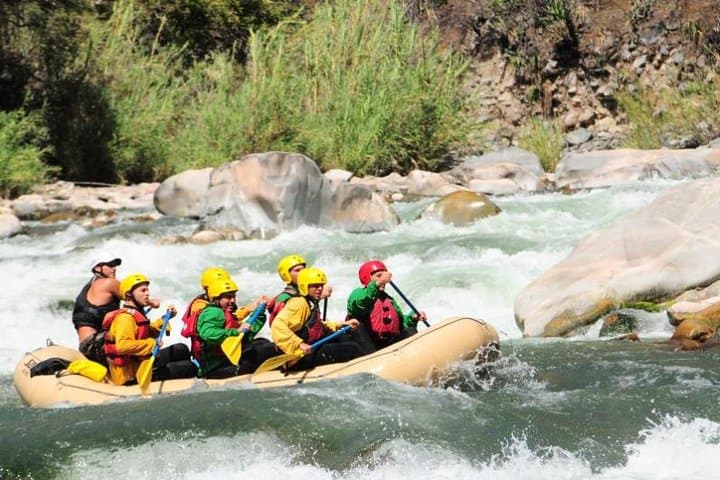
The Vilcanota—known downstream as the Urubamba—was an artery for the Inca, cutting a corridor from high puna to the lower Sacred Valley. Geologically it’s a glacier-fed stream that has carved steep banks of volcanic and sedimentary rock, creating a mix of calm pools and churning rapids. Today the river dares you through a lively sequence of class III to IV sections: technical eddies where the current pushes, clean drops that reward good timing, and quieter meanders to catch your breath.
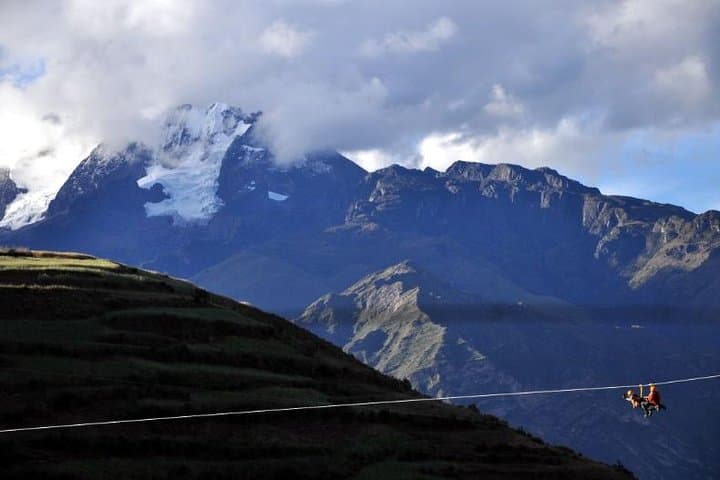
Local culture threads through the day. Guides point out old irrigation channels—part of pre-Columbian waterworks—and explain why Oropesa’s bread became famous: high-altitude wheat and wood-fired ovens. At midday you change, refuel on sandwiches and local fruit, then cross to a riverside clearing where two ziplines send you skimming over the canyon—brief, vertical speed that puts the roar of the river beneath you.
Practical reality anchors the thrill. The full day runs about eight hours with roughly 30–60 minutes of driving each way from central Cusco. The rafting stretch is commonly reported around 8–15 km depending on the launch point; expect an elevation difference of a few hundred meters between start and finish. Cusco sits at 3,400 m (11,150 ft), and although the river drops into a cooler valley, altitude can still affect breathing and energy—acclimatize a day or two before booking.
What makes the trip work is structure: professional guides, provided wetsuits, life jackets and helmets, and a safety team ready for the river’s mood. That said, physical fitness matters—you’ll paddle actively through the longer rapids and need enough stamina to climb out and walk short riverbank approaches. Pack layers for shifting sun and spray, secure footwear that can get wet, and a small dry bag for your camera.
Timing is simple: pickup from Cusco hotels between 8:30–9:00 a.m., back in the city by late afternoon. If you want bigger waves, book in the rainy season when flows are higher; for clearer skies and warmer mid-days the dry season (May–September) is ideal. Either way, the Vilcanota asks for respect—approach the whitewater with attention and you’ll come away with a day that’s equal parts adrenaline and Andean insight.
moderate.
8 hours.
Moderate—comfortable with sustained paddling bursts and short hikes; good cardiovascular baseline recommended
No prior experience required—guides provide instruction and run the raft; basic fitness and comfort in moving water are recommended.
Age restrictions vary by operator, but expect a common minimum of around 12–14 for Class III–IV sections; check with the supplier for exact limits.
The Vilcanota is fed from highland melt—water stays cold year-round; wetsuits are provided and advised, especially outside peak summer months.
Yes—Cusco is about 3,400 m. Acclimatize for a day or two, hydrate, and avoid heavy alcohol before the trip to reduce symptoms.
Yes if it’s in a waterproof case or dry bag; many operators also offer secure storage at the meeting point for valuables.
Tours may be canceled for safety in heavy rain or very high river flows—the operator typically offers a full refund if canceled 24 hours prior.
The Vilcanota/Urubamba was central to Inca agriculture and transport—ancient irrigation channels and trail systems still follow its valley.
Operators encourage Leave No Trace practices and limit group sizes; avoid single‑use plastics and support local communities by buying snacks and bread locally.
Bamba Travel operates guided outdoor trips and adventures with an emphasis on safety, stewardship, and memorable experiences.
You feel the van slow as the Andes open up—Cusco’s stone facades give way to terraced fields and distant summits catching morning light. By the time the driver eases into Oropesa you can smell baking bread; the town has been supplying local lunchboxes for generations. A quick stop for fresh loaves, a safety briefing on the riverbank, and you’re clipped into a paddle team facing the Vilcanota River as it narrows and takes on speed.
You feel the van slow as the Andes open up—Cusco’s stone facades give way to terraced fields and distant summits catching morning light. By the time the driver eases into Oropesa you can smell baking bread; the town has been supplying local lunchboxes for generations. A quick stop for fresh loaves, a safety briefing on the riverbank, and you’re clipped into a paddle team facing the Vilcanota River as it narrows and takes on speed.
The Vilcanota—known downstream as the Urubamba—was an artery for the Inca, cutting a corridor from high puna to the lower Sacred Valley. Geologically it’s a glacier-fed stream that has carved steep banks of volcanic and sedimentary rock, creating a mix of calm pools and churning rapids. Today the river dares you through a lively sequence of class III to IV sections: technical eddies where the current pushes, clean drops that reward good timing, and quieter meanders to catch your breath.
Local culture threads through the day. Guides point out old irrigation channels—part of pre-Columbian waterworks—and explain why Oropesa’s bread became famous: high-altitude wheat and wood-fired ovens. At midday you change, refuel on sandwiches and local fruit, then cross to a riverside clearing where two ziplines send you skimming over the canyon—brief, vertical speed that puts the roar of the river beneath you.
Practical reality anchors the thrill. The full day runs about eight hours with roughly 30–60 minutes of driving each way from central Cusco. The rafting stretch is commonly reported around 8–15 km depending on the launch point; expect an elevation difference of a few hundred meters between start and finish. Cusco sits at 3,400 m (11,150 ft), and although the river drops into a cooler valley, altitude can still affect breathing and energy—acclimatize a day or two before booking.
What makes the trip work is structure: professional guides, provided wetsuits, life jackets and helmets, and a safety team ready for the river’s mood. That said, physical fitness matters—you’ll paddle actively through the longer rapids and need enough stamina to climb out and walk short riverbank approaches. Pack layers for shifting sun and spray, secure footwear that can get wet, and a small dry bag for your camera.
Timing is simple: pickup from Cusco hotels between 8:30–9:00 a.m., back in the city by late afternoon. If you want bigger waves, book in the rainy season when flows are higher; for clearer skies and warmer mid-days the dry season (May–September) is ideal. Either way, the Vilcanota asks for respect—approach the whitewater with attention and you’ll come away with a day that’s equal parts adrenaline and Andean insight.