THE ADVENTURE COLLECTIVE® · Independent discovery and booking for outdoor travel

A seven-day, high-altitude circuit from Cusco that pairs city archaeology with Sacred Valley terraces, salt pans, the 7-Color Mountain and a full-day visit to Machu Picchu. Ideal for travelers who want guided logistics with demanding but achievable hikes at altitude.
A seven-day, high-altitude circuit from Cusco that pairs city archaeology with Sacred Valley terraces, salt pans, the 7-Color Mountain and a full-day visit to Machu Picchu. Ideal for travelers who want guided logistics with demanding but achievable hikes at altitude.
Dawn in Cusco arrives cool and thin at 3,400 m — the city exhales steam from street kitchens while ancient stone walls keep the memory of the Inca Empire alive. Walk the Plaza de Armas and you stand where astronomers and clergy once measured the sky; leave the city and the high Andean landscape opens into terraced valleys, salt pans glittering like a dare, and mountains that seem to breathe color.
Verified experiences and guided adventures in the surrounding area.
Operated by Destino Inka · Cusco, Cusco
Dawn in Cusco arrives cool and thin at 3,400 m — the city exhales steam from street kitchens while ancient stone walls keep the memory of the Inca Empire alive. Walk the Plaza de Armas and you stand where astronomers and clergy once measured the sky; leave the city and the high Andean landscape opens into terraced valleys, salt pans glittering like a dare, and mountains that seem to breathe color.
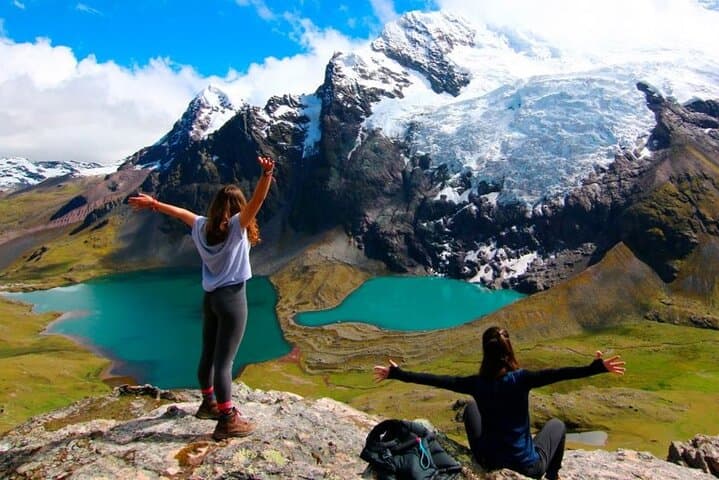
This seven-day loop pairs urban history with high-altitude trail work: day one tours Cusco’s Qorikancha temple, Saqsaywaman and colonial churches showing the uneasy fusion of Inca masonry and Spanish architecture. The Sacred Valley brings Pisac’s terraces, Ollantaytambo’s fortress lines and living Inca streets. Expect visits to Moray’s concentric labs of agriculture and the Maras salt pans — geology and human engineering side by side. Key ascents include Vinicunca (5,200–5,400 m) — a steep 1.5–2 hour climb over rocky, wind-exposed slopes — and the Humantay Lagoon (4,200 m), a 1.5–2 hour uphill that rewards with glacier-fed turquoise.
Machu Picchu is scheduled as a full-day excursion by train and bus; the citadel sits lower at about 2,430 m but requires daylight timing and ticketed entry. Trails are a mix of cobblestone, packed dirt and loose scree; weather shifts fast — sun becomes wind becomes snow in a single day.
Practical guidance: build 48–72 hours of acclimatization in Cusco, drink extra water, move at a conversational pace on high days, and carry layers, sunscreen and a small first-aid kit. Book train and site tickets in advance, start mountain days pre-dawn for the light and to reduce wind exposure, and budget time for gentle rest between active days.
challenging.
7 days.
Should be in good cardiovascular shape with experience walking on uneven terrain; prior acclimatization recommended for high-altitude days.
Plan 48–72 hours of light activity in Cusco before attempting Vinicunca (5,200–5,400 m) or Humantay (4,200 m); move slowly and hydrate to reduce altitude sickness risk.
Machupicchu admission is included for the citadel visit day in this itinerary when marked; train upgrades and optional meals in Aguas Calientes may be additional—confirm at booking.
Both are steep uphill efforts of 1.5–2 hours each; terrain includes rocky and loose sections, so moderate-to-good fitness and steady pacing are required.
The tour offers personalized experiences and private options on request—contact the operator ahead of time to arrange private guides or timing changes.
Cusco served as the administrative and ceremonial capital of the Inca Empire; colonial buildings were often constructed atop precisely cut Inca stone foundations, reflecting cultural continuity and change.
High-traffic ruins require timed entries and stick-to-path rules; support local guides, avoid single-use plastics on hikes, and respect village agriculture to reduce impact.
Destino Inka operates guided outdoor trips and adventures with an emphasis on safety, stewardship, and memorable experiences.
Dawn in Cusco arrives cool and thin at 3,400 m — the city exhales steam from street kitchens while ancient stone walls keep the memory of the Inca Empire alive. Walk the Plaza de Armas and you stand where astronomers and clergy once measured the sky; leave the city and the high Andean landscape opens into terraced valleys, salt pans glittering like a dare, and mountains that seem to breathe color.
Dawn in Cusco arrives cool and thin at 3,400 m — the city exhales steam from street kitchens while ancient stone walls keep the memory of the Inca Empire alive. Walk the Plaza de Armas and you stand where astronomers and clergy once measured the sky; leave the city and the high Andean landscape opens into terraced valleys, salt pans glittering like a dare, and mountains that seem to breathe color.
This seven-day loop pairs urban history with high-altitude trail work: day one tours Cusco’s Qorikancha temple, Saqsaywaman and colonial churches showing the uneasy fusion of Inca masonry and Spanish architecture. The Sacred Valley brings Pisac’s terraces, Ollantaytambo’s fortress lines and living Inca streets. Expect visits to Moray’s concentric labs of agriculture and the Maras salt pans — geology and human engineering side by side. Key ascents include Vinicunca (5,200–5,400 m) — a steep 1.5–2 hour climb over rocky, wind-exposed slopes — and the Humantay Lagoon (4,200 m), a 1.5–2 hour uphill that rewards with glacier-fed turquoise.
Machu Picchu is scheduled as a full-day excursion by train and bus; the citadel sits lower at about 2,430 m but requires daylight timing and ticketed entry. Trails are a mix of cobblestone, packed dirt and loose scree; weather shifts fast — sun becomes wind becomes snow in a single day.
Practical guidance: build 48–72 hours of acclimatization in Cusco, drink extra water, move at a conversational pace on high days, and carry layers, sunscreen and a small first-aid kit. Book train and site tickets in advance, start mountain days pre-dawn for the light and to reduce wind exposure, and budget time for gentle rest between active days.