THE ADVENTURE COLLECTIVE® · Independent discovery and booking for outdoor travel

Explore Cusco’s layered history on a focused half-day tour that links Plaza de Armas, Qorikancha, Sacsayhuamán and Qenqo. Expect fitted Inca stonework, colonial churches built over sacred sites, and practical tips for altitude and timing.
Explore Cusco’s layered history on a focused half-day tour that links Plaza de Armas, Qorikancha, Sacsayhuamán and Qenqo. Expect fitted Inca stonework, colonial churches built over sacred sites, and practical tips for altitude and timing.
A morning in Cusco opens with thin air that nudges each breath and a city that seems to move on stone. From the Plaza de Armas the guide leads through narrow colonial streets where Inca foundations rise under Spanish facades, and the surrounding peaks press close enough to be felt rather than merely seen.
Verified experiences and guided adventures in the surrounding area.
Operated by Machu Picchu Amazon Peru · Cusco, Cusco
A morning in Cusco opens with thin air that nudges each breath and a city that seems to move on stone. From the Plaza de Armas the guide leads through narrow colonial streets where Inca foundations rise under Spanish facades, and the surrounding peaks press close enough to be felt rather than merely seen.
The tour stitches together four major sites: the Cathedral’s baroque chapels standing over Inca palace foundations; Qorikancha, the Temple of the Sun whose exquisitely cut stones became the skeleton for Santo Domingo; the megalithic terraces and walls of Sacsayhuamán, where enormous fitted boulders still hold their angles; and the carved monoliths and canals of Qenqo with its amphitheater-like chambers. Geology is on display — ancient volcanic and metamorphic stones quarried from nearby ridges, hauled and shaped with surprising precision.
Culturally the walk shows the collision and fusion of worlds: Quechua ritual landscapes repurposed into Christian centers, local artisans selling textiles in the shadow of colonial balconies, and markets that still trade traditional foods. The air has a mineral bite and the city’s slopes dare you to pay attention to elevation.
Practical guidance: wear sturdy shoes and layer for rapid temperature swings; take it slow to acclimatize and drink water frequently. Expect roughly four to five hours on foot with frequent stops; bring cash for museum entrances and small purchases. Respect archaeological boundaries — the stones carry centuries of hands and history, and leaving them intact keeps them speaking for generations to come.
easy.
4–5 hours.
Suitable for travelers in basic walking fitness; some uneven cobbles and short uphill sections at altitude.
The tour runs about four to five hours, including stops at Plaza de Armas, Qorikancha, Sacsayhuamán and Qenqo.
Cusco sits above 11,000 ft; some visitors experience mild symptoms—rest, hydrate, and ascend slowly; consult a doctor about medication if concerned.
This tour description notes transport and guide but typically does not include museum or archaeological site entrance fees—bring cash for admissions.
Many colonial streets and Inca sites have uneven cobbles and steps; full accessibility is limited—check with the operator for accommodations.
Cusco was the capital of the Inca Empire; Spanish colonizers often built churches and convents directly atop Inca temples, creating a visible fusion of cultures.
Heavy visitor traffic and altitude-related erosion threaten fragile stonework—stick to marked paths, avoid touching carved surfaces, and support local conservation efforts.
Machu Picchu Amazon Peru operates guided outdoor trips and adventures with an emphasis on safety, stewardship, and memorable experiences.


A morning in Cusco opens with thin air that nudges each breath and a city that seems to move on stone. From the Plaza de Armas the guide leads through narrow colonial streets where Inca foundations rise under Spanish facades, and the surrounding peaks press close enough to be felt rather than merely seen.
A morning in Cusco opens with thin air that nudges each breath and a city that seems to move on stone. From the Plaza de Armas the guide leads through narrow colonial streets where Inca foundations rise under Spanish facades, and the surrounding peaks press close enough to be felt rather than merely seen.
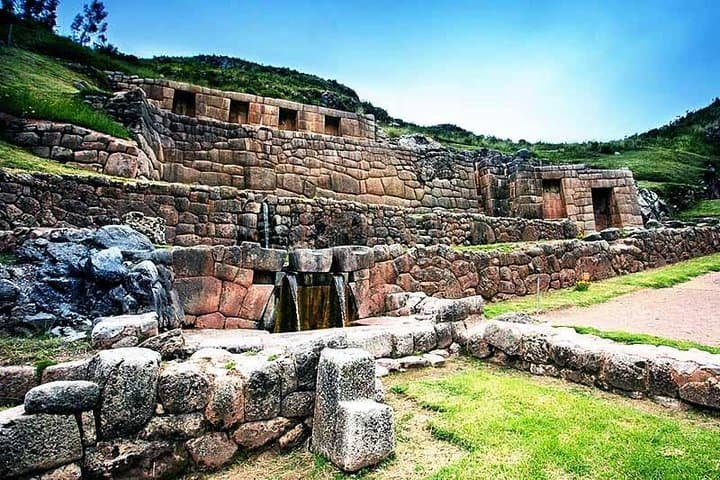
The tour stitches together four major sites: the Cathedral’s baroque chapels standing over Inca palace foundations; Qorikancha, the Temple of the Sun whose exquisitely cut stones became the skeleton for Santo Domingo; the megalithic terraces and walls of Sacsayhuamán, where enormous fitted boulders still hold their angles; and the carved monoliths and canals of Qenqo with its amphitheater-like chambers. Geology is on display — ancient volcanic and metamorphic stones quarried from nearby ridges, hauled and shaped with surprising precision.
Culturally the walk shows the collision and fusion of worlds: Quechua ritual landscapes repurposed into Christian centers, local artisans selling textiles in the shadow of colonial balconies, and markets that still trade traditional foods. The air has a mineral bite and the city’s slopes dare you to pay attention to elevation.
Practical guidance: wear sturdy shoes and layer for rapid temperature swings; take it slow to acclimatize and drink water frequently. Expect roughly four to five hours on foot with frequent stops; bring cash for museum entrances and small purchases. Respect archaeological boundaries — the stones carry centuries of hands and history, and leaving them intact keeps them speaking for generations to come.