THE ADVENTURE COLLECTIVE® · Independent discovery and booking for outdoor travel

Bike from high Andean lanes to colonial aqueducts and panoramic overlooks on a private, 3–4 hour Cusco City Biking Tour. Expect mixed dirt and paved descents, cultural stops, and close views of llamas and Inca-era stonework.
Bike from high Andean lanes to colonial aqueducts and panoramic overlooks on a private, 3–4 hour Cusco City Biking Tour. Expect mixed dirt and paved descents, cultural stops, and close views of llamas and Inca-era stonework.
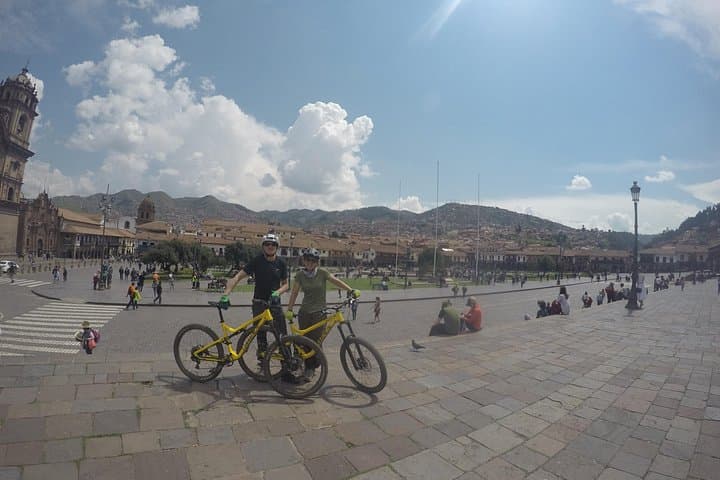
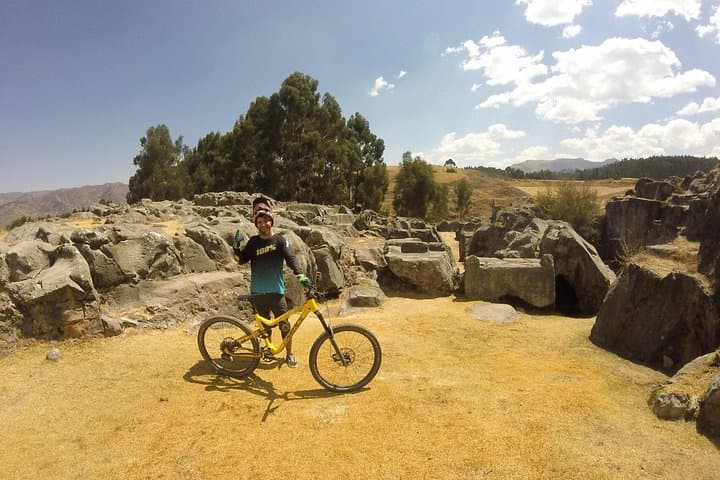
Morning light breaks over terraced hills as your guide tightens a helmet strap and the city hums awake below. You push off from a high Andean lane near Poroy, tires crunching on loose earth, and the skyline of Cusco—stone walls, colonial roofs, and Sacsayhuamán’s ramparts—unfolds with each downhill sweep.
Verified experiences and guided adventures in the surrounding area.
Operated by Tangol · Cusco, Cusco
Morning light breaks over terraced hills as your guide tightens a helmet strap and the city hums awake below. You push off from a high Andean lane near Poroy, tires crunching on loose earth, and the skyline of Cusco—stone walls, colonial roofs, and Sacsayhuamán’s ramparts—unfolds with each downhill sweep.
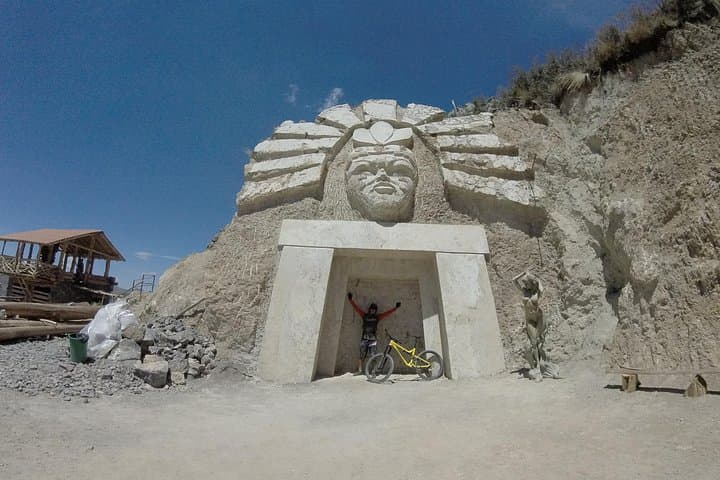
The route threads together two circuits: first to the 16th-century Fortaleza Colonial Aqueduct at roughly 3,890 m, a Roman‑style arched wall that supplied water across pre‑modern Cusco, then past Apukunaq Tianan, a set of carved adobe figures that echo Inca iconography. Geologically, the city sits on uplifted volcanic and sedimentary formations that create short, steep drops—perfect for controlled downhill riding and panoramic viewpoints.
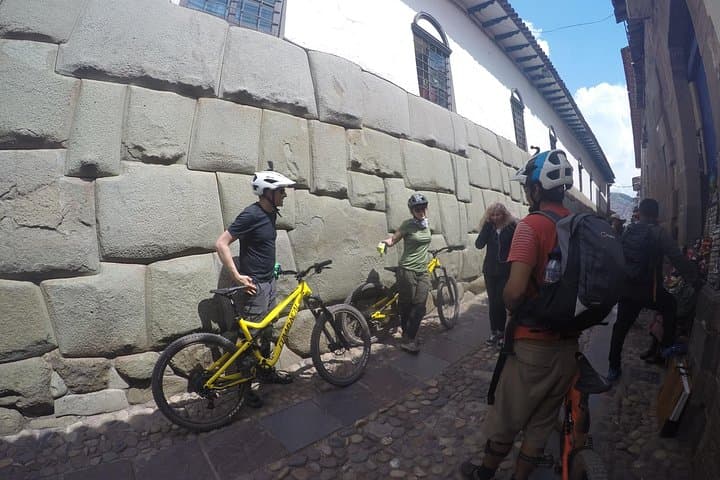
Culturally, the tour moves through working neighborhoods where roadside altars and colonial churches sit beside markets selling ch’arki and textiles; you glimpse daily life as llamas and alpacas graze on nearby farms. Guides typically weave local history into the ride, explaining how Spanish-era infrastructure adapted Inca water management systems.
Practically, expect 3–4 hours of mixed paved and dirt descents with short climbs; altitude matters—acclimatize in Cusco for at least 24–48 hours. Wear layered clothing for cold mornings and sun in the valleys, and plan for brief stops at viewpoints and Plaza de Armas at the finish. The operator provides bikes, helmets, and private transport between circuits, returning you to your hotel when the final bells of the cathedral mark the end of the ride.
moderate.
3–4 hours.
Requires a moderate level of cardiovascular fitness and basic bike-handling skills for short technical descents.
Basic bike-handling and comfort on short dirt descents are recommended; guides tailor pace to group ability.
Yes—Cusco sits above 3,300 m; acclimatize beforehand and monitor for symptoms like headache or nausea.
Yes—this tour includes use of a mountain bike and helmet, plus private transport between circuits.
The operator provides hotel pickup and returns you to your accommodation at the end of the tour.
The Fortaleza Colonial Aqueduct (built 1570) illustrates how Spanish engineers adapted and expanded preexisting Inca water systems that served Cusco.
Stay on designated roads and avoid approaching grazing animals; support local guides who contribute to community-based tourism and minimize trail erosion.
Tangol operates guided outdoor trips and adventures with an emphasis on safety, stewardship, and memorable experiences.
Morning light breaks over terraced hills as your guide tightens a helmet strap and the city hums awake below. You push off from a high Andean lane near Poroy, tires crunching on loose earth, and the skyline of Cusco—stone walls, colonial roofs, and Sacsayhuamán’s ramparts—unfolds with each downhill sweep.
Morning light breaks over terraced hills as your guide tightens a helmet strap and the city hums awake below. You push off from a high Andean lane near Poroy, tires crunching on loose earth, and the skyline of Cusco—stone walls, colonial roofs, and Sacsayhuamán’s ramparts—unfolds with each downhill sweep.
The route threads together two circuits: first to the 16th-century Fortaleza Colonial Aqueduct at roughly 3,890 m, a Roman‑style arched wall that supplied water across pre‑modern Cusco, then past Apukunaq Tianan, a set of carved adobe figures that echo Inca iconography. Geologically, the city sits on uplifted volcanic and sedimentary formations that create short, steep drops—perfect for controlled downhill riding and panoramic viewpoints.
Culturally, the tour moves through working neighborhoods where roadside altars and colonial churches sit beside markets selling ch’arki and textiles; you glimpse daily life as llamas and alpacas graze on nearby farms. Guides typically weave local history into the ride, explaining how Spanish-era infrastructure adapted Inca water management systems.
Practically, expect 3–4 hours of mixed paved and dirt descents with short climbs; altitude matters—acclimatize in Cusco for at least 24–48 hours. Wear layered clothing for cold mornings and sun in the valleys, and plan for brief stops at viewpoints and Plaza de Armas at the finish. The operator provides bikes, helmets, and private transport between circuits, returning you to your hotel when the final bells of the cathedral mark the end of the ride.