THE ADVENTURE COLLECTIVE® · Independent discovery and booking for outdoor travel

Explore Cusco on two wheels: a 3–4 hour guided bike tour that threads colonial streets, colorful markets, and ancient Inca foundations. Perfect for travelers who want an efficient, local-minded view of the city without extensive hiking.
Explore Cusco on two wheels: a 3–4 hour guided bike tour that threads colonial streets, colorful markets, and ancient Inca foundations. Perfect for travelers who want an efficient, local-minded view of the city without extensive hiking.
Pedaling out from a sunlit Plaza de Armas, the city unfolds in a series of quick turns—cobblestones clacking under tires, laundry-laced alleys, and the smell of roasted corn drifting from market stalls. Riders thread through colonial portals and wide viewpoints; the bikes make quick work of distances that would feel long on foot, opening corners of the city most visitors miss.
Verified experiences and guided adventures in the surrounding area.
Operated by Cusco Kinti Biking Tours · Cusco, Cusco
Pedaling out from a sunlit Plaza de Armas, the city unfolds in a series of quick turns—cobblestones clacking under tires, laundry-laced alleys, and the smell of roasted corn drifting from market stalls. Riders thread through colonial portals and wide viewpoints; the bikes make quick work of distances that would feel long on foot, opening corners of the city most visitors miss.
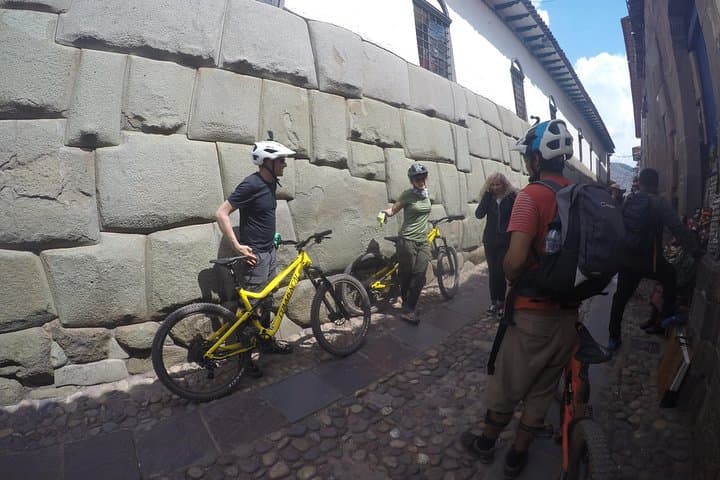
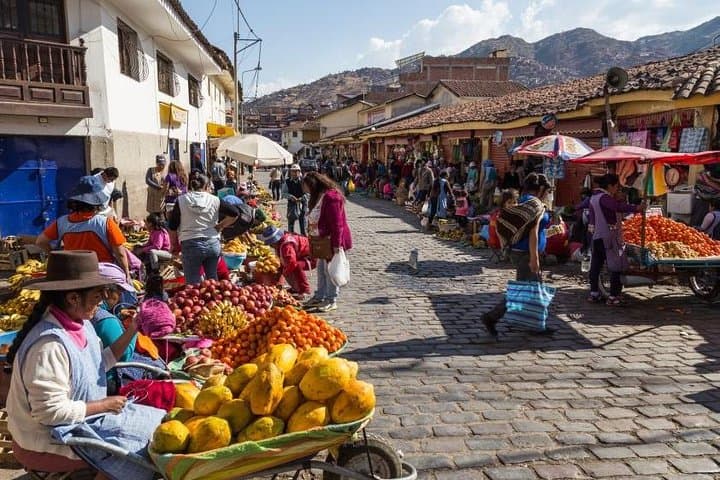
Cusco’s streets are a living overlay of Inca foundations and Spanish façades. The route follows neighborhoods that grew around pre-Columbian terraces and later colonial expansion, passing the city’s oldest cemetery and bustling mercados where fruit vendors and artisans have traded for generations. Geologically the city sits in a high Andean basin at about 3,400 m, carved by tributaries of the Urubamba River; the landscape beyond the city rises quickly into terraced hills and puna grasslands.
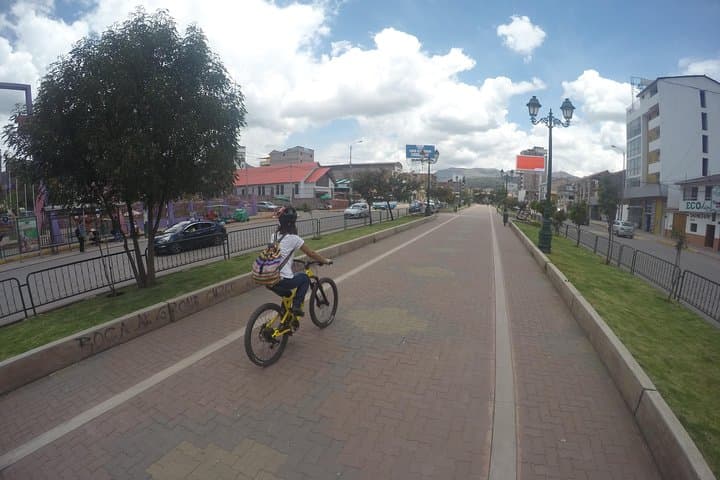
Practically, this is an accessible, 3–4 hour urban tour best taken in the morning when traffic eases and markets are active. Expect short climbs and sections of uneven cobbles—basic bike handling and steady balance are helpful. Bring layered clothing for sharp altitude sun and cool breezes, a compact hydration system, and modest cash for market purchases. Guides typically provide helmets and a route that avoids busier roads when possible, but riders should be comfortable signaling and keeping pace with a small group.
The payoff is immediate: intimate market stops, viewpoints over red-tiled roofs, and the rare chance to traverse places that reveal Cusco’s everyday life as much as its history.
moderate.
3–4 hours.
Suitable for most people in light to moderate cardiovascular shape; comfortable balance and short-climb ability recommended.
No advanced experience is needed, but riders should be comfortable riding on uneven cobbles and making short climbs.
Yes, guides typically provide helmets and basic bikes; confirm sizes when booking.
Policies vary—check age limits with the operator; smaller children may need child-specific bikes or trailers.
Altitude can cause breathlessness and fatigue; allow 24–48 hours in Cusco before the tour and pace yourself during climbs.
Cusco was the political and spiritual center of the Inca Empire; many colonial streets were built atop Inca stonework, creating layered historic streetscapes.
Respect local vendors and cultural sites by avoiding single-use plastics, staying on paved routes, and limiting noise in residential neighborhoods.
Cusco Kinti Biking Tours operates guided outdoor trips and adventures with an emphasis on safety, stewardship, and memorable experiences.
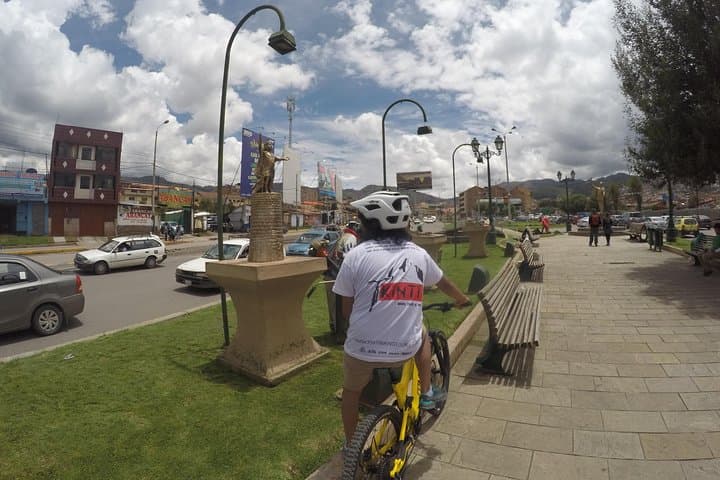
Pedaling out from a sunlit Plaza de Armas, the city unfolds in a series of quick turns—cobblestones clacking under tires, laundry-laced alleys, and the smell of roasted corn drifting from market stalls. Riders thread through colonial portals and wide viewpoints; the bikes make quick work of distances that would feel long on foot, opening corners of the city most visitors miss.
Pedaling out from a sunlit Plaza de Armas, the city unfolds in a series of quick turns—cobblestones clacking under tires, laundry-laced alleys, and the smell of roasted corn drifting from market stalls. Riders thread through colonial portals and wide viewpoints; the bikes make quick work of distances that would feel long on foot, opening corners of the city most visitors miss.
Cusco’s streets are a living overlay of Inca foundations and Spanish façades. The route follows neighborhoods that grew around pre-Columbian terraces and later colonial expansion, passing the city’s oldest cemetery and bustling mercados where fruit vendors and artisans have traded for generations. Geologically the city sits in a high Andean basin at about 3,400 m, carved by tributaries of the Urubamba River; the landscape beyond the city rises quickly into terraced hills and puna grasslands.
Practically, this is an accessible, 3–4 hour urban tour best taken in the morning when traffic eases and markets are active. Expect short climbs and sections of uneven cobbles—basic bike handling and steady balance are helpful. Bring layered clothing for sharp altitude sun and cool breezes, a compact hydration system, and modest cash for market purchases. Guides typically provide helmets and a route that avoids busier roads when possible, but riders should be comfortable signaling and keeping pace with a small group.
The payoff is immediate: intimate market stops, viewpoints over red-tiled roofs, and the rare chance to traverse places that reveal Cusco’s everyday life as much as its history.