THE ADVENTURE COLLECTIVE® · Independent discovery and booking for outdoor travel

Trade Cusco’s high stones for humid riverbanks on a four-day Manu Park expedition. Ride boats to clay licks, watch macaws at dawn, and sleep in jungle lodges while guides lead you through emblematic Amazon wildlife and culture.
Trade Cusco’s high stones for humid riverbanks on a four-day Manu Park expedition. Ride boats to clay licks, watch macaws at dawn, and sleep in jungle lodges while guides lead you through emblematic Amazon wildlife and culture.
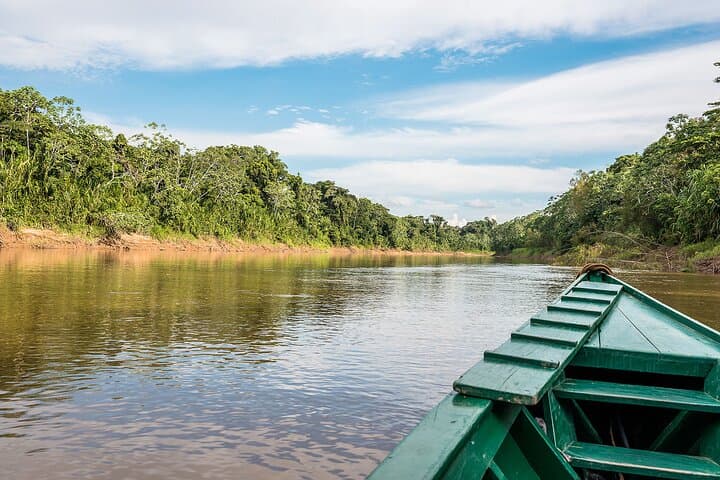
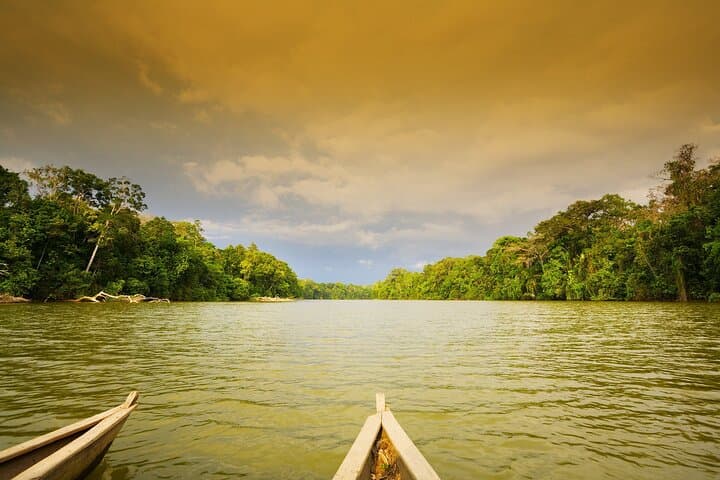
Dawn in Cusco smells of cold stone and diesel as the bus climbs toward the high pass that marks Manu’s entrance. By midafternoon the air changes—mist thins into humid green, orchids lean toward the road and the cloud forest gives way to the lowland Amazon. Boat motors cut through tannin-stained rivers that seem to dare you into the forest beyond.
Verified experiences and guided adventures in the surrounding area.
Operated by IZI PERU · Cusco, Cusco Region
Dawn in Cusco smells of cold stone and diesel as the bus climbs toward the high pass that marks Manu’s entrance. By midafternoon the air changes—mist thins into humid green, orchids lean toward the road and the cloud forest gives way to the lowland Amazon. Boat motors cut through tannin-stained rivers that seem to dare you into the forest beyond.
Manu National Park is one of the most biodiverse places on Earth; established in 1973 it protects altitudinal gradients from Andean puna to Amazonian terra firme. Geologically the route drops thousands of meters in a day, tracing eroding Andean slopes into broad alluvial plains. Culturally, you pass Paucartambo’s colonial bridge and Andean chullpas before meeting multilingual guides who interpret the flora and fauna and explain local Quechua and Amazonian traditions.
Over four days you move by private bus, riverside launches and simple jungle lodges with private bathrooms. Expect close-up birdwatching at clay licks—macaws and parrots congregate on mineral walls—quiet catamaran rides on Cocha Machuwasi and Cocha Maravilla, and optional night walks where tree frogs and insects become the chorus. Wildlife sightings vary by season; nocturnals and river edge species are common.
Practical guidance: pack quick-dry layers, a lightweight rain jacket, and sturdy walking shoes suitable for muddy platforms. Bring insect repellent and binoculars; mornings are best for birds, afternoons for river mammals. Early starts (pick-up ~5:30–6:00 a.m.) and long transit days mean patience rewards close wildlife encounters. The trip is immersive, low-impact, and driven by observation—prepare for humidity, quiet dawns, and the slow reveal of Manu’s living landscape.
moderate.
4 days (approx. 4D/3N).
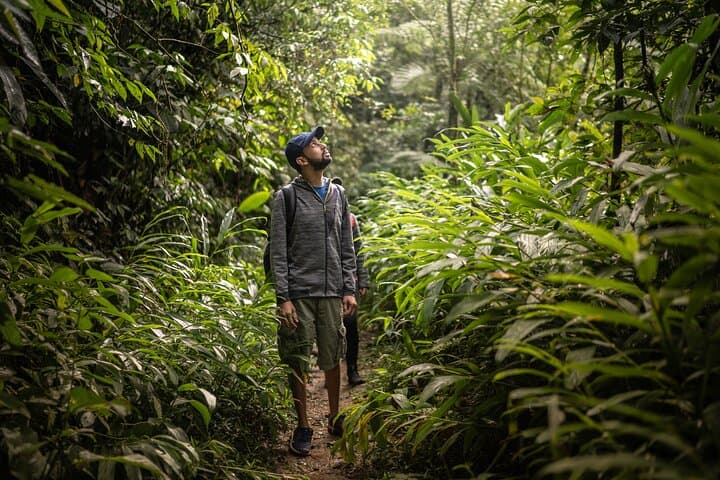
Suitable for travelers in average fitness: short to moderate walks, boardwalks and boat rides; able to handle humidity and some uneven terrain.
Most travelers reach the operator’s office easily from central Cusco; confirm pickup details at booking—there is typically an early hotel pickup option.
Lodges on this itinerary are simple but include private bathrooms and showers; expect basic amenities and hot meals centered on local ingredients.
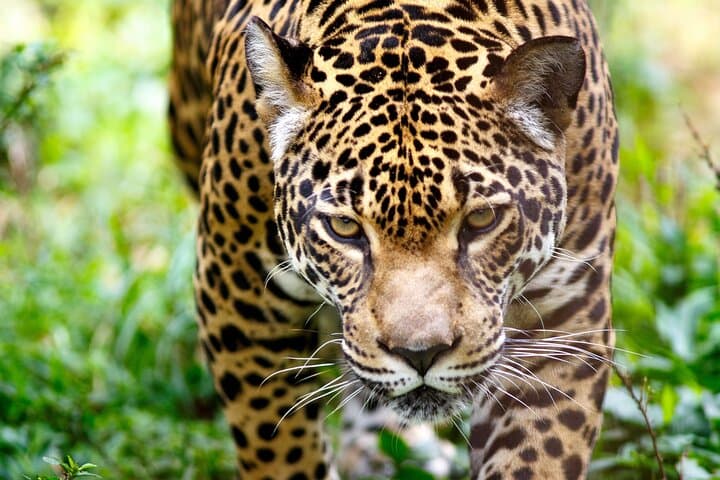
Large mammals are present in Manu but are elusive; the tour prioritizes birdlife, primates, caimans and abundant smaller species—occasional large-mammal sightings happen but are not guaranteed.
The operator notes the trip is suitable for all fitness levels; children and older travelers should be comfortable with early mornings, boat travel and humid conditions.
Manu National Park was created in 1973 to protect a continuous Andean–Amazon corridor; many lowland communities maintain traditional subsistence and craft practices.
Manu is a UNESCO Biosphere Reserve and strict protected zone—visitors are encouraged to follow leave-no-trace practices, avoid single-use plastics and respect wildlife distance.
IZI PERU operates guided outdoor trips and adventures with an emphasis on safety, stewardship, and memorable experiences.
Dawn in Cusco smells of cold stone and diesel as the bus climbs toward the high pass that marks Manu’s entrance. By midafternoon the air changes—mist thins into humid green, orchids lean toward the road and the cloud forest gives way to the lowland Amazon. Boat motors cut through tannin-stained rivers that seem to dare you into the forest beyond.
Dawn in Cusco smells of cold stone and diesel as the bus climbs toward the high pass that marks Manu’s entrance. By midafternoon the air changes—mist thins into humid green, orchids lean toward the road and the cloud forest gives way to the lowland Amazon. Boat motors cut through tannin-stained rivers that seem to dare you into the forest beyond.
Manu National Park is one of the most biodiverse places on Earth; established in 1973 it protects altitudinal gradients from Andean puna to Amazonian terra firme. Geologically the route drops thousands of meters in a day, tracing eroding Andean slopes into broad alluvial plains. Culturally, you pass Paucartambo’s colonial bridge and Andean chullpas before meeting multilingual guides who interpret the flora and fauna and explain local Quechua and Amazonian traditions.
Over four days you move by private bus, riverside launches and simple jungle lodges with private bathrooms. Expect close-up birdwatching at clay licks—macaws and parrots congregate on mineral walls—quiet catamaran rides on Cocha Machuwasi and Cocha Maravilla, and optional night walks where tree frogs and insects become the chorus. Wildlife sightings vary by season; nocturnals and river edge species are common.
Practical guidance: pack quick-dry layers, a lightweight rain jacket, and sturdy walking shoes suitable for muddy platforms. Bring insect repellent and binoculars; mornings are best for birds, afternoons for river mammals. Early starts (pick-up ~5:30–6:00 a.m.) and long transit days mean patience rewards close wildlife encounters. The trip is immersive, low-impact, and driven by observation—prepare for humidity, quiet dawns, and the slow reveal of Manu’s living landscape.