THE ADVENTURE COLLECTIVE® · Independent discovery and booking for outdoor travel

Four days of Andean culture and high-country landscapes: explore Cusco’s Inca foundations, the Sacred Valley, Machu Picchu and the striking colors of Rainbow Mountain. Expect big elevation changes, train and bus transfers, and a mix of easy walks and strenuous high-altitude trekking.
Four days of Andean culture and high-country landscapes: explore Cusco’s Inca foundations, the Sacred Valley, Machu Picchu and the striking colors of Rainbow Mountain. Expect big elevation changes, train and bus transfers, and a mix of easy walks and strenuous high-altitude trekking.
The first light in Cusco slants across carved stone walls and wooden balconies, and your group moves through Plaza de Armas with breath visible in the cool mountain air. Over four days this loop pulls you from colonial streets into terraced farmland, through the Sacred Valley’s river corridor, up to the misted ramparts of Machu Picchu and finally onto the high, wind-swept slopes of Rainbow Mountain.
Verified experiences and guided adventures in the surrounding area.
Operated by Andina Expeditions · Cusco, Cusco Region
The first light in Cusco slants across carved stone walls and wooden balconies, and your group moves through Plaza de Armas with breath visible in the cool mountain air. Over four days this loop pulls you from colonial streets into terraced farmland, through the Sacred Valley’s river corridor, up to the misted ramparts of Machu Picchu and finally onto the high, wind-swept slopes of Rainbow Mountain.
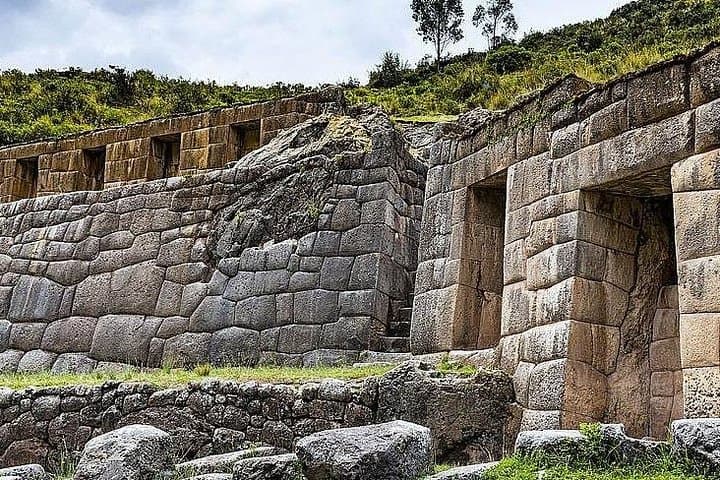
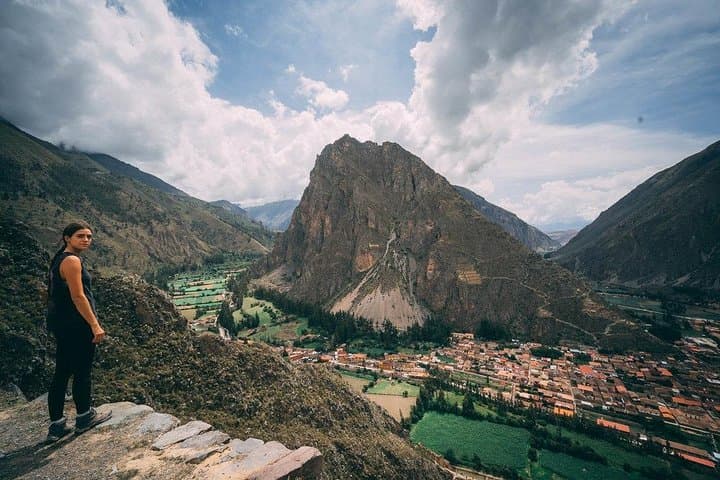
Cusco sits at roughly 3,400 m and was the political center of the Inca Empire; its ashlar masonry at Qoricancha and the zig-zag tunnels of Qenqo reveal construction techniques and ritual practices that endured here for centuries. The Sacred Valley follows the Urubamba/ Vilcanota River for about 60 km, its geology a patchwork of fertile fluvial terraces and high Andean ridgelines shaped by glacial action. Ollantaytambo’s terraces and Moray’s concentric agricultural depressions offer a clear view of Inca agricultural ingenuity; nearby Maras’ salt pans trace an even older resource economy.
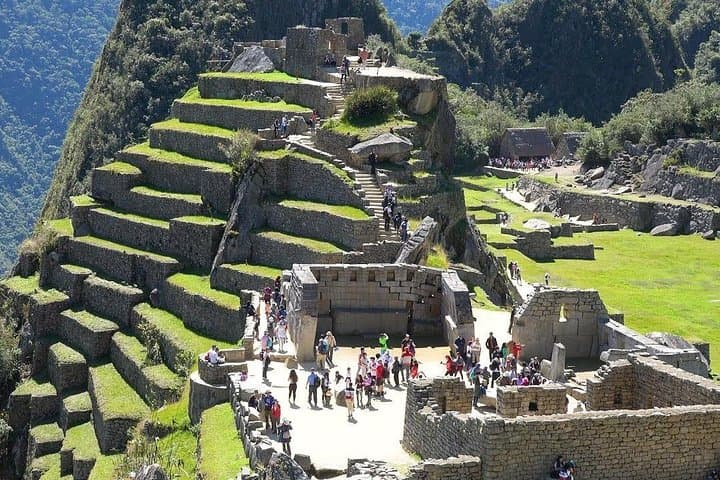
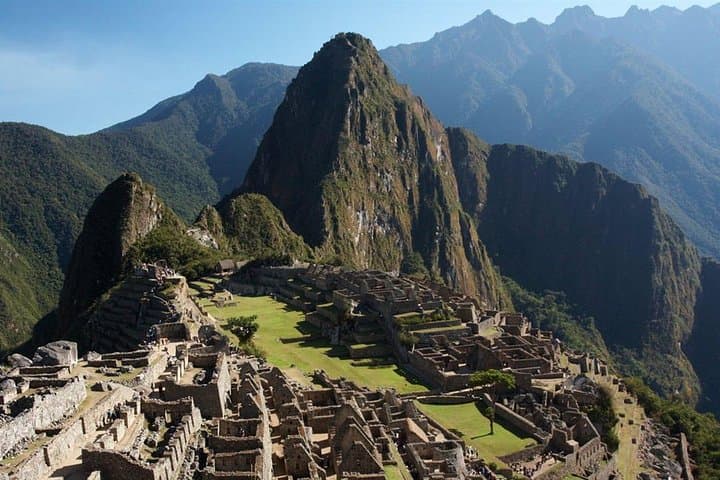
Practically: train travel from Ollantaytambo to Aguas Calientes punctuates the itinerary; buses link Aguas Calientes to the Machu Picchu entrance. Expect variable weather and big elevation swings—Machu Picchu sits near 2,430 m, Rainbow Mountain around 5,200 m—so acclimatize and plan for cold, wind and strong sun. Footwear with grip, layered insulation and hydration are non-negotiable. Time your Machu Picchu visit early to avoid crowds and bring a small daypack: the rewards are panoramic terraces, close encounters with llamas and a sense of place earned by altitude and effort.
moderate.
4 days.
Good baseline fitness for long days and high-altitude walking; be ready for short steep sections and sustained elevation.
Yes—spend at least 24 hours in Cusco at low activity levels before strenuous excursions; consider arriving a day early if possible.
This program includes Machu Picchu entrance and a guided visit, but verify your train and bus times as schedules are fixed.
Rainbow Mountain involves a high-altitude hike to about 5,200 m with up to several hours of walking; expect steep, thin-air sections—adequate fitness and pacing are important.
Carry small Peruvian soles for markets and tips; larger towns accept cards but rural vendors often require cash.
Cusco was the Inca capital; many colonial buildings were built atop Inca foundations, visibly blending two eras of construction.
Machu Picchu has visitor limits and enforced routes to reduce erosion; stick to paths, avoid single-use plastics and support local guides to sustain communities.
Andina Expeditions operates guided outdoor trips and adventures with an emphasis on safety, stewardship, and memorable experiences.
The first light in Cusco slants across carved stone walls and wooden balconies, and your group moves through Plaza de Armas with breath visible in the cool mountain air. Over four days this loop pulls you from colonial streets into terraced farmland, through the Sacred Valley’s river corridor, up to the misted ramparts of Machu Picchu and finally onto the high, wind-swept slopes of Rainbow Mountain.
The first light in Cusco slants across carved stone walls and wooden balconies, and your group moves through Plaza de Armas with breath visible in the cool mountain air. Over four days this loop pulls you from colonial streets into terraced farmland, through the Sacred Valley’s river corridor, up to the misted ramparts of Machu Picchu and finally onto the high, wind-swept slopes of Rainbow Mountain.
Cusco sits at roughly 3,400 m and was the political center of the Inca Empire; its ashlar masonry at Qoricancha and the zig-zag tunnels of Qenqo reveal construction techniques and ritual practices that endured here for centuries. The Sacred Valley follows the Urubamba/ Vilcanota River for about 60 km, its geology a patchwork of fertile fluvial terraces and high Andean ridgelines shaped by glacial action. Ollantaytambo’s terraces and Moray’s concentric agricultural depressions offer a clear view of Inca agricultural ingenuity; nearby Maras’ salt pans trace an even older resource economy.
Practically: train travel from Ollantaytambo to Aguas Calientes punctuates the itinerary; buses link Aguas Calientes to the Machu Picchu entrance. Expect variable weather and big elevation swings—Machu Picchu sits near 2,430 m, Rainbow Mountain around 5,200 m—so acclimatize and plan for cold, wind and strong sun. Footwear with grip, layered insulation and hydration are non-negotiable. Time your Machu Picchu visit early to avoid crowds and bring a small daypack: the rewards are panoramic terraces, close encounters with llamas and a sense of place earned by altitude and effort.