THE ADVENTURE COLLECTIVE® · Independent discovery and booking for outdoor travel

Walk the misty trails of Curicancha Reserve with a naturalist guide to find Resplendent Quetzals, hummingbirds, and orchids in Monteverde’s highland cloud forest. Practical tips on timing, gear, and accessibility to help you plan a memorable morning among the cloud-shrouded trees.
Walk the misty trails of Curicancha Reserve with a naturalist guide to find Resplendent Quetzals, hummingbirds, and orchids in Monteverde’s highland cloud forest. Practical tips on timing, gear, and accessibility to help you plan a memorable morning among the cloud-shrouded trees.
Morning mist threads through tall oaks and bromeliad-laden branches as you step onto a narrow trail at Curicancha Reserve. The cloud forest breathes slow and dense; every fern and epiphyte seems to lean in, listening. Hummingbirds dart like punctuation marks; a distant call—thin, urgent—announces the resplendent quetzal.
Verified experiences and guided adventures in the surrounding area.
Operated by Roy´s the Monteverde local nature guide´s · Santa Elena, Puntarenas
Morning mist threads through tall oaks and bromeliad-laden branches as you step onto a narrow trail at Curicancha Reserve. The cloud forest breathes slow and dense; every fern and epiphyte seems to lean in, listening. Hummingbirds dart like punctuation marks; a distant call—thin, urgent—announces the resplendent quetzal.
Curicancha sits on the high slopes of Monteverde, part of a network of private reserves created by local landowners and conservationists after mid-20th-century settlement shifted from pasture to protection. Geologically, the ridges are volcanic outwash and steep colluvium, holding the moisture that forms low cloud and an ecosystem rich in endemic species. Culturally, Monteverde blends Costa Rican campesino traditions with a history of Quaker settlers who prioritized land preservation; that legacy shapes today’s guided, low-impact wildlife visits.
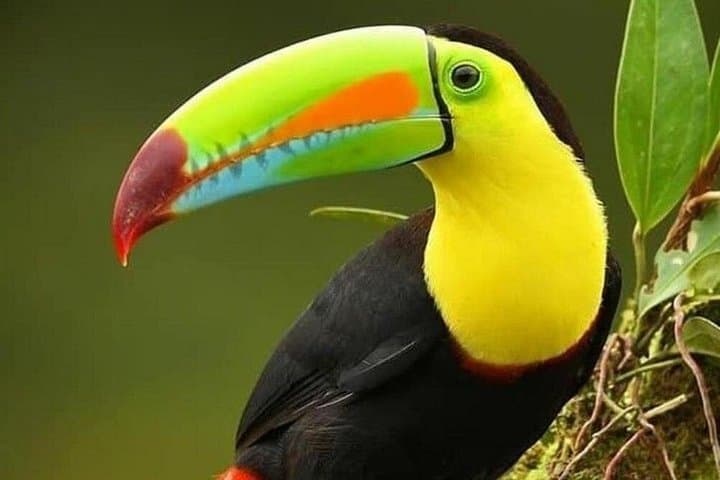
On this three-hour naturalist-led walk you’ll look for quetzals, toucanets, hummingbirds, and the orchids that cling to trunks and branches. Guides use spotting scopes and field guides to reveal identification marks and behavior; mornings are busiest for vocal activity and feeding flurries.
Practical guidance: dress in lightweight layers and a quiet pair of trail shoes—the trail is uneven, often wet, and shaded. Bring water, a rain shell, and a camera with a tele lens or a phone adapter for scope shots. If mobility is limited, request the electric cart option when booking. Stay on designated paths, keep noise to a minimum, and avoid flash photography to reduce stress on birds and other wildlife.
easy.
2–3 hours.
Suitable for most fitness levels; involves slow-paced walking on uneven, sometimes muddy trails.
Quetzals are regular at Curicancha, especially during breeding and feeding times at dawn; sightings are common but never guaranteed—patience and a quiet approach increase odds.
Yes—an electric cart is available for an extra fee (payable locally); notify the operator when booking so arrangements can be made.
The naturalist guide service, use of a spotting scope, and field guide are included; binoculars may be shared but bringing your own is recommended.
Public transport and local taxis operate between Santa Elena and reserve access points; many visitors book hotel transfers or walk short distances depending on location—confirm meeting details with the operator.
Local private reserves like Curicancha emerged from community-led conservation in the late 20th century, influenced by settlers who favored protection over large-scale agriculture.
Trails are managed to limit erosion and disturbance; stick to paths, avoid feeding wildlife, and follow guide instructions to minimize visitor impact.
Roy´s the Monteverde local nature guide´s operates guided outdoor trips and adventures with an emphasis on safety, stewardship, and memorable experiences.
Morning mist threads through tall oaks and bromeliad-laden branches as you step onto a narrow trail at Curicancha Reserve. The cloud forest breathes slow and dense; every fern and epiphyte seems to lean in, listening. Hummingbirds dart like punctuation marks; a distant call—thin, urgent—announces the resplendent quetzal.
Morning mist threads through tall oaks and bromeliad-laden branches as you step onto a narrow trail at Curicancha Reserve. The cloud forest breathes slow and dense; every fern and epiphyte seems to lean in, listening. Hummingbirds dart like punctuation marks; a distant call—thin, urgent—announces the resplendent quetzal.
Curicancha sits on the high slopes of Monteverde, part of a network of private reserves created by local landowners and conservationists after mid-20th-century settlement shifted from pasture to protection. Geologically, the ridges are volcanic outwash and steep colluvium, holding the moisture that forms low cloud and an ecosystem rich in endemic species. Culturally, Monteverde blends Costa Rican campesino traditions with a history of Quaker settlers who prioritized land preservation; that legacy shapes today’s guided, low-impact wildlife visits.
On this three-hour naturalist-led walk you’ll look for quetzals, toucanets, hummingbirds, and the orchids that cling to trunks and branches. Guides use spotting scopes and field guides to reveal identification marks and behavior; mornings are busiest for vocal activity and feeding flurries.
Practical guidance: dress in lightweight layers and a quiet pair of trail shoes—the trail is uneven, often wet, and shaded. Bring water, a rain shell, and a camera with a tele lens or a phone adapter for scope shots. If mobility is limited, request the electric cart option when booking. Stay on designated paths, keep noise to a minimum, and avoid flash photography to reduce stress on birds and other wildlife.