THE ADVENTURE COLLECTIVE® · Independent discovery and booking for outdoor travel

Break the fast like an Emirati in Al Fahidi’s wind-tower house: dates and Arabic coffee, the Athan, a family-style Iftar spread, and a guided visit to Diwan Mosque. This accessible, conversation-driven evening is both an introduction to Ramadan and a deep dive into local customs.
Break the fast like an Emirati in Al Fahidi’s wind-tower house: dates and Arabic coffee, the Athan, a family-style Iftar spread, and a guided visit to Diwan Mosque. This accessible, conversation-driven evening is both an introduction to Ramadan and a deep dive into local customs.
The evening arrives over Al Fahidi like a slow breath—wind-towers cooling alleys, the call to prayer rolling across low stone walls, and lamps beginning to glow. You take a seat in a wind-tower house where hosts move with quiet purpose: dates and Arabic coffee offered first, the Athan marking the precise moment when the fast is broken, and plates arriving one after another that reflect Emirati home cooking and hospitality.
Verified experiences and guided adventures in the surrounding area.
Operated by Sheikh Mohammed Centre for Cultural Understanding · Dubai, Dubai
The evening arrives over Al Fahidi like a slow breath—wind-towers cooling alleys, the call to prayer rolling across low stone walls, and lamps beginning to glow. You take a seat in a wind-tower house where hosts move with quiet purpose: dates and Arabic coffee offered first, the Athan marking the precise moment when the fast is broken, and plates arriving one after another that reflect Emirati home cooking and hospitality.
Al Fahidi is one of Dubai’s oldest quarters, a working example of pre-oil urban life where narrow lanes, coral-stone walls and wind-catchers recall Gulf trade and pearling. Ramadan itself is a lunar-month ritual observed across the UAE: daytime restraint gives way to communal evenings, conversation, and shared meals. The included walk to Diwan Mosque offers a chance to observe prayer in a functioning neighborhood mosque and ask about religious practice and local customs.
Practical guidance: dress modestly (shoulders and knees covered) and arrive on time—the Iftar is synchronized with sunset. The program is accessible and family-friendly, with a kids area and wheelchair access, but be prepared for a mixed group and an emotionally intimate setting during prayer. Questions are welcomed; hosts expect respectful curiosity.
Timing and booking matter: Ramadan dates shift annually, so confirm local sunset times and reservation requirements. Bring a light jacket for coastal evenings, and keep noise and flash photography minimal during prayers. This is an immersive cultural evening—quietly observant, socially warm, and rich in everyday history.
easy.
3 hours.
Suitable for all physical fitness levels; mostly seated with short, flat walking segments
Yes—this program is designed for visitors of all backgrounds to learn about Ramadan; respectful participation is expected.
Yes; there’s a designated kids’ area and the pace is family-friendly, though prayer moments are solemn.
Yes; the visit is guided, introductory, and attendees receive briefings on etiquette beforehand.
Inform organizers when booking so they can adapt dishes where possible; many traditional items are available in multiple versions.
Al Fahidi (Bastakiya) preserves 19th-century merchant architecture from pre-oil Dubai and hosts cultural centers that interpret Emirati social life; Ramadan practices here reflect long-standing Gulf customs.
Respect local waste rules and minimize single-use plastics; cultural tourism in historic districts depends on visitor stewardship and respectful behavior.
Sheikh Mohammed Centre for Cultural Understanding operates guided outdoor trips and adventures with an emphasis on safety, stewardship, and memorable experiences.
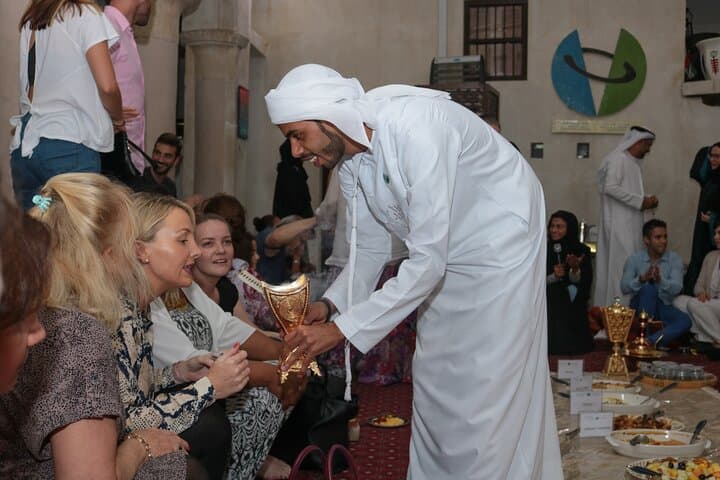
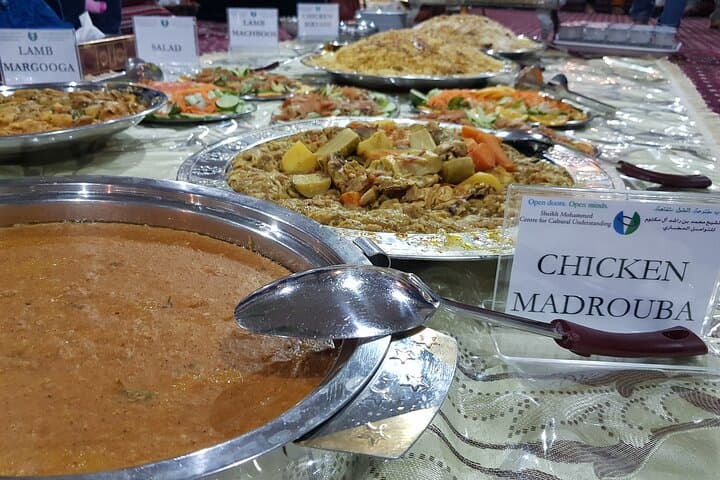
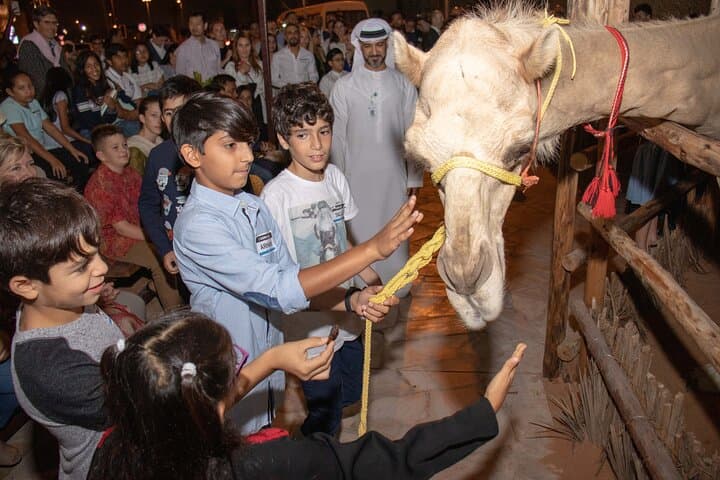
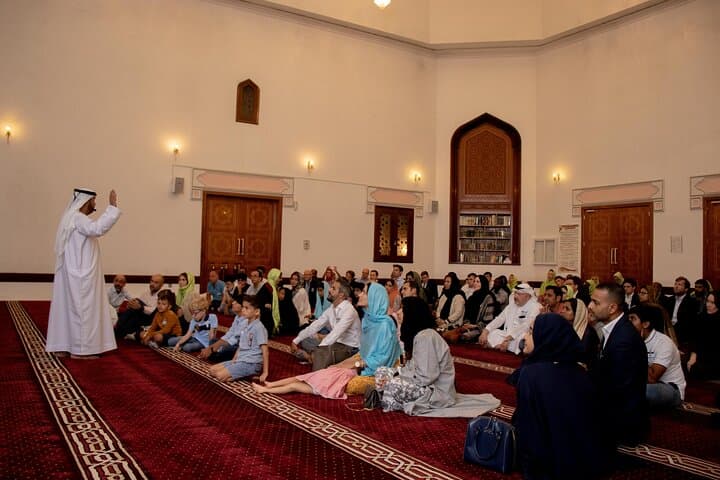
The evening arrives over Al Fahidi like a slow breath—wind-towers cooling alleys, the call to prayer rolling across low stone walls, and lamps beginning to glow. You take a seat in a wind-tower house where hosts move with quiet purpose: dates and Arabic coffee offered first, the Athan marking the precise moment when the fast is broken, and plates arriving one after another that reflect Emirati home cooking and hospitality.
The evening arrives over Al Fahidi like a slow breath—wind-towers cooling alleys, the call to prayer rolling across low stone walls, and lamps beginning to glow. You take a seat in a wind-tower house where hosts move with quiet purpose: dates and Arabic coffee offered first, the Athan marking the precise moment when the fast is broken, and plates arriving one after another that reflect Emirati home cooking and hospitality.
Al Fahidi is one of Dubai’s oldest quarters, a working example of pre-oil urban life where narrow lanes, coral-stone walls and wind-catchers recall Gulf trade and pearling. Ramadan itself is a lunar-month ritual observed across the UAE: daytime restraint gives way to communal evenings, conversation, and shared meals. The included walk to Diwan Mosque offers a chance to observe prayer in a functioning neighborhood mosque and ask about religious practice and local customs.
Practical guidance: dress modestly (shoulders and knees covered) and arrive on time—the Iftar is synchronized with sunset. The program is accessible and family-friendly, with a kids area and wheelchair access, but be prepared for a mixed group and an emotionally intimate setting during prayer. Questions are welcomed; hosts expect respectful curiosity.
Timing and booking matter: Ramadan dates shift annually, so confirm local sunset times and reservation requirements. Bring a light jacket for coastal evenings, and keep noise and flash photography minimal during prayers. This is an immersive cultural evening—quietly observant, socially warm, and rich in everyday history.