THE ADVENTURE COLLECTIVE® · Independent discovery and booking for outdoor travel

A full-day small-group outing from Madrid that pairs medieval Cuenca’s cliffside old town with the sculpted limestone forms of the Enchanted City. Expect easy urban walking, short uneven trails, and striking geology framed by Castilla‑La Mancha’s open skies.
A full-day small-group outing from Madrid that pairs medieval Cuenca’s cliffside old town with the sculpted limestone forms of the Enchanted City. Expect easy urban walking, short uneven trails, and striking geology framed by Castilla‑La Mancha’s open skies.
You arrive to Cuenca with the bus winding down into a pair of gorges; the city perches on the cliff edge like a built-in lookout, its stone façades catching afternoon light. The air smells of dry oak and the faint, mineral tang of the Júcar valley below as you step onto cobbled streets that slope toward the famous Casas Colgadas — the Hanging Houses — balanced over the gorge.
Verified experiences and guided adventures in the surrounding area.
Operated by Bizitour · Cuenca, Castilla-La Mancha
You arrive to Cuenca with the bus winding down into a pair of gorges; the city perches on the cliff edge like a built-in lookout, its stone façades catching afternoon light. The air smells of dry oak and the faint, mineral tang of the Júcar valley below as you step onto cobbled streets that slope toward the famous Casas Colgadas — the Hanging Houses — balanced over the gorge.
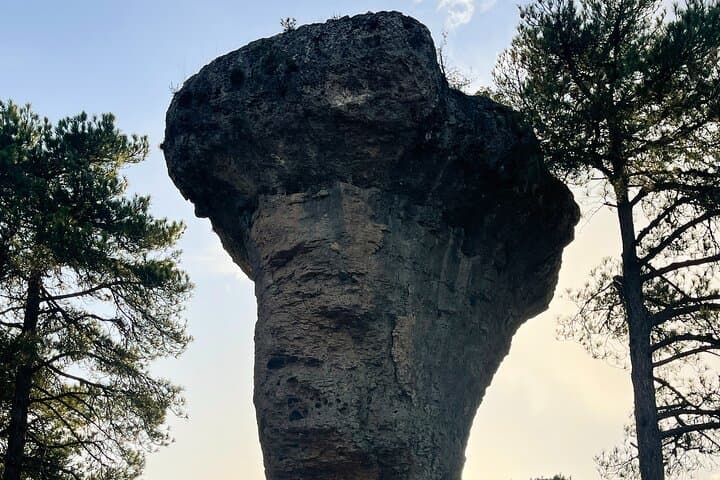
Cuenca began as a fortified settlement during Muslim rule and grew through medieval trade and ecclesiastical power; its cathedral and Gothic lanes reflect that layered past. An hour northwest, the Enchanted City exposes a very different history: limestone plateaus and karst weathering shaped by wind and rain into pillars, mushrooms, and labyrinthine rock corridors. Geology here is readable — erosion mapped in curves and stacking, with small caves and fissures that invite exploration.
Local culture remains straightforward and rural: small cafes serve manchego cheese and simple stews, and shepherding patterns still shape the surrounding hills. The Serranía de Cuenca Natural Park protects this landscape, so visitors should respect marked trails and waste rules to preserve fragile karst formations.
Practical guidance: the day is long (about nine hours), combining easy urban walking with short, uneven trails at the Enchanted City — expect loose stones and a few steps. Wear grippy shoes, bring water, sun protection, and layers for wind on exposed limestone. Favor mornings or late afternoons for softer light and cooler temperatures. Guided small-group tours make logistics straightforward and leave time to savor viewpoints without rushing back to Madrid.
easy.
9 hours.
Suitable for most travelers with basic mobility; involves short bouts of walking and some uneven surfaces.
Mostly short urban walks in Cuenca plus a 30–60 minute circuit on uneven trails at the Enchanted City; nothing technical but expect stairs and loose rock.
This tour typically covers transport and guide services; check the booking page for specific admission inclusions or optional local fees.
Yes—it's described as physically easy, but those with limited mobility should note there are cobbled streets and some steps at viewpoints.
Spring and fall offer milder temperatures and better light for photography; summer can be hot on exposed limestone, and winter may bring wind and occasional snow.
Cuenca evolved from a Moorish fortress into a medieval episcopal city; its historic quarter earned UNESCO World Heritage status for its dramatic cliffside architecture.
Serranía de Cuenca is a protected natural park; stay on signed trails, avoid climbing fragile formations, and carry out litter to limit visitor impact.
Bizitour operates guided outdoor trips and adventures with an emphasis on safety, stewardship, and memorable experiences.


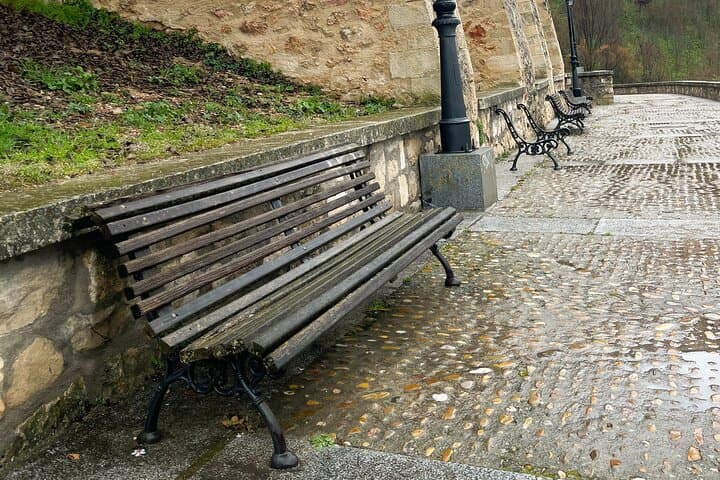
You arrive to Cuenca with the bus winding down into a pair of gorges; the city perches on the cliff edge like a built-in lookout, its stone façades catching afternoon light. The air smells of dry oak and the faint, mineral tang of the Júcar valley below as you step onto cobbled streets that slope toward the famous Casas Colgadas — the Hanging Houses — balanced over the gorge.
You arrive to Cuenca with the bus winding down into a pair of gorges; the city perches on the cliff edge like a built-in lookout, its stone façades catching afternoon light. The air smells of dry oak and the faint, mineral tang of the Júcar valley below as you step onto cobbled streets that slope toward the famous Casas Colgadas — the Hanging Houses — balanced over the gorge.
Cuenca began as a fortified settlement during Muslim rule and grew through medieval trade and ecclesiastical power; its cathedral and Gothic lanes reflect that layered past. An hour northwest, the Enchanted City exposes a very different history: limestone plateaus and karst weathering shaped by wind and rain into pillars, mushrooms, and labyrinthine rock corridors. Geology here is readable — erosion mapped in curves and stacking, with small caves and fissures that invite exploration.
Local culture remains straightforward and rural: small cafes serve manchego cheese and simple stews, and shepherding patterns still shape the surrounding hills. The Serranía de Cuenca Natural Park protects this landscape, so visitors should respect marked trails and waste rules to preserve fragile karst formations.
Practical guidance: the day is long (about nine hours), combining easy urban walking with short, uneven trails at the Enchanted City — expect loose stones and a few steps. Wear grippy shoes, bring water, sun protection, and layers for wind on exposed limestone. Favor mornings or late afternoons for softer light and cooler temperatures. Guided small-group tours make logistics straightforward and leave time to savor viewpoints without rushing back to Madrid.