THE ADVENTURE COLLECTIVE® · Independent discovery and booking for outdoor travel

Spend a full day exploring Vietnam’s oldest national park and a tranquil limestone wetland: see rescued primates, step into a 7,500‑year‑old cave, and glide through reed-fringed waters by sampan. This balanced day trip pairs light trekking with gentle boating and hands-on conservation insights.
Spend a full day exploring Vietnam’s oldest national park and a tranquil limestone wetland: see rescued primates, step into a 7,500‑year‑old cave, and glide through reed-fringed waters by sampan. This balanced day trip pairs light trekking with gentle boating and hands-on conservation insights.
Morning light slices between karst ridges as the coach winds away from Ninh Binh toward Vietnam’s oldest national park. The air changes—cooler, leaf-scented—and the rainforest feels purposeful, as if the trees themselves are directing visitors toward hidden trails and silent caves. At Cuc Phuong the cadence slows: a measured walk past ancient trees, a stop at the Endangered Primate Rescue Center to meet animals recovering from the wildlife trade, then a short trek that threads through primary forest to a prehistoric cave studded with human artifacts.
Verified experiences and guided adventures in the surrounding area.
Operated by Divi Travel · Ninh Binh, Ninh Binh Province
Morning light slices between karst ridges as the coach winds away from Ninh Binh toward Vietnam’s oldest national park. The air changes—cooler, leaf-scented—and the rainforest feels purposeful, as if the trees themselves are directing visitors toward hidden trails and silent caves. At Cuc Phuong the cadence slows: a measured walk past ancient trees, a stop at the Endangered Primate Rescue Center to meet animals recovering from the wildlife trade, then a short trek that threads through primary forest to a prehistoric cave studded with human artifacts.
Cuc Phuong was established in 1962 and protects limestone hills carved over millions of years. Nearby Van Long is known locally as the “bay without waves” — a flat, mirror-still wetland ringed by steep karst towers that tell a geological story of uplift and erosion. The culture here is rural and agricultural; boat crews use low-profile sampans and live knowledge of tidal patterns to navigate reed-lined channels.
Practically, the day balances short hikes with a relaxed boat ride and a village-style lunch. Trails are mostly well-trodden but uneven; expect roots, slick rock after rain, and low-light cave interiors. Bring insect repellent, a light rain layer, and a pair of shoes that grip wet surfaces. Early starts improve bird and primate sightings; afternoons are better for warmer-weather comfort.
The trip is approachable for most travelers but rewards those who move slowly, listen, and leave no trace—so the park can keep its rare langurs and ancient caves for the next visitor.
easy.
8 hours.
Suitable for most people who can walk short forest trails and board a small boat; minimal elevation but uneven terrain.
The tour runs about 8 hours and typically includes entrance fees, lunch, an air-conditioned vehicle, a guided visit to Cuc Phuong, and a sampan ride at Van Long.
Yes—operators mark it as physically easy; however, boardings, low cave ceilings, and uneven paths mean close supervision for young children and reasonable mobility for older guests.
Sightings are never guaranteed, but the rescue center offers reliable close-up encounters, and Van Long is a strong site for waterbirds and the endangered Delacour’s langur.
Entrance fees are typically included and the itinerary often incorporates an educational visit to the Endangered Primate Rescue Center explaining local conservation work.
Cuc Phuong was Vietnam’s first national park (established 1962); caves in the park have yielded human remains and artifacts dated to around 7,500 years ago.
The Endangered Primate Rescue Center and wetland protections at Van Long are active conservation efforts; visitors are encouraged to stick to paths, avoid single-use plastics, and follow guide rules to minimize disturbance.
Divi Travel operates guided outdoor trips and adventures with an emphasis on safety, stewardship, and memorable experiences.
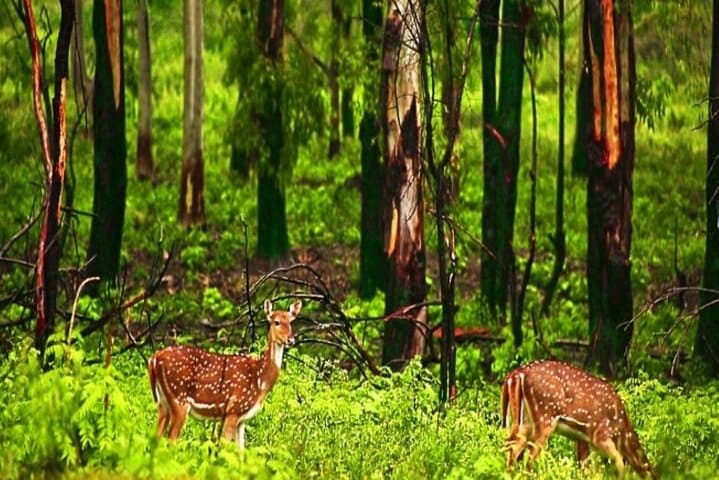


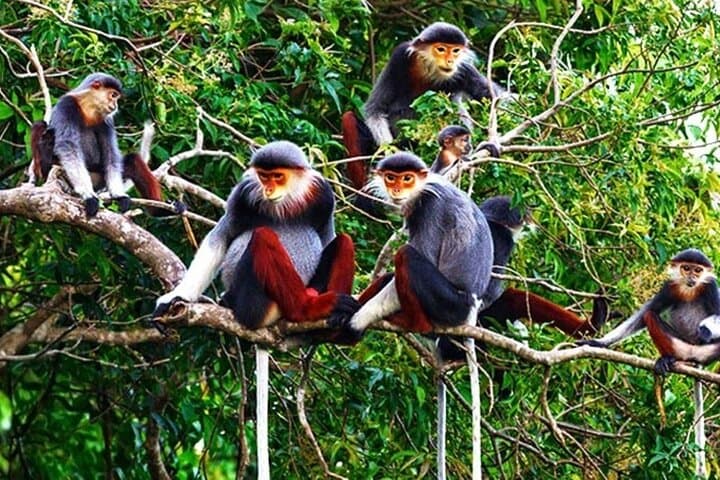
Morning light slices between karst ridges as the coach winds away from Ninh Binh toward Vietnam’s oldest national park. The air changes—cooler, leaf-scented—and the rainforest feels purposeful, as if the trees themselves are directing visitors toward hidden trails and silent caves. At Cuc Phuong the cadence slows: a measured walk past ancient trees, a stop at the Endangered Primate Rescue Center to meet animals recovering from the wildlife trade, then a short trek that threads through primary forest to a prehistoric cave studded with human artifacts.
Morning light slices between karst ridges as the coach winds away from Ninh Binh toward Vietnam’s oldest national park. The air changes—cooler, leaf-scented—and the rainforest feels purposeful, as if the trees themselves are directing visitors toward hidden trails and silent caves. At Cuc Phuong the cadence slows: a measured walk past ancient trees, a stop at the Endangered Primate Rescue Center to meet animals recovering from the wildlife trade, then a short trek that threads through primary forest to a prehistoric cave studded with human artifacts.
Cuc Phuong was established in 1962 and protects limestone hills carved over millions of years. Nearby Van Long is known locally as the “bay without waves” — a flat, mirror-still wetland ringed by steep karst towers that tell a geological story of uplift and erosion. The culture here is rural and agricultural; boat crews use low-profile sampans and live knowledge of tidal patterns to navigate reed-lined channels.
Practically, the day balances short hikes with a relaxed boat ride and a village-style lunch. Trails are mostly well-trodden but uneven; expect roots, slick rock after rain, and low-light cave interiors. Bring insect repellent, a light rain layer, and a pair of shoes that grip wet surfaces. Early starts improve bird and primate sightings; afternoons are better for warmer-weather comfort.
The trip is approachable for most travelers but rewards those who move slowly, listen, and leave no trace—so the park can keep its rare langurs and ancient caves for the next visitor.