THE ADVENTURE COLLECTIVE® · Independent discovery and booking for outdoor travel

Swap Ninh Binh’s karst paddies for old-growth forest and fossil-rich limestone on a full-day trek to Cuc Phuong National Park. Expect primate rescue centers, museum displays of prehistoric finds, a thousand-year tree, and shaded trails with short climbs.
Swap Ninh Binh’s karst paddies for old-growth forest and fossil-rich limestone on a full-day trek to Cuc Phuong National Park. Expect primate rescue centers, museum displays of prehistoric finds, a thousand-year tree, and shaded trails with short climbs.
Dawn light threads through dipterocarp canopy and karst spires as the minivan eases up to Cuc Phuong National Park’s gate. The air smells of damp leaf litter and the distant calls of primates; for a day you trade the rice-flatscape of the Red River Delta for humid, old-growth forest and limestone ridgelines.
Verified experiences and guided adventures in the surrounding area.
Operated by Local Tours Around Viet Nam · Ninh Binh, Ninh Bình Province
Dawn light threads through dipterocarp canopy and karst spires as the minivan eases up to Cuc Phuong National Park’s gate. The air smells of damp leaf litter and the distant calls of primates; for a day you trade the rice-flatscape of the Red River Delta for humid, old-growth forest and limestone ridgelines.
Vietnam’s first national park, created in the early 1960s, protects lowland tropical forest that sits atop Jurassic-to-Permian limestone. Fossil-bearing strata and slab-toothed reptile remains in the park museum hint at 230 million years of deep time. Human presence here reaches back to prehistoric occupants: the Man’s Cave site preserves stone stair approaches and artifacts that stitch culture to landscape.
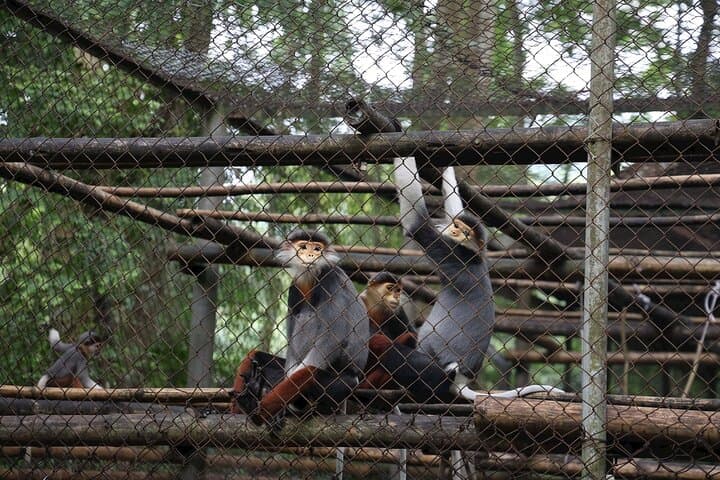
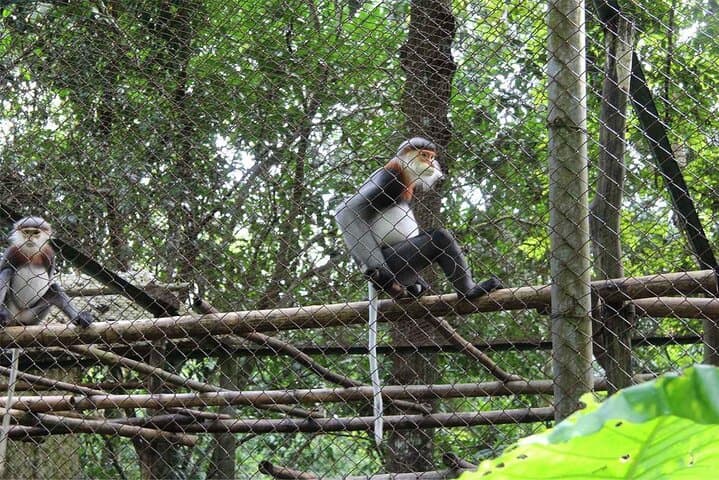
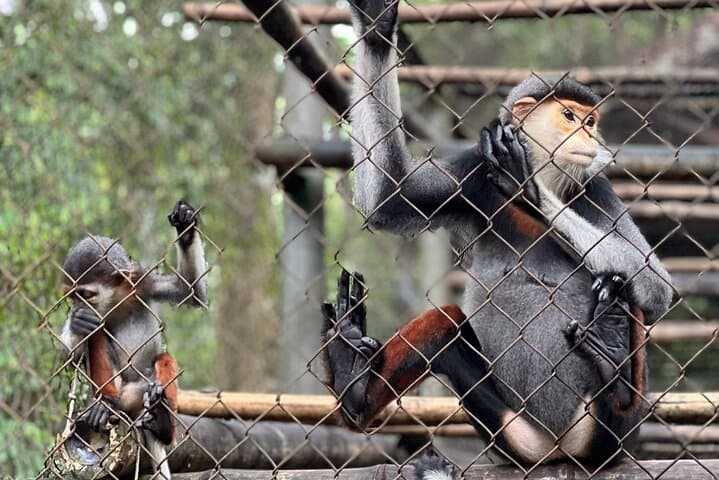
The day tour normally visits the Endangered Primate Rescue Center, the park museum with archaeological and natural history collections, the Ancient—or Thousand-Year—Tree, and short trekking loops that include a 300-meter approach and a climb of roughly 50 stone steps to cave mouths and viewpoints. Trails are mostly compact dirt and stone, with wet sections and occasional roots; expect gentle climbs rather than sustained elevation gain.
Practical edge: bring sturdy shoes, insect protection, and a light rain layer; carry 1–2 liters of water and move at a deliberate pace through shaded sections. Guides handle permits, transport, and lunch; visitors should respect wildlife viewing distances and leave no trace. Timing a visit for morning hours improves bird and primate sightings and avoids afternoon heat and showers.
easy.
7–8 hours.
Suitable for most fitness levels; expect several short climbs, uneven ground, and up to a few hours of walking.
The tour runs about 7–8 hours door-to-door from Ninh Binh and includes round-trip minivan transfer with hotel pickup and drop-off in the listed areas.
Yes—admission and a set Vietnamese lunch are included in the standard tour package described.
The tour is rated easy and suitable for most fitness levels, but some short climbs and steps (including ~50 stone steps to Man’s Cave) may challenge very young children or those with mobility limits.
Expect to see monkeys and many bird species; the Endangered Primate Rescue Center is visitable but access is controlled—follow guide directions and do not enter enclosures.
Cuc Phuong was designated Vietnam’s first national park in the early 1960s and contains archaeological sites like Man’s Cave with prehistoric remains.
The park runs a notable Endangered Primate Rescue Center and museum programs—stay on trails, avoid feeding wildlife, and follow guide rules to minimize impact.
Local Tours Around Viet Nam operates guided outdoor trips and adventures with an emphasis on safety, stewardship, and memorable experiences.
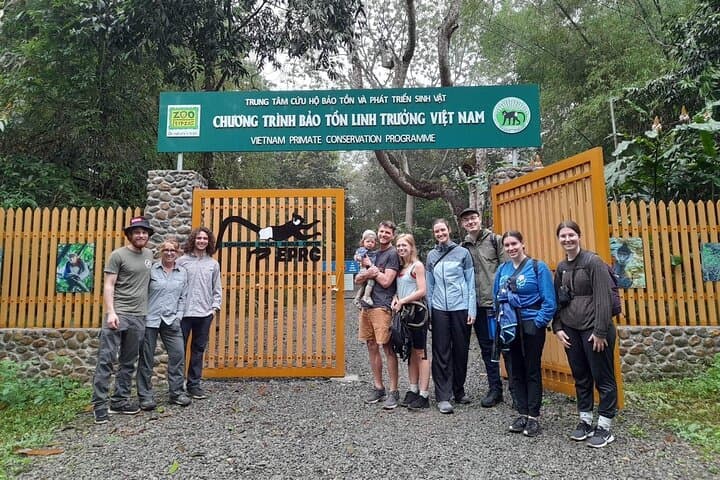
Dawn light threads through dipterocarp canopy and karst spires as the minivan eases up to Cuc Phuong National Park’s gate. The air smells of damp leaf litter and the distant calls of primates; for a day you trade the rice-flatscape of the Red River Delta for humid, old-growth forest and limestone ridgelines.
Dawn light threads through dipterocarp canopy and karst spires as the minivan eases up to Cuc Phuong National Park’s gate. The air smells of damp leaf litter and the distant calls of primates; for a day you trade the rice-flatscape of the Red River Delta for humid, old-growth forest and limestone ridgelines.
Vietnam’s first national park, created in the early 1960s, protects lowland tropical forest that sits atop Jurassic-to-Permian limestone. Fossil-bearing strata and slab-toothed reptile remains in the park museum hint at 230 million years of deep time. Human presence here reaches back to prehistoric occupants: the Man’s Cave site preserves stone stair approaches and artifacts that stitch culture to landscape.
The day tour normally visits the Endangered Primate Rescue Center, the park museum with archaeological and natural history collections, the Ancient—or Thousand-Year—Tree, and short trekking loops that include a 300-meter approach and a climb of roughly 50 stone steps to cave mouths and viewpoints. Trails are mostly compact dirt and stone, with wet sections and occasional roots; expect gentle climbs rather than sustained elevation gain.
Practical edge: bring sturdy shoes, insect protection, and a light rain layer; carry 1–2 liters of water and move at a deliberate pace through shaded sections. Guides handle permits, transport, and lunch; visitors should respect wildlife viewing distances and leave no trace. Timing a visit for morning hours improves bird and primate sightings and avoids afternoon heat and showers.