THE ADVENTURE COLLECTIVE® · Independent discovery and booking for outdoor travel

Spend a calm day paddling the Cua Can River, visiting the Nguyen Trung Truc temple, touring pepper gardens and relaxing at Rach Vem Beach—an easy, guided introduction to Phu Quoc’s natural and cultural highlights.
Spend a calm day paddling the Cua Can River, visiting the Nguyen Trung Truc temple, touring pepper gardens and relaxing at Rach Vem Beach—an easy, guided introduction to Phu Quoc’s natural and cultural highlights.
Morning light spills across the slow Cua Can River, and the mangroves seem to lean in—part watchful, part welcoming—as a guide loads kayaks for the day. The water dares you to trade the shore for a quiet paddle; currents nudge the hulls forward, and mangrove roots slide by like the ribs of an old boat.
Verified experiences and guided adventures in the surrounding area.
Operated by Rose Tourist · Duong Dong, Kien Giang
Morning light spills across the slow Cua Can River, and the mangroves seem to lean in—part watchful, part welcoming—as a guide loads kayaks for the day. The water dares you to trade the shore for a quiet paddle; currents nudge the hulls forward, and mangrove roots slide by like the ribs of an old boat.
This full-day loop moves from craft to coastline: an introductory stop at a local silk center frames island handicrafts; the river route threads a fishing village rich in mangrove ecology; a short visit to the Nguyen Trung Truc temple connects the landscape to Phu Quoc’s 19th-century resistance history. Geologically, the island’s mix of sandstone headlands, alluvial river flats and thin coral platforms creates sheltered estuaries and clear snorkeling fringes near Rach Vem.
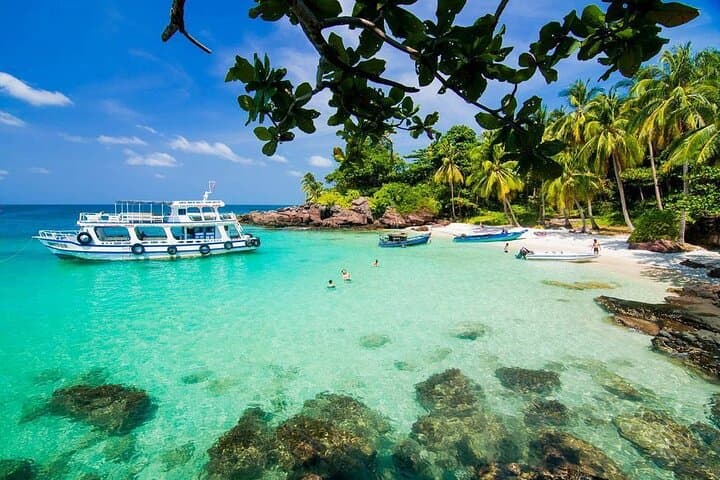
Culturally, pepper farms and small-scale fishing remain visible—a working island where lunch is usually the catch of the morning. The guide-led rhythm of the tour balances paddling with easy walks and photo stops; at Rach Vem you can relax on pale sand or take an optional boat to Ham Rong Cape for higher sea views.
Practical edge: expect a 6–7 hour outing with hotel pickup, light paddling suitable for beginners, and a seafood lunch included. Bring reef-safe sunscreen, a dry bag, water and footwear that can get wet. Travel in the dry season (roughly November–April) for calmer seas and clearer skies. Keep cash for small vendors and optional boat rides; respect mangrove and temple sites by sticking to paths and leaving no trace.
easy.
6–7 hours.
Suitable for most fitness levels; participants should be able to sit in a kayak and paddle for short periods and walk short distances on uneven ground.
Yes; the Cua Can River section is generally calm and guided instruction is provided—no prior experience required.
Yes; the tour includes round-trip shuttle pickup from hotels around Tran Hung Dao street in Duong Dong.
Yes—boat transfer to Ham Rong Cape is optional and at additional personal expense; timing depends on sea conditions.
Yes; the operator accepts common dietary requests (vegetarian, vegan, gluten-free) if specified at booking.
Rose Tourist operates guided outdoor trips and adventures with an emphasis on safety, stewardship, and memorable experiences.
Morning light spills across the slow Cua Can River, and the mangroves seem to lean in—part watchful, part welcoming—as a guide loads kayaks for the day. The water dares you to trade the shore for a quiet paddle; currents nudge the hulls forward, and mangrove roots slide by like the ribs of an old boat.
Morning light spills across the slow Cua Can River, and the mangroves seem to lean in—part watchful, part welcoming—as a guide loads kayaks for the day. The water dares you to trade the shore for a quiet paddle; currents nudge the hulls forward, and mangrove roots slide by like the ribs of an old boat.
This full-day loop moves from craft to coastline: an introductory stop at a local silk center frames island handicrafts; the river route threads a fishing village rich in mangrove ecology; a short visit to the Nguyen Trung Truc temple connects the landscape to Phu Quoc’s 19th-century resistance history. Geologically, the island’s mix of sandstone headlands, alluvial river flats and thin coral platforms creates sheltered estuaries and clear snorkeling fringes near Rach Vem.
Culturally, pepper farms and small-scale fishing remain visible—a working island where lunch is usually the catch of the morning. The guide-led rhythm of the tour balances paddling with easy walks and photo stops; at Rach Vem you can relax on pale sand or take an optional boat to Ham Rong Cape for higher sea views.
Practical edge: expect a 6–7 hour outing with hotel pickup, light paddling suitable for beginners, and a seafood lunch included. Bring reef-safe sunscreen, a dry bag, water and footwear that can get wet. Travel in the dry season (roughly November–April) for calmer seas and clearer skies. Keep cash for small vendors and optional boat rides; respect mangrove and temple sites by sticking to paths and leaving no trace.