THE ADVENTURE COLLECTIVE® · Independent discovery and booking for outdoor travel

Explore the underground network that aided Viet Cong fighters—narrow crawlways, hidden chambers and practical wartime ingenuity—on a half-day, small-group tour from Ho Chi Minh City. Learn tactical history and local perspectives while covering about 1.5 km of pedestrian terrain.
Explore the underground network that aided Viet Cong fighters—narrow crawlways, hidden chambers and practical wartime ingenuity—on a half-day, small-group tour from Ho Chi Minh City. Learn tactical history and local perspectives while covering about 1.5 km of pedestrian terrain.
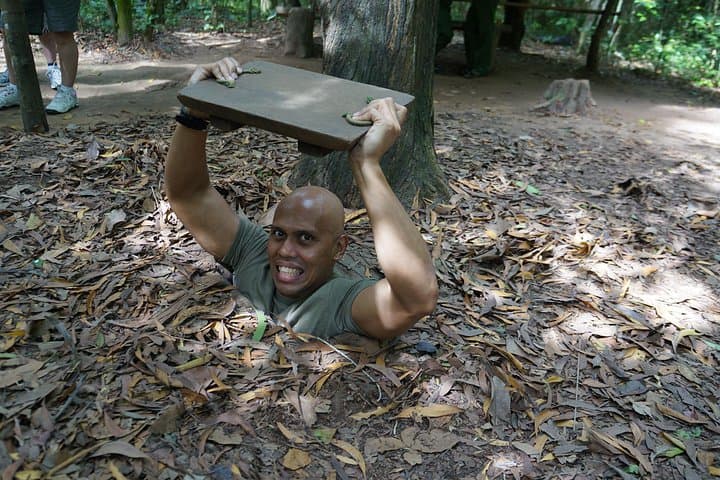
You step out of the van into humid Mekong air, the city noise shrinking behind you as flat rice fields and rubber trees take over. The park's entrance sits low on the landscape; a concrete bunker and a patch of disturbed earth hint at what the ground here keeps secret. Dusty paths lead toward patched mounds where thin metal trapdoors once opened onto an underground world.
Verified experiences and guided adventures in the surrounding area.
Operated by Intrepid Urban Adventures - Vietnam · Cu Chi, Ho Chi Minh City
You step out of the van into humid Mekong air, the city noise shrinking behind you as flat rice fields and rubber trees take over. The park's entrance sits low on the landscape; a concrete bunker and a patch of disturbed earth hint at what the ground here keeps secret. Dusty paths lead toward patched mounds where thin metal trapdoors once opened onto an underground world.
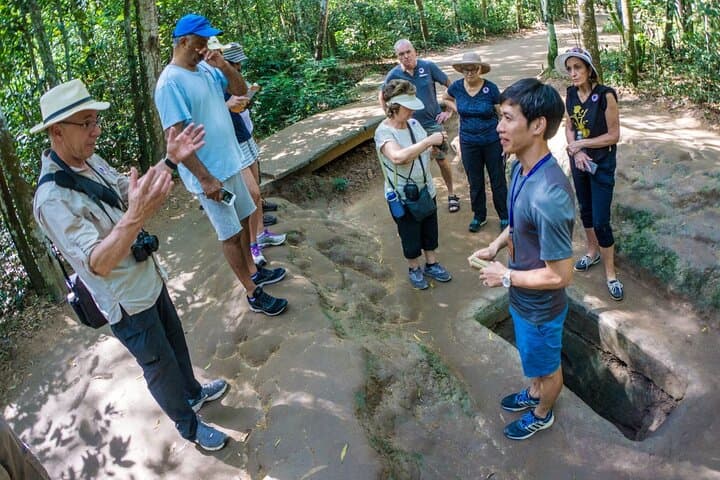
The Cu Chi tunnels—part of a network that once exceeded 200 km—played a decisive role during the American War, functioning as underground villages, command posts, clinics and supply lines. The soil here is alluvial and compacted, the kind that allowed long tunnel sections to remain stable when shored correctly; rubber plantations provided natural cover. Guides at the memorial park share local stories and technical details: how ventilation shafts were disguised, how kitchens and storage nodes were ventilated, and how the tunnels connected communities.
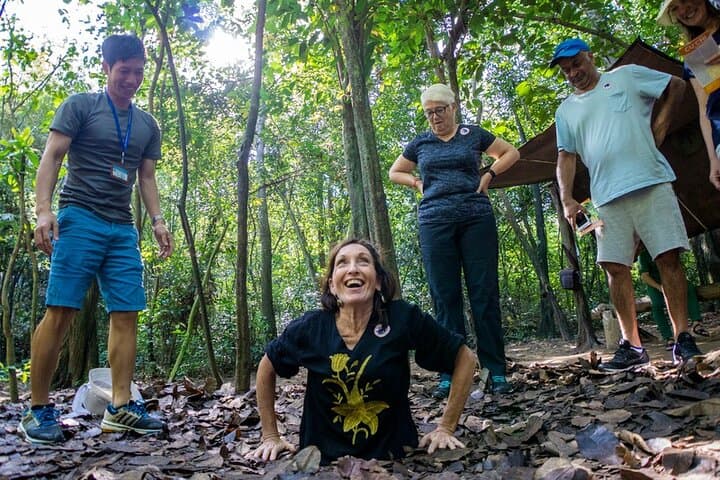
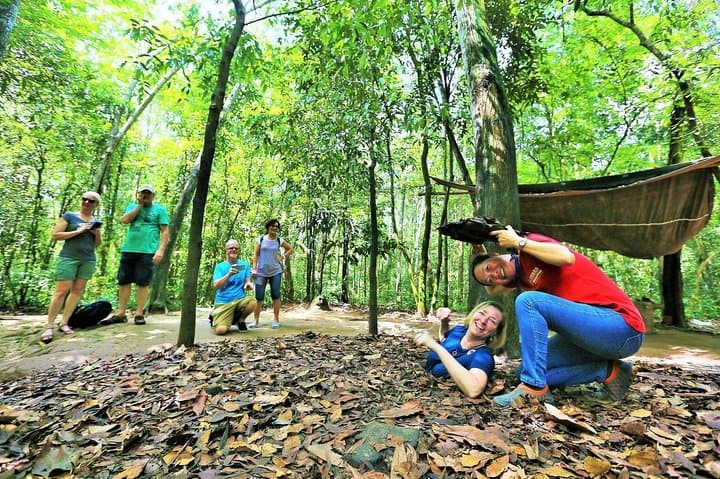
The site is both a lesson in improvised engineering and an emotional historical visit; displays include recreated living chambers, weapon exhibits and demonstrations. Expect short, low crawls in replica sections and interpretive stops that put hardship and ingenuity into plain terms.
Practical guidance: the tour covers roughly 1.5 km of walking with periods of standing and stooped movement—bring closed-toe shoes, long pants, sun protection and a refillable water bottle. Mornings are cooler and less crowded; mid-day can be hot and humid. Respect signage, avoid touching fragile exhibits and follow your guide during demonstrations—these preserve the tunnels and the stories they hold.
moderate.
5–6 hours.
Moderate fitness—able to walk 1.5 km, stand for presentations and negotiate brief low-crawl sections.
The tour covers about 1.5 km (roughly 1 mile) of walking on mostly flat paths with stops; allow 5–6 hours total including transport from Ho Chi Minh City.
Guides lead visitors through short, reinforced replica sections designed for tourists; the original tunnels are unstable and not open—follow guide instructions and avoid confined sections if you have health concerns.
Children aged 6 and up can join, but some replica crawls are cramped—families should assess comfort with confined spaces and notify the operator of any concerns.
The itinerary typically includes a local sandwich during the return trip; if you have strict dietary needs, inform the operator at least 24 hours in advance.
The Cu Chi tunnels were an extensive Viet Cong underground network used in the 1960s and 1970s for living, logistics and surprise tactics; the preserved sites are part museum and part memorial.
Entrance fees and on-site rules help fund preservation; visitors are asked to stay on paths, avoid touching fragile exhibits and minimize single-use plastics.
Intrepid Urban Adventures - Vietnam operates guided outdoor trips and adventures with an emphasis on safety, stewardship, and memorable experiences.
You step out of the van into humid Mekong air, the city noise shrinking behind you as flat rice fields and rubber trees take over. The park's entrance sits low on the landscape; a concrete bunker and a patch of disturbed earth hint at what the ground here keeps secret. Dusty paths lead toward patched mounds where thin metal trapdoors once opened onto an underground world.
You step out of the van into humid Mekong air, the city noise shrinking behind you as flat rice fields and rubber trees take over. The park's entrance sits low on the landscape; a concrete bunker and a patch of disturbed earth hint at what the ground here keeps secret. Dusty paths lead toward patched mounds where thin metal trapdoors once opened onto an underground world.
The Cu Chi tunnels—part of a network that once exceeded 200 km—played a decisive role during the American War, functioning as underground villages, command posts, clinics and supply lines. The soil here is alluvial and compacted, the kind that allowed long tunnel sections to remain stable when shored correctly; rubber plantations provided natural cover. Guides at the memorial park share local stories and technical details: how ventilation shafts were disguised, how kitchens and storage nodes were ventilated, and how the tunnels connected communities.
The site is both a lesson in improvised engineering and an emotional historical visit; displays include recreated living chambers, weapon exhibits and demonstrations. Expect short, low crawls in replica sections and interpretive stops that put hardship and ingenuity into plain terms.
Practical guidance: the tour covers roughly 1.5 km of walking with periods of standing and stooped movement—bring closed-toe shoes, long pants, sun protection and a refillable water bottle. Mornings are cooler and less crowded; mid-day can be hot and humid. Respect signage, avoid touching fragile exhibits and follow your guide during demonstrations—these preserve the tunnels and the stories they hold.