THE ADVENTURE COLLECTIVE® · Independent discovery and booking for outdoor travel

Spend a compact, revealing day moving from the underground Cu Chi Tunnels to the waterways of the Mekong Delta. This full‑day tour combines wartime history, hands‑on cultural stops, and a lazy boat ride through island canals.
Spend a compact, revealing day moving from the underground Cu Chi Tunnels to the waterways of the Mekong Delta. This full‑day tour combines wartime history, hands‑on cultural stops, and a lazy boat ride through island canals.
You step off the air‑conditioned bus into a hush of scrub and rubber trees; the earth here still holds the imprint of conflict while life pushes green shoots up through old scars. Morning at Ben Dinh begins with a diagram and a slow walk around camouflaged tunnel entrances, termite‑mound vents and the B‑52 bomb crater — tangible pieces of wartime engineering that demand methodical, quiet attention.
Verified experiences and guided adventures in the surrounding area.
Operated by Joy Tourist · Ho Chi Minh City, Ho Chi Minh
You step off the air‑conditioned bus into a hush of scrub and rubber trees; the earth here still holds the imprint of conflict while life pushes green shoots up through old scars. Morning at Ben Dinh begins with a diagram and a slow walk around camouflaged tunnel entrances, termite‑mound vents and the B‑52 bomb crater — tangible pieces of wartime engineering that demand methodical, quiet attention.
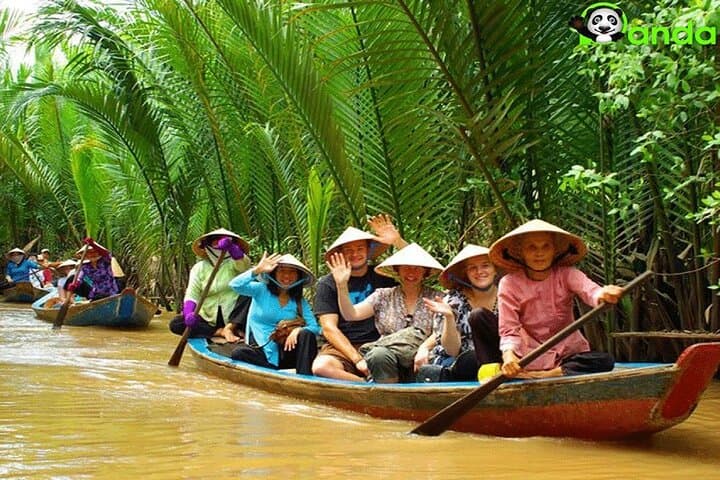
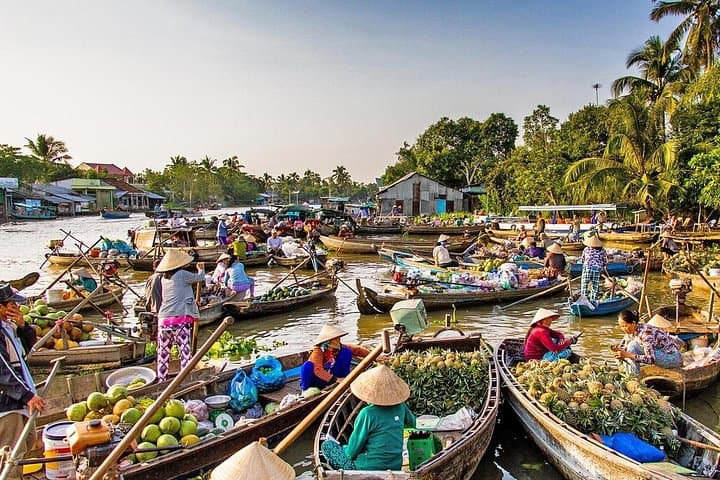
The region’s story shifts by noon as you head south through flat alluvial plains into the Mekong Delta—an ever‑changing landscape carved by channels and lined with water‑coconut palms. On Con Lan (Unicorn) Island you’ll ride a traditional rowboat through narrow canals, visit a honey farm and watch coconut candy being pulled on wooden paddles; the taste of fresh honey tea and sweet coconut candy ties cultural practice to place.
Geology here is recent: riverine silt and seasonal flooding built the delta’s low, fertile soils; meanwhile Cu Chi’s red lateritic soils and dense rubber plantations conceal a complex human history. Local guides weave oral history and practical detail—how smoke‑reducing hearths worked, why sandals were made from tires—into each stop.
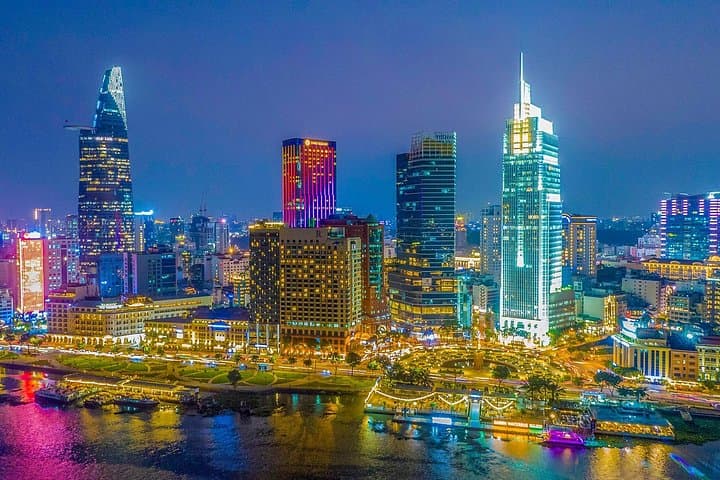
Practical notes: this is a long day (about 11 hours) with short walks on uneven ground and cramped tunnel sections if you enter them. Bring sun protection, refillable water, and comfortable shoes suited to heat and sticky humidity. Expect English commentary, a motorboat and a rowboat, and regional food with options for common dietary needs. Plan for traffic on return to Ho Chi Minh City; the tour ends in the early evening back in District 1.
easy.
11 hours.
Suitable for most travelers who can handle several short walks and a day of sitting on transfers; not strenuous.
The meeting point is in District 1 (near Bui Vien); the tour returns to Ho Chi Minh City in the early evening.
Yes—many sections are open to visitors but are low and narrow; guides will note alternatives for those who prefer not to enter.
Lunch is provided at a local restaurant and operators can usually accommodate common dietary requests if notified when booking.
Live‑fire experiences are supervised at a licensed range; hearing protection and safety briefings are provided, but participants must follow staff instructions and meet health requirements.
Cu Chi’s tunnel network was used by Viet Cong units during the Vietnam War for shelter, logistics and guerrilla tactics; the Mekong Delta has long been Vietnam’s rice and coconut heartland.
The delta faces pressures from boat traffic, plastic waste and upstream water management; choose operators who minimize single‑use plastics and support local communities.
Joy Tourist operates guided outdoor trips and adventures with an emphasis on safety, stewardship, and memorable experiences.
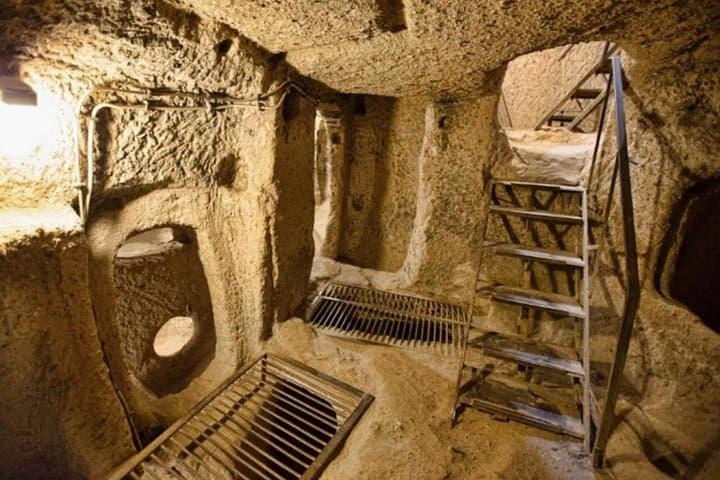
You step off the air‑conditioned bus into a hush of scrub and rubber trees; the earth here still holds the imprint of conflict while life pushes green shoots up through old scars. Morning at Ben Dinh begins with a diagram and a slow walk around camouflaged tunnel entrances, termite‑mound vents and the B‑52 bomb crater — tangible pieces of wartime engineering that demand methodical, quiet attention.
You step off the air‑conditioned bus into a hush of scrub and rubber trees; the earth here still holds the imprint of conflict while life pushes green shoots up through old scars. Morning at Ben Dinh begins with a diagram and a slow walk around camouflaged tunnel entrances, termite‑mound vents and the B‑52 bomb crater — tangible pieces of wartime engineering that demand methodical, quiet attention.
The region’s story shifts by noon as you head south through flat alluvial plains into the Mekong Delta—an ever‑changing landscape carved by channels and lined with water‑coconut palms. On Con Lan (Unicorn) Island you’ll ride a traditional rowboat through narrow canals, visit a honey farm and watch coconut candy being pulled on wooden paddles; the taste of fresh honey tea and sweet coconut candy ties cultural practice to place.
Geology here is recent: riverine silt and seasonal flooding built the delta’s low, fertile soils; meanwhile Cu Chi’s red lateritic soils and dense rubber plantations conceal a complex human history. Local guides weave oral history and practical detail—how smoke‑reducing hearths worked, why sandals were made from tires—into each stop.
Practical notes: this is a long day (about 11 hours) with short walks on uneven ground and cramped tunnel sections if you enter them. Bring sun protection, refillable water, and comfortable shoes suited to heat and sticky humidity. Expect English commentary, a motorboat and a rowboat, and regional food with options for common dietary needs. Plan for traffic on return to Ho Chi Minh City; the tour ends in the early evening back in District 1.