THE ADVENTURE COLLECTIVE® · Independent discovery and booking for outdoor travel

Explore the Cu Chi Tunnels on a private half-day tour, 60 km from Ho Chi Minh City. Crawl demonstration tunnels, learn wartime engineering, try local snacks, and return by air-conditioned vehicle—an intense, compact history lesson for curious travelers.
Explore the Cu Chi Tunnels on a private half-day tour, 60 km from Ho Chi Minh City. Crawl demonstration tunnels, learn wartime engineering, try local snacks, and return by air-conditioned vehicle—an intense, compact history lesson for curious travelers.
You step out of the air-conditioned minivan and the countryside takes over—flat fields, rows of rubber trees that lean in like quiet sentries, and a low, steady hum of village life. The Cu Chi site is 60 km northwest of Ho Chi Minh City; it doesn’t feel distant so much as deliberately hidden, a landscape that once sheltered an entire underground army.
Verified experiences and guided adventures in the surrounding area.
Operated by Asia Green Travel · Cu Chi, Ho Chi Minh City
You step out of the air-conditioned minivan and the countryside takes over—flat fields, rows of rubber trees that lean in like quiet sentries, and a low, steady hum of village life. The Cu Chi site is 60 km northwest of Ho Chi Minh City; it doesn’t feel distant so much as deliberately hidden, a landscape that once sheltered an entire underground army.
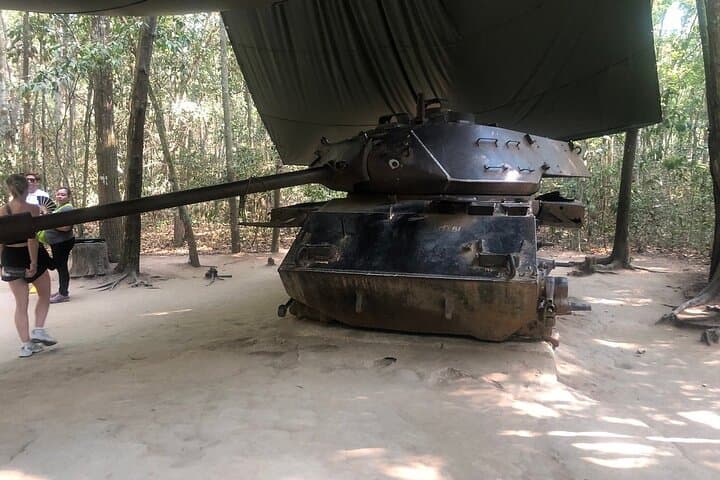
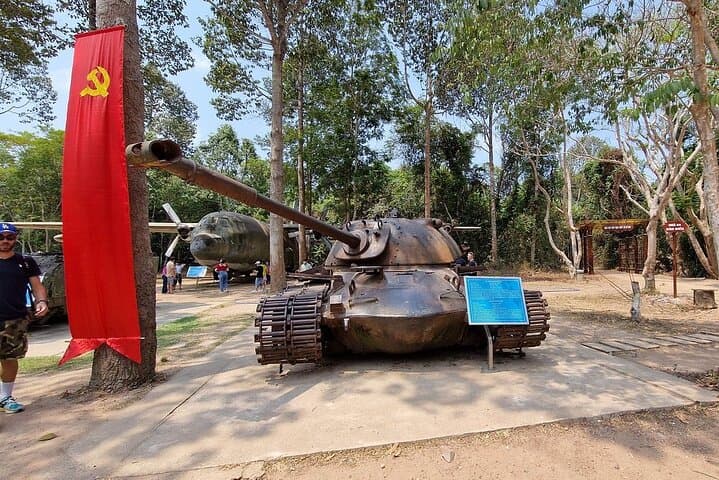
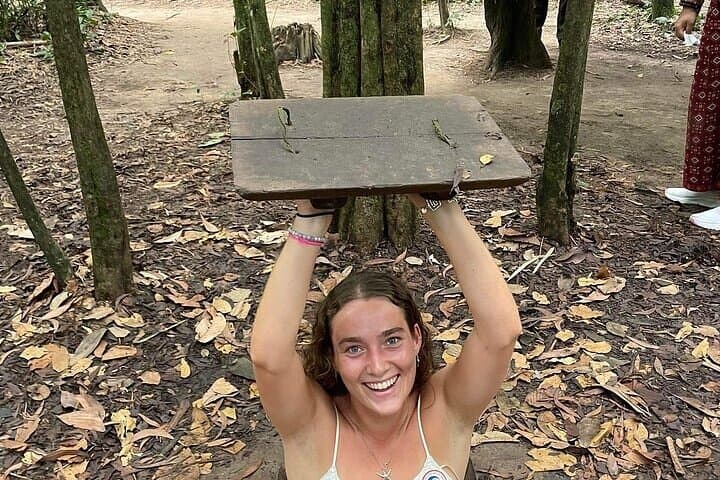
Carved into lateritic soil and sand, the tunnel network extends for over 220 kilometers through resilient clay and compacted earth. The tunnels are engineering shaped by necessity: tight quarters, false chambers and concealed trapdoors to confuse outsiders. This is wartime ingenuity made tangible—booby traps that demand careful attention, hidden kitchens that still give off the faint scent of cassava, and small mock-ups that show how fighters lived on rations.
Local culture is present in simple ways—grilled cassava stands, craft villages in the outskirts, and veterans’ memorials that keep memory active. Visitors can crawl through widened demonstration tunnels, observe a shooting range, and taste the austere dishes soldiers ate.
Practical guidance: allow four hours for a private pick-up, visit early to avoid afternoon heat, and wear closed-toe shoes and breathable layers; the tunnels are cool but the approach can be hot. Note the physical limits—those with spinal problems, heart conditions, or pregnancy should avoid crawling sections. Bring a camera but keep electronics secure in narrow spaces; follow guides’ safety briefings around replica traps and the firing range. Respect memorial spaces and local communities by staying on marked paths and leaving no trace.
easy.
4 hours.
Suitable for light fitness; expect short crouches and some walking on uneven ground
The private half-day option runs about four hours including hotel pickup, travel time (roughly 60 km each way), the site visit, and return.
You can enter widened demonstration tunnels designed for visitors; original combat tunnels are narrow and fragile and are not used for visitor access.
Many operators include a visit to a shooting range where, for an extra fee, visitors can try firearms under supervised conditions; check your booking details before arrival.
Children can attend, but crawling sections and the shooting range may be unsuitable for very young kids—confirm age restrictions with the operator.
Cu Chi’s tunnels were expanded during the mid-20th century as a defensive and logistical network; they exemplify improvised wartime engineering and rural resilience.
Stay on marked paths and avoid touching fragile tunnel walls; local operators encourage minimal impact and support site maintenance and memorial preservation.
Asia Green Travel operates guided outdoor trips and adventures with an emphasis on safety, stewardship, and memorable experiences.

You step out of the air-conditioned minivan and the countryside takes over—flat fields, rows of rubber trees that lean in like quiet sentries, and a low, steady hum of village life. The Cu Chi site is 60 km northwest of Ho Chi Minh City; it doesn’t feel distant so much as deliberately hidden, a landscape that once sheltered an entire underground army.
You step out of the air-conditioned minivan and the countryside takes over—flat fields, rows of rubber trees that lean in like quiet sentries, and a low, steady hum of village life. The Cu Chi site is 60 km northwest of Ho Chi Minh City; it doesn’t feel distant so much as deliberately hidden, a landscape that once sheltered an entire underground army.
Carved into lateritic soil and sand, the tunnel network extends for over 220 kilometers through resilient clay and compacted earth. The tunnels are engineering shaped by necessity: tight quarters, false chambers and concealed trapdoors to confuse outsiders. This is wartime ingenuity made tangible—booby traps that demand careful attention, hidden kitchens that still give off the faint scent of cassava, and small mock-ups that show how fighters lived on rations.
Local culture is present in simple ways—grilled cassava stands, craft villages in the outskirts, and veterans’ memorials that keep memory active. Visitors can crawl through widened demonstration tunnels, observe a shooting range, and taste the austere dishes soldiers ate.
Practical guidance: allow four hours for a private pick-up, visit early to avoid afternoon heat, and wear closed-toe shoes and breathable layers; the tunnels are cool but the approach can be hot. Note the physical limits—those with spinal problems, heart conditions, or pregnancy should avoid crawling sections. Bring a camera but keep electronics secure in narrow spaces; follow guides’ safety briefings around replica traps and the firing range. Respect memorial spaces and local communities by staying on marked paths and leaving no trace.